Funerary stele of carved limestone
Egypt; 6th–7th century
H: 36.5; W: 27.5; D: 7 cm
Inventory number 20/2019
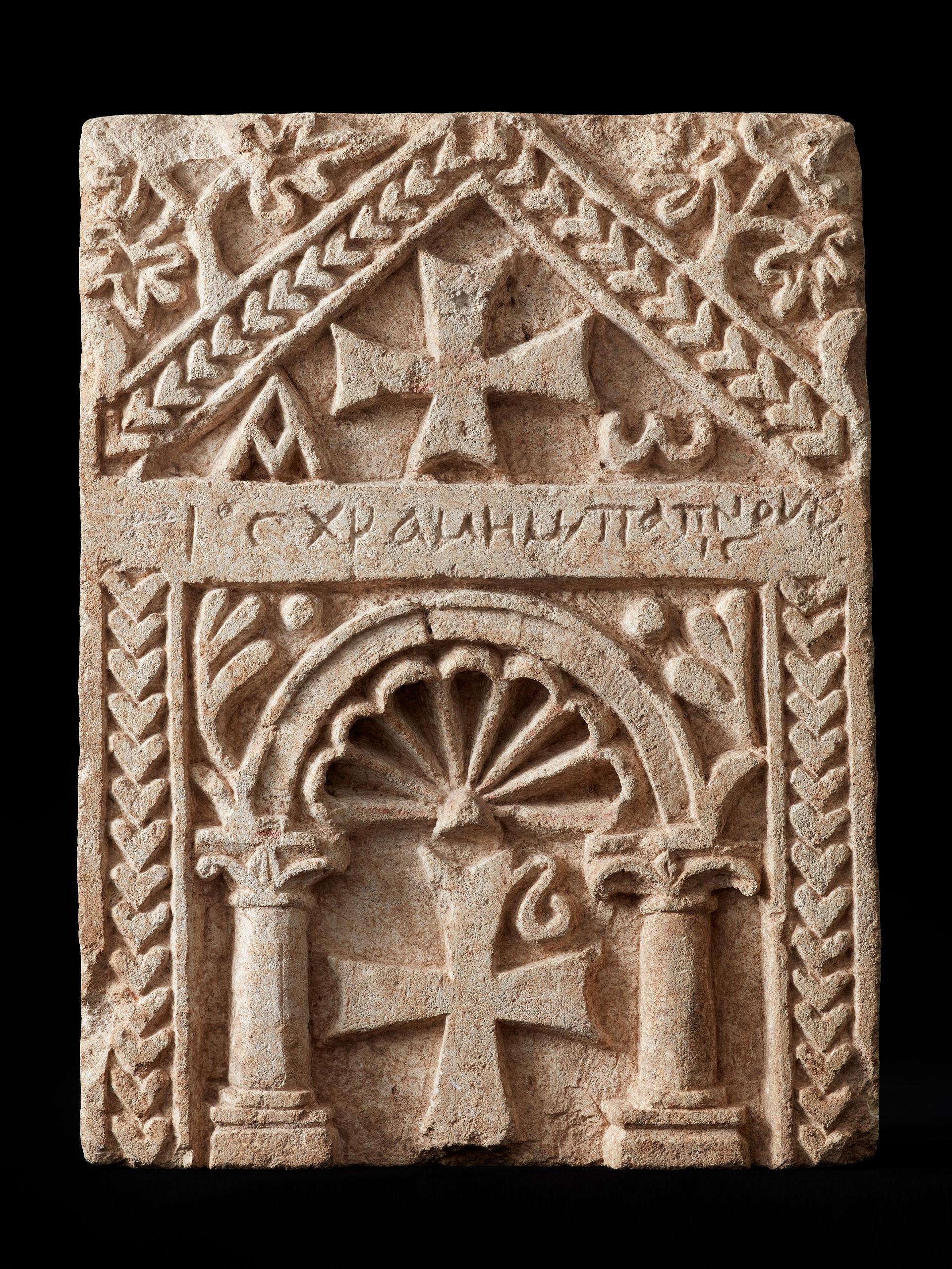
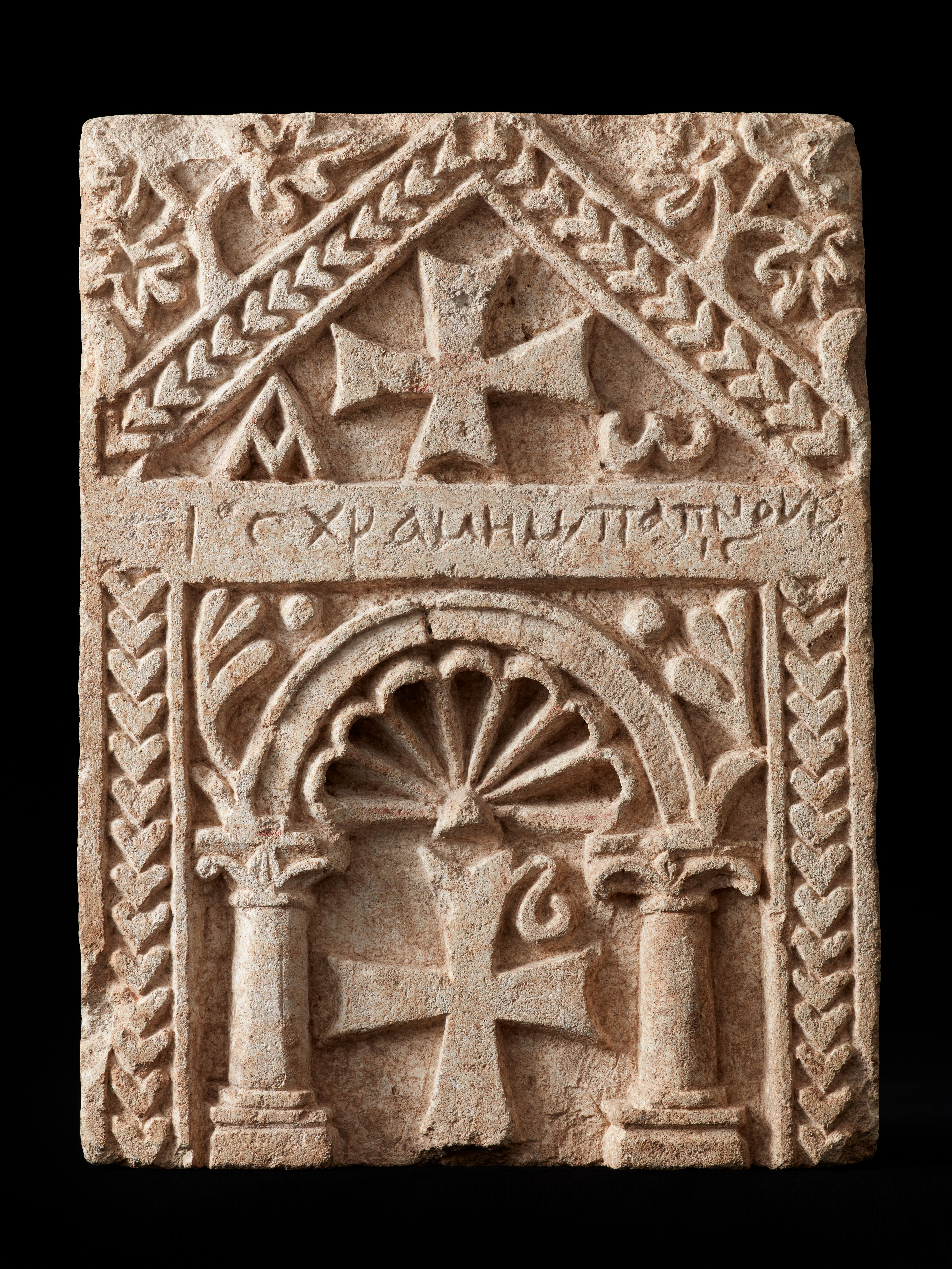
Having conquered Egypt in 641, the Muslims became acquainted with the Christian Copts, whose art was very much based on the Greek/Roman heritage. This Coptic funerary stele, raised over a man called Papnouthis (the one who belongs to God), carries decorations which show how the imagery of antiquity lived on in sixth- and seventh-century Egypt.
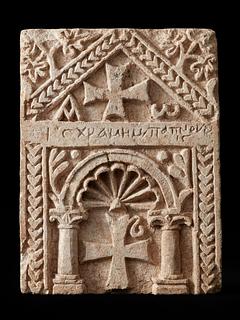
Overall, the carved decoration resembles the façade of a building with classical antique features, of which the two round columns with leaf-shaped capitals are the most conspicuous. The scallop shell adorning the niche above the pillars is also a loan from antiquity, where it was originally a reference to Aphrodite, the Greek goddess of love. In the Christian, Coptic context, the scallop shell becomes a symbol of rebirth and appears on funerary steles and in churches.
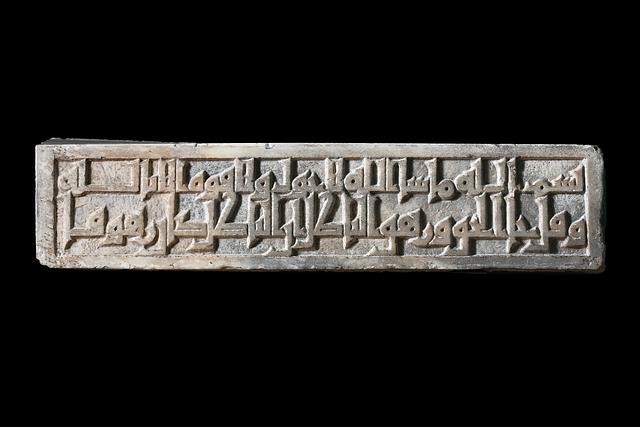
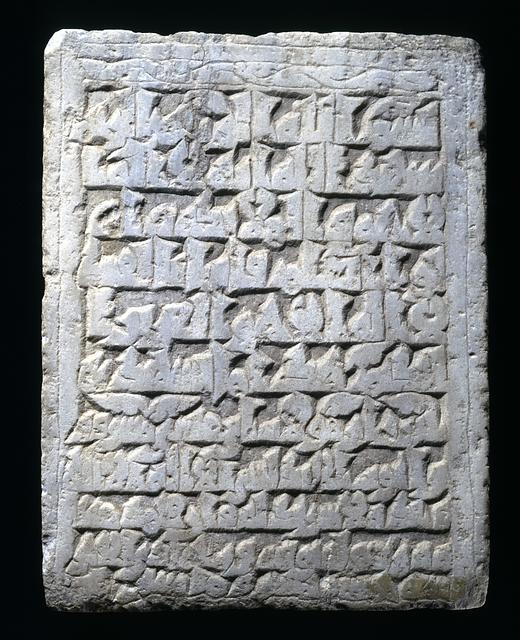
The scallop shell was also incorporated in Islamic art and architecture, for example as a decoration in vaulted niches and on steles (28/2001). Here, however, the motif is to be regarded as a purely decorative element, carrying none of the antique or Christian connotations.
In addition to the classical elements, the ornamentation on this stele contains several unambiguously Christian symbols. In the triangular pediment is a cross with four equal arms flanked by the Greek letters alpha and omega, a reference to Revelation 22:13, in which Jesus says, ‘I am the Alpha and the Omega, the Beginning and the End, the First and the Last’. The cross between the two columns, which has a hook-shaped outgrowth, can be interpreted as a combination of the Greek letters thau (T) and rho (R). In Coptic art, this combination was used as an abbreviation for the word stauros (cross).
Overall, the carved decoration resembles the façade of a building with classical antique features, of which the two round columns with leaf-shaped capitals are the most conspicuous. The scallop shell adorning the niche above the pillars is also a loan from antiquity, where it was originally a reference to Aphrodite, the Greek goddess of love. In the Christian, Coptic context, the scallop shell becomes a symbol of rebirth and appears on funerary steles and in churches.
The scallop shell was also incorporated in Islamic art and architecture, for example as a decoration in vaulted niches and on steles (28/2001). Here, however, the motif is to be regarded as a purely decorative element, carrying none of the antique or Christian connotations.
In addition to the classical elements, the ornamentation on this stele contains several unambiguously Christian symbols. In the triangular pediment is a cross with four equal arms flanked by the Greek letters alpha and omega, a reference to Revelation 22:13, in which Jesus says, ‘I am the Alpha and the Omega, the Beginning and the End, the First and the Last’. The cross between the two columns, which has a hook-shaped outgrowth, can be interpreted as a combination of the Greek letters thau (T) and rho (R). In Coptic art, this combination was used as an abbreviation for the word stauros (cross).
Published in
Published in
André Wiese: Antikenmuseum Basel und Sammlung Ludwig: die Ägyptische Abteilung, Mainz am Rhein 2001, p. 232, cat.no. 161;
Artcurial: Archéologie & arts d’orient: Collections Bouvier et à divers, Mercredi 15 mai 2019, Paris 2019, pp. 154-155, cat.no. 257;
Artcurial: Archéologie & arts d’orient: Collections Bouvier et à divers, Mercredi 15 mai 2019, Paris 2019, pp. 154-155, cat.no. 257;