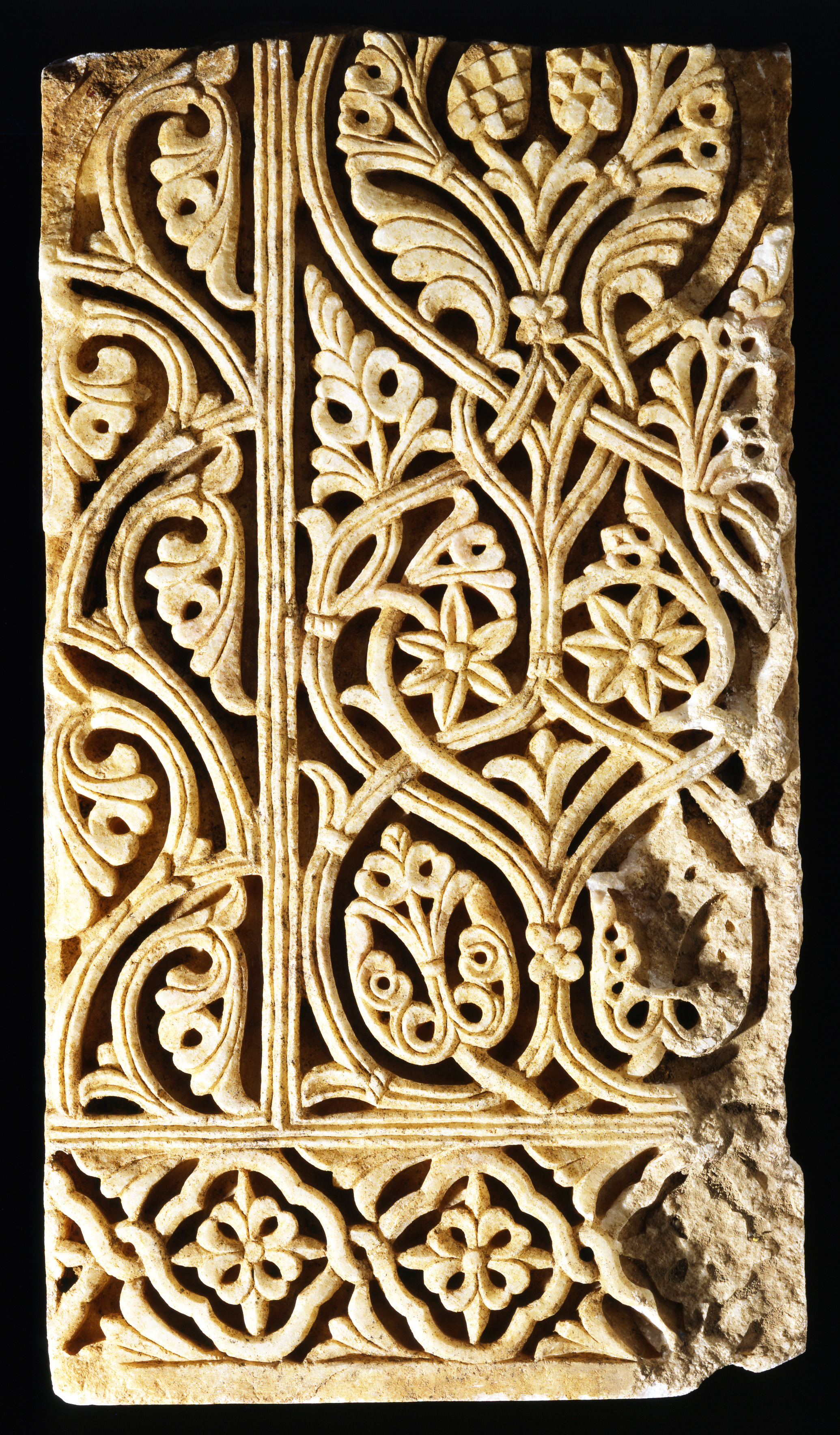
Marble panel
Spain, Cordoba; 2nd half of 10th century
H: 51.5; W: 28.2 cm
Inventory number 86/2004
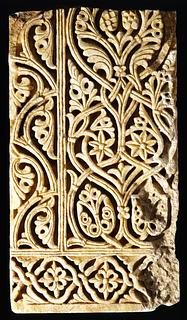
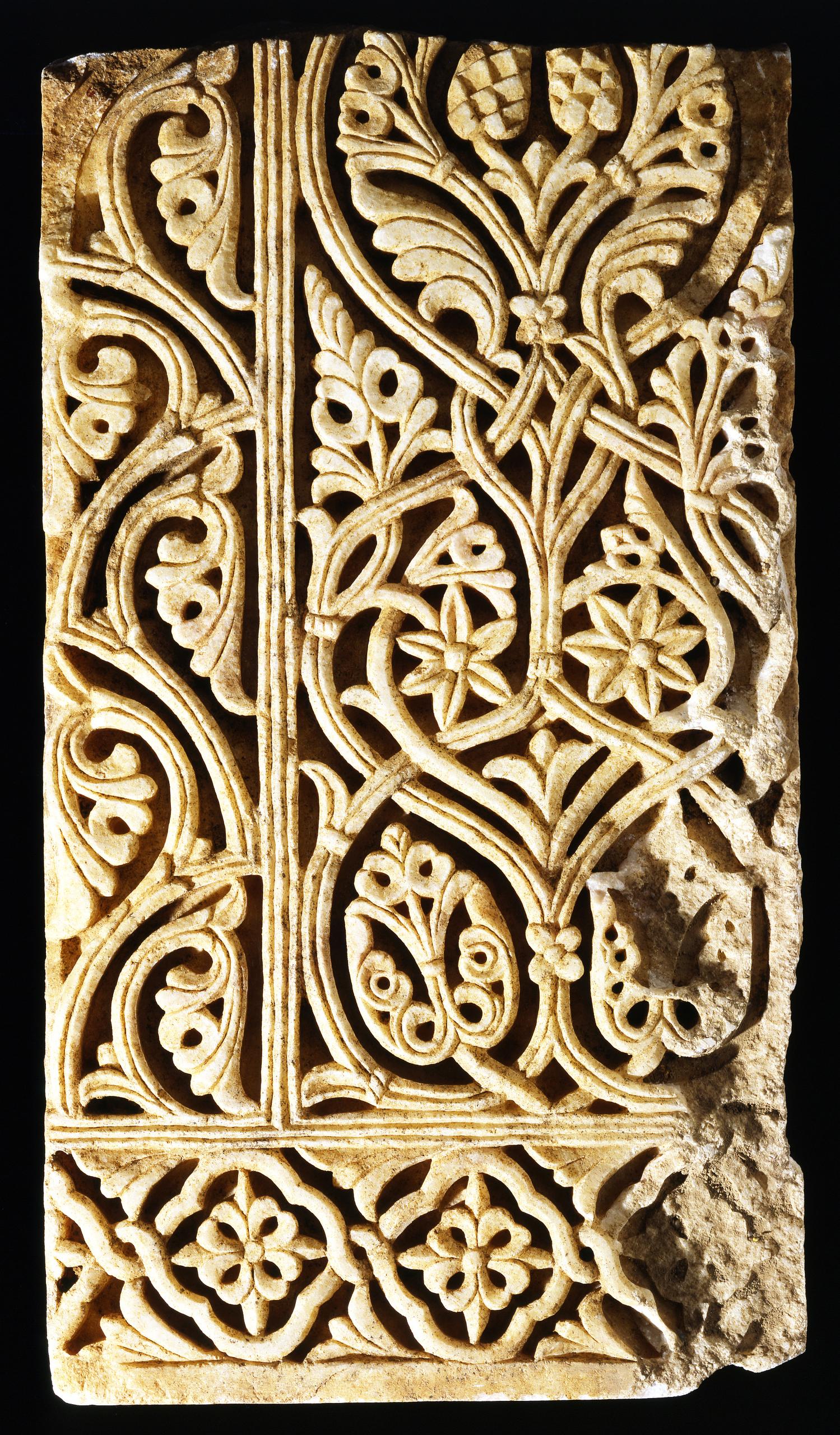
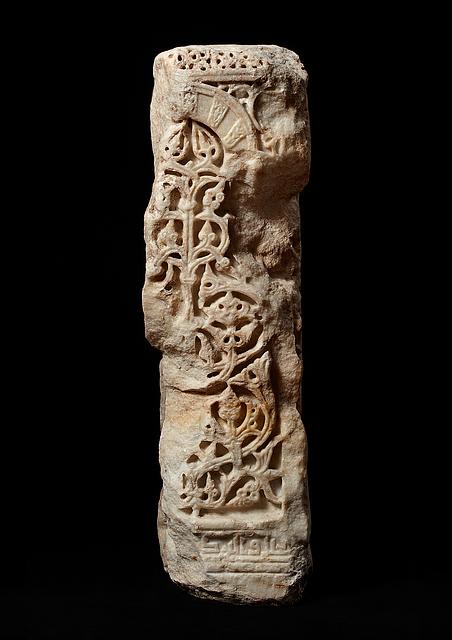
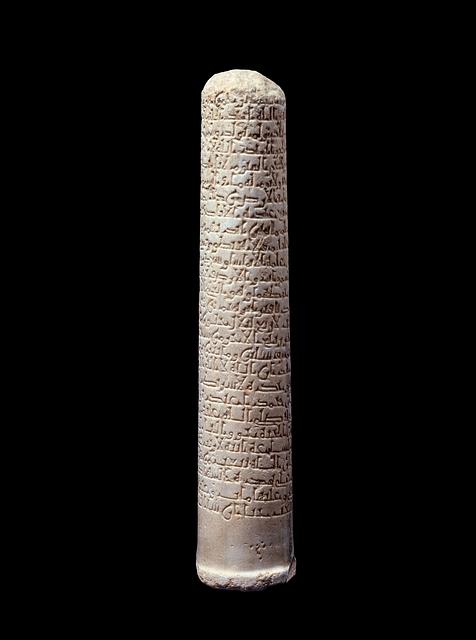
The marble panel is closely related to the reliefs that decorated facades and pillars in the palace city of Madinat al-Zahra, outside Cordoba. The city was built in the second half of the 10th century for the caliph, but was already destroyed in 1010 by marauding Berbers. Because of their very high quality, the city’s building materials were reused throughout southern Spain.
The fairly naturalistic decoration that is characteristic of the art of Umayyad Spain – used on everything from work in ivory to large architectural embellishments – can be traced back to the Umayyad ornamentation of Syria. The Spanish Umayyads seemed to have made an effort to deliberately revive it.
The fairly naturalistic decoration that is characteristic of the art of Umayyad Spain – used on everything from work in ivory to large architectural embellishments – can be traced back to the Umayyad ornamentation of Syria. The Spanish Umayyads seemed to have made an effort to deliberately revive it.
Published in
Published in
Fernando Valdés: “The ivories of al-Andalus (10th-11th century): some thoughts on arts and crafts in the Caliphate of Córdoba and the Taifa kingdoms” in Journal of the David Collection, 2005, 2:2, fig. 105, p. 196;
Sheila S. Blair and Jonathan M. Bloom (eds.): Cosmophilia. Islamic Art from the David Collection, Copenhagen, McMullen Museum of Art, Boston College, Boston 2006, cat.no. 84;
Kjeld von Folsach: Flora islamica: plantemotiver i islamisk kunst, Davids Samling, København 2013, cat.no. 9;
Sheila S. Blair and Jonathan M. Bloom (eds.): Cosmophilia. Islamic Art from the David Collection, Copenhagen, McMullen Museum of Art, Boston College, Boston 2006, cat.no. 84;
Kjeld von Folsach: Flora islamica: plantemotiver i islamisk kunst, Davids Samling, København 2013, cat.no. 9;