Ewer, rock crystal
Egypt; c. 1000
H: 15.5 cm
Inventory number 27/1999
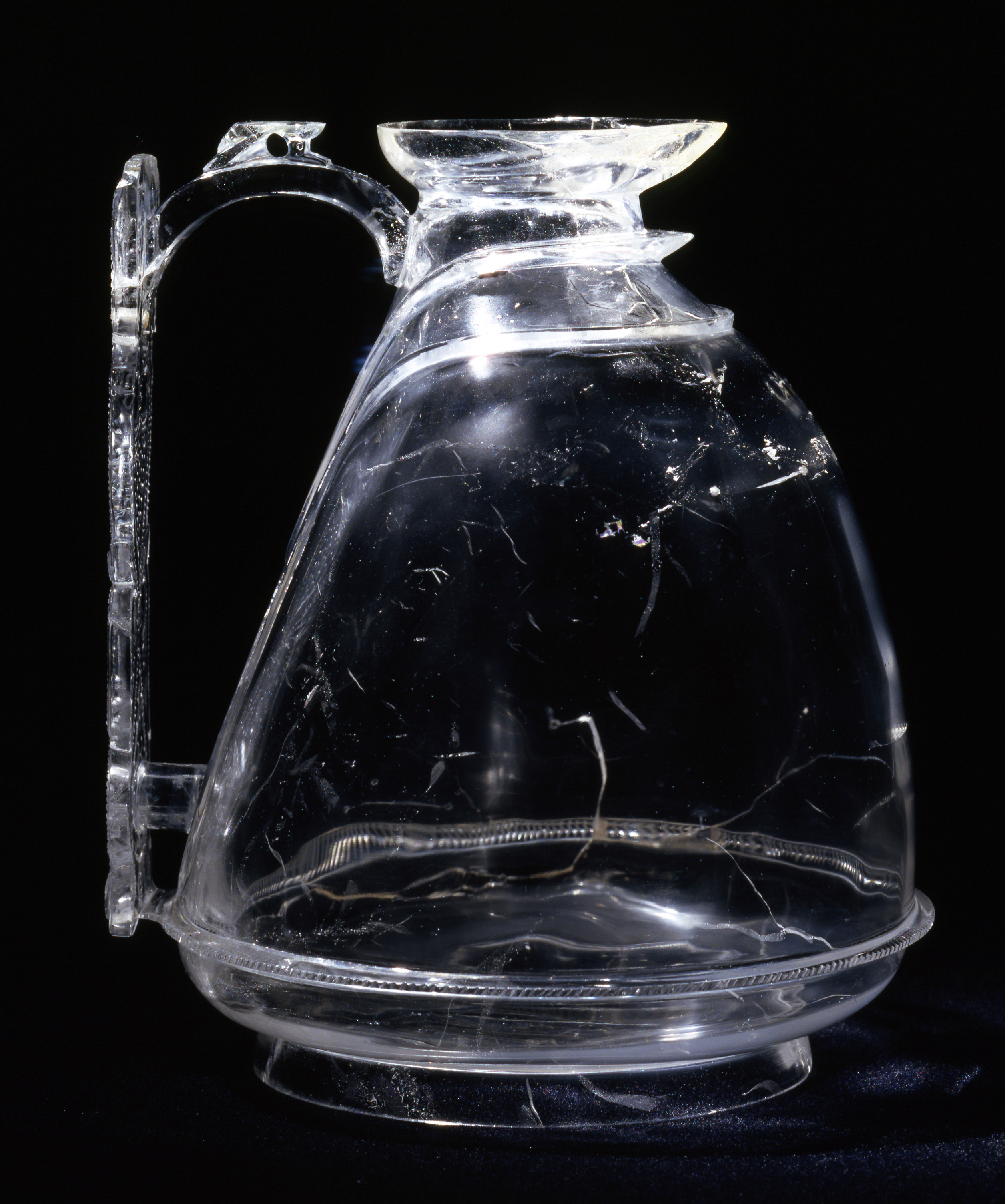
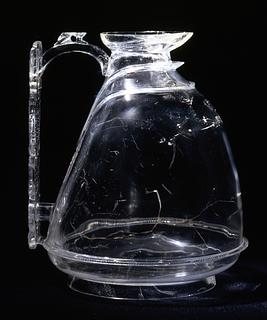
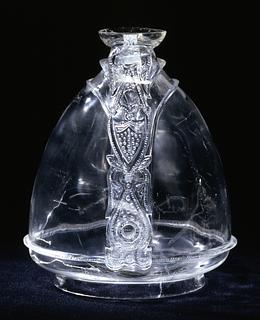
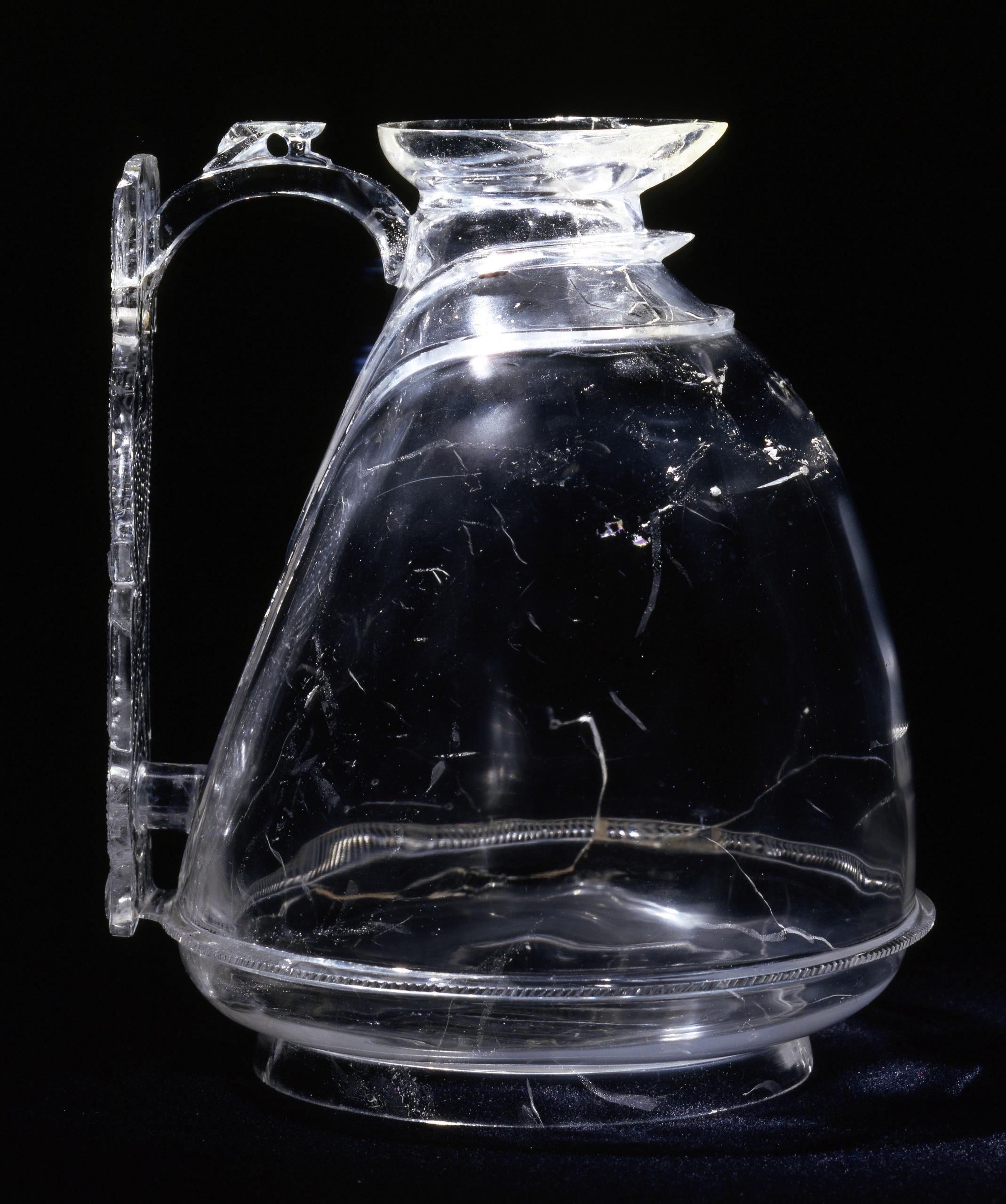
This rock-crystal ewer belongs to quite a small group that has survived from the Fatimid period. These are luxury items, which according to the 15th-century Egyptian historian al-Maqrizi were found in large quantities in the Fatimid caliphs’ treasuries in Cairo. The treasuries were plundered in the 1060s, after which the ewers that have been preserved soon found their way to European churches, used as exquisite containers for the most precious relics.
Unlike the others, this ewer has no figurative decoration on the corpus, which has an exceedingly elegant form, protruding like the breast of a bird in the axis of the spout.
The ewer is a masterpiece technically as well. Before it was polished for the last time, the rock crystal was opaque. Still, the craftsman was able to cut down the material so it is only just over 1 mm thick in places.
Unlike the others, this ewer has no figurative decoration on the corpus, which has an exceedingly elegant form, protruding like the breast of a bird in the axis of the spout.
The ewer is a masterpiece technically as well. Before it was polished for the last time, the rock crystal was opaque. Still, the craftsman was able to cut down the material so it is only just over 1 mm thick in places.
Published in
Published in
Kjeld von Folsach: Art from the World of Islam in The David Collection, Copenhagen 2001, cat.no. 368;
Avinoam Shalem: “On medieval rock crystal sources and resources in the lands of Islam” in Cynthia Hahn and Avinoam Shalem (eds.): Seeking transparency : rock crystals across the medieval Mediterranean, Berlin 2020, p. 104, fig. 1;
Mentioned in Christie's, London, 7/10-2008, lot 50, p. 66;
Avinoam Shalem: “On medieval rock crystal sources and resources in the lands of Islam” in Cynthia Hahn and Avinoam Shalem (eds.): Seeking transparency : rock crystals across the medieval Mediterranean, Berlin 2020, p. 104, fig. 1;
Mentioned in Christie's, London, 7/10-2008, lot 50, p. 66;
.jpg)