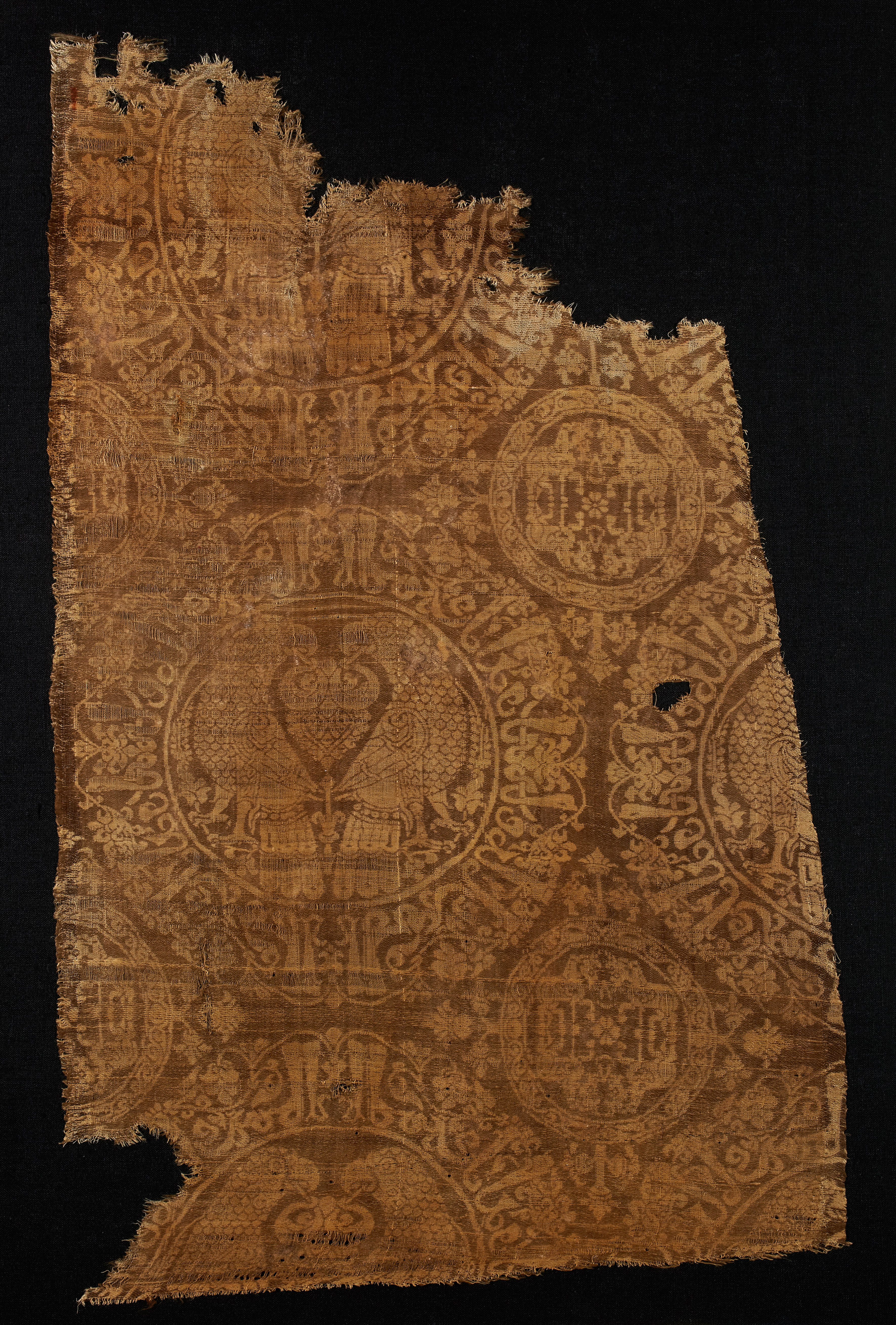
Fragment of a two-colored, samitum-woven silk
Afghanistan or Iran; 11th-12th century
H: 69; W: 43 cm
Inventory number 16/2009
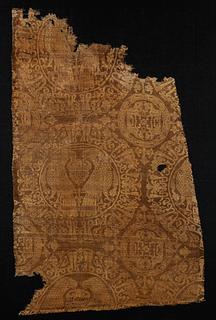
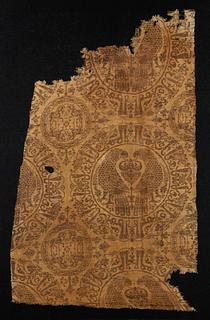
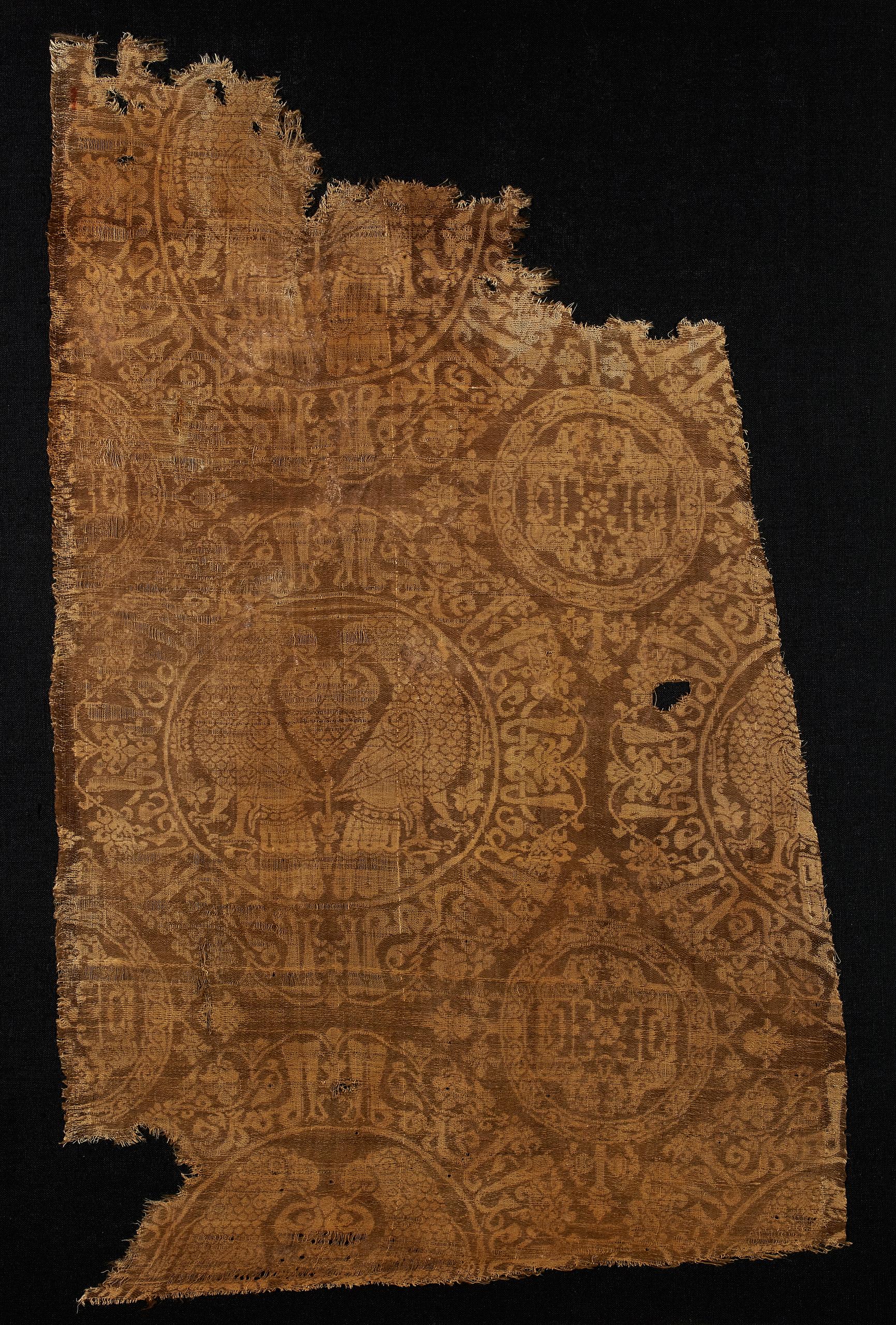
Textiles with confronted animals in medallions are known from the Islamic world from as early as the 7th right up to the 14th and 15th century. This fragment shows two addorsed eagles surrounded by vine scrolls along with four identical inscriptions in Naskh (two of them reversed) wishing “happiness and wealth.” In between them are medallions with four confronted horses. The front and back of the textile are the same, but with the colors of motif and background reversed.
Frescoes in the Ghaznavid palace in Lashkari Bazar in southwestern Afghanistan show a number of guards wearing clothing with related patterns.
It was difficult – and consequently costly – to produce woven textiles with complex patterns. A much cheaper painted version of a similar design is found on a fragmentary wooden casket covered with paper (31/1997).
Frescoes in the Ghaznavid palace in Lashkari Bazar in southwestern Afghanistan show a number of guards wearing clothing with related patterns.
It was difficult – and consequently costly – to produce woven textiles with complex patterns. A much cheaper painted version of a similar design is found on a fragmentary wooden casket covered with paper (31/1997).