Fragment of a pile carpet, wool and silk. “Animal carpet”
Iran; End of 16th century
H: 57,5; W: 27 cm
Inventory number 5/1973
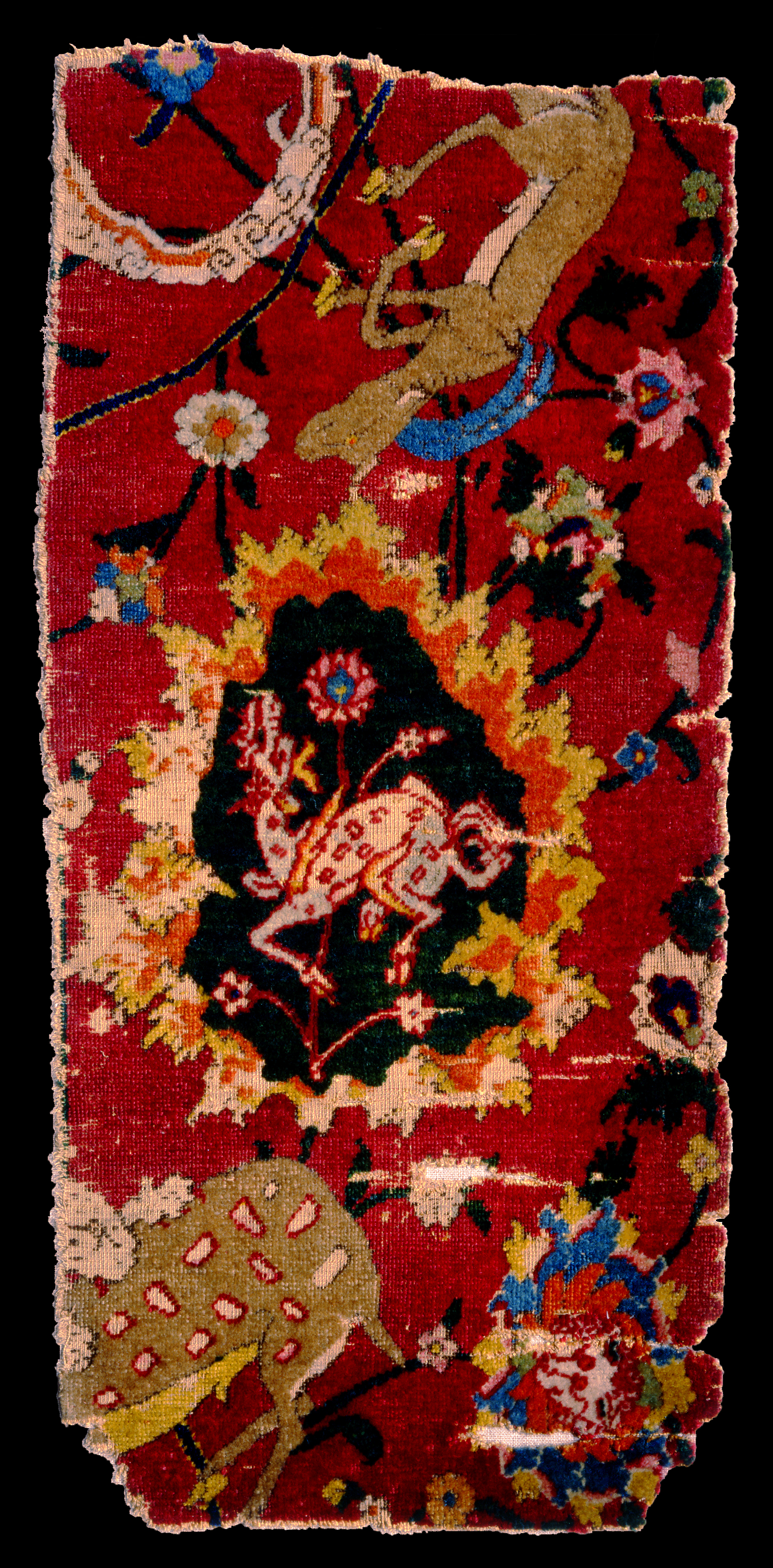
Carpets with figurative motifs with a unique richness of detail, made possible by the denseness of the knots, were created under the Safavids. Animal combat was an ancient motif common to many cultures. It also appears in early Islamic art, where it could be interpreted among other things as a metaphor of the right of the strong to dominate the weak.
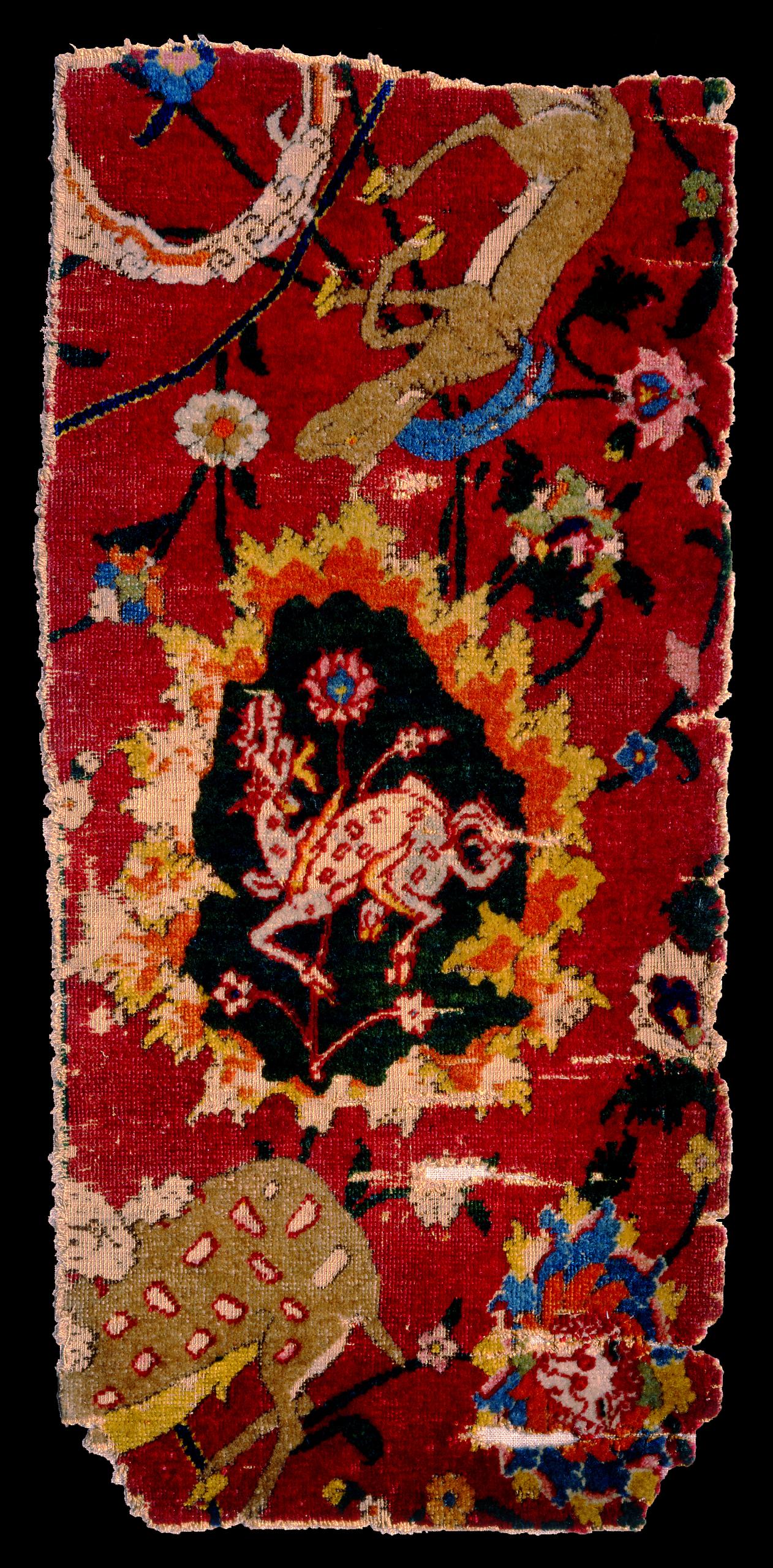
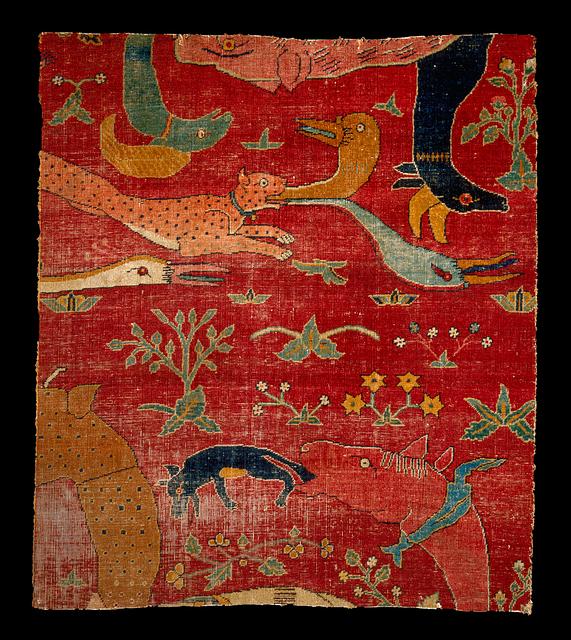
On this carpet, a cheetah sinks its teeth into a spotted gazelle in the lower left corner. In the center, in contrast, is a qilin, a deer-like animal with a bushy tail and dragon-like head. This mythical creature originally came from China and – like the frame around it and the cloud ornaments above – is an expression of the many Far Eastern elements that were used in new decorative contexts under the Timurids and the Safavids.
On this carpet, a cheetah sinks its teeth into a spotted gazelle in the lower left corner. In the center, in contrast, is a qilin, a deer-like animal with a bushy tail and dragon-like head. This mythical creature originally came from China and – like the frame around it and the cloud ornaments above – is an expression of the many Far Eastern elements that were used in new decorative contexts under the Timurids and the Safavids.
Published in
Published in
F. Kussmaul (ed.): Das Tier in der Kunst Irans, Linden-Museum, Stuttgart 1972, cat.no. 191;
Kjeld von Folsach: Islamic art. The David Collection, Copenhagen 1990, cat.no. 416;
Kjeld von Folsach: Fabelvæsner fra Islams Verden, Davids Samling, København 1991, cat.no. 62;
Kjeld von Folsach: Art from the World of Islam in The David Collection, Copenhagen 2001, cat.no. 690;
Kjeld von Folsach: Islamic art. The David Collection, Copenhagen 1990, cat.no. 416;
Kjeld von Folsach: Fabelvæsner fra Islams Verden, Davids Samling, København 1991, cat.no. 62;
Kjeld von Folsach: Art from the World of Islam in The David Collection, Copenhagen 2001, cat.no. 690;