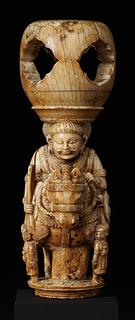
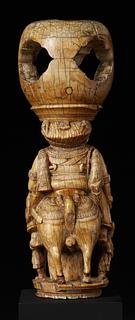
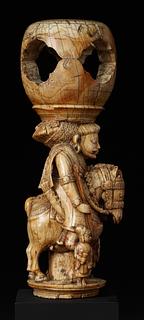
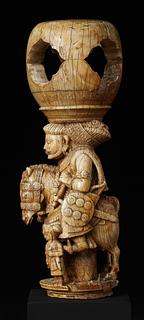
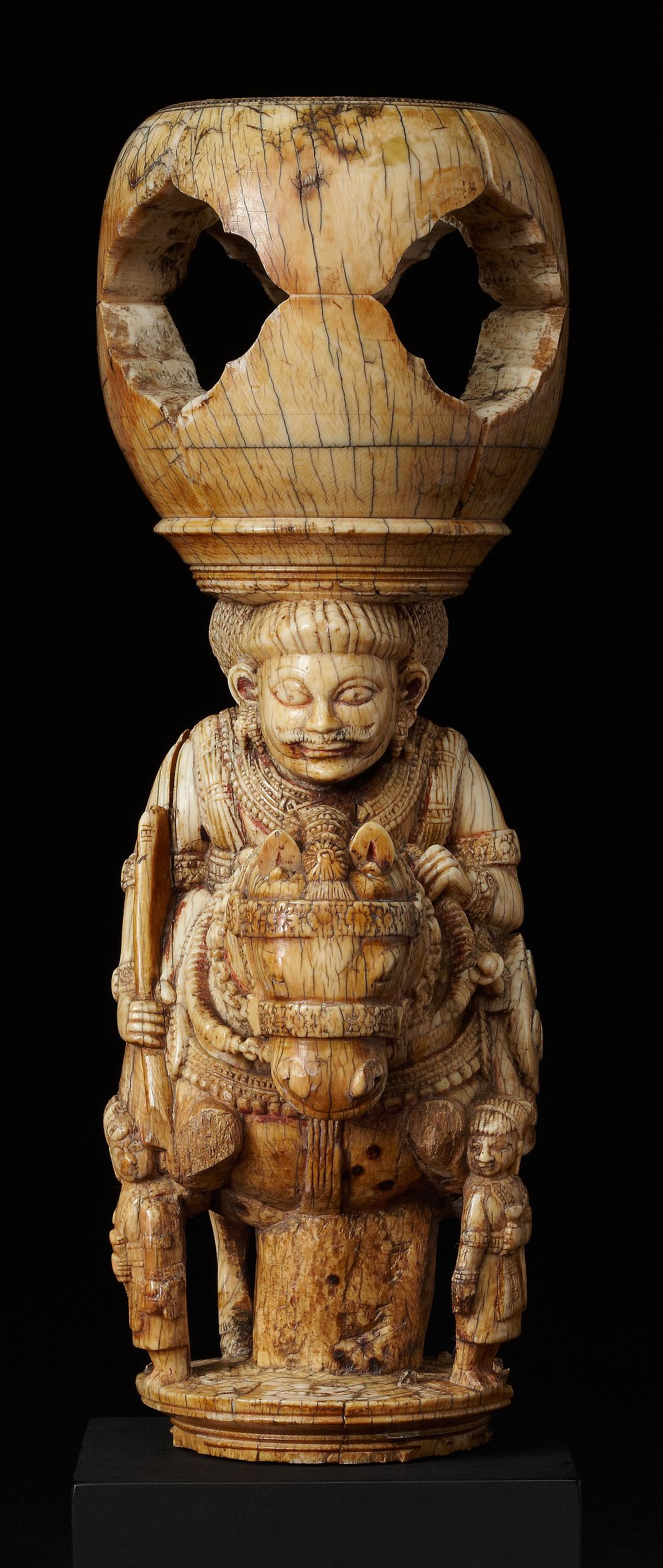
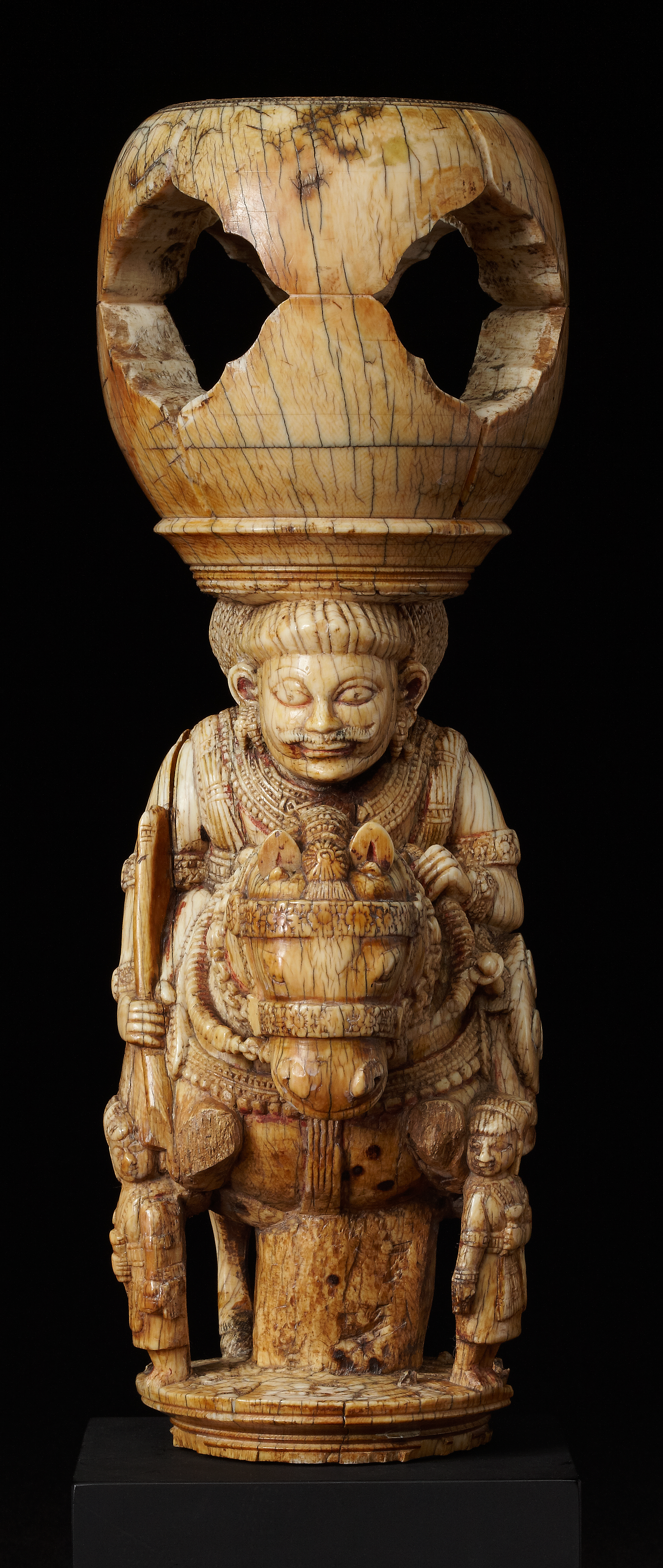
Throne leg, carved ivory with traces of paint
India, Deccan; 17th century
H: 31.2 cm
Inventory number 26/2008
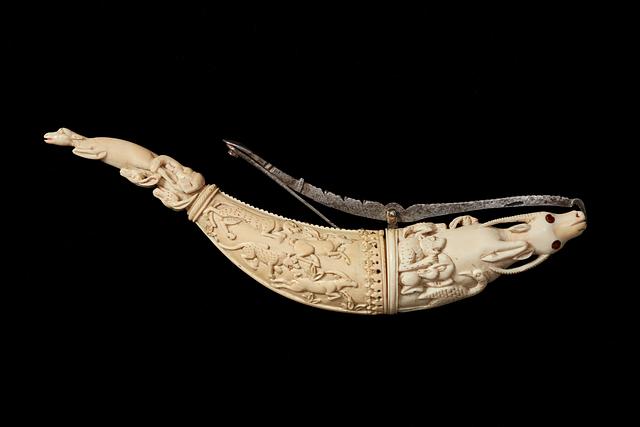
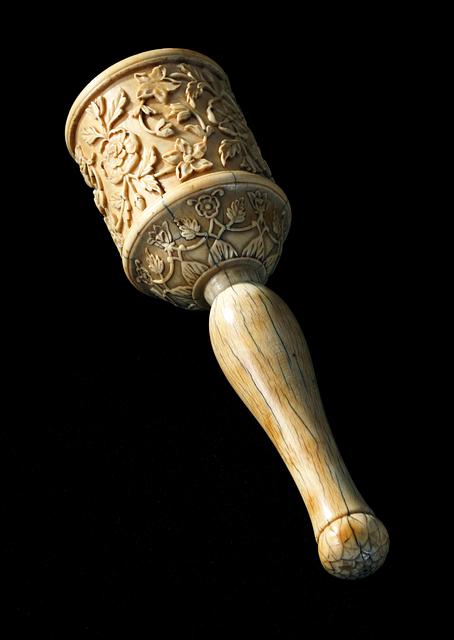
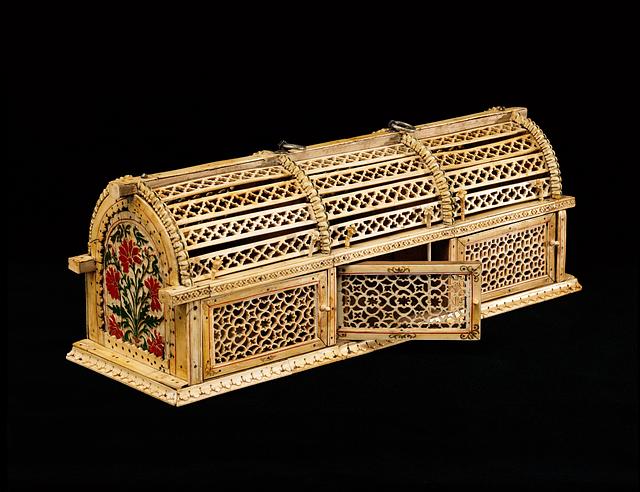
The size and shape of the tusk set natural limits from which the ivory carver worked. This was exploited positively in India to create amazing, compact compositions that could contain architecture as well as animals and human figures carved from a single tusk.
The warrior on his horse and his little servants are depicted with a great wealth of details. They wear the kind of turban that is typical of the Deccan area and horse and rider are embellished with finely worked straps and chains.
The leg was originally fixed to a flat throne without a back. The compressed character of the rider reinforced the impression of the power of the prince seated above it.
The warrior on his horse and his little servants are depicted with a great wealth of details. They wear the kind of turban that is typical of the Deccan area and horse and rider are embellished with finely worked straps and chains.
The leg was originally fixed to a flat throne without a back. The compressed character of the rider reinforced the impression of the power of the prince seated above it.
Published in
Published in
J. P. Losty and F. Galloway: Sringaran: exhibition celebrating divine and erotic love, Francesca Galloway, London 2007, cat.no. 35, pp. 100-103;
Kjeld von Folsach, Joachim Meyer and Peter Wandel: Fighting, Hunting, Impressing. Arms and Armour from the Islamic World 1500-1850, The David Collection, Copenhagen 2021, cat.no. 139;
Kjeld von Folsach, Joachim Meyer and Peter Wandel: Fighting, Hunting, Impressing. Arms and Armour from the Islamic World 1500-1850, The David Collection, Copenhagen 2021, cat.no. 139;