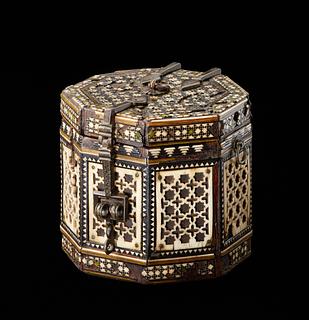
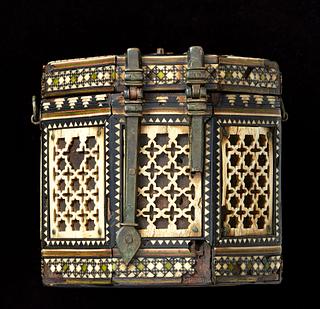
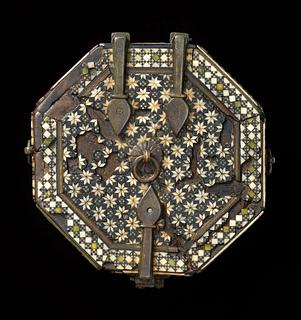
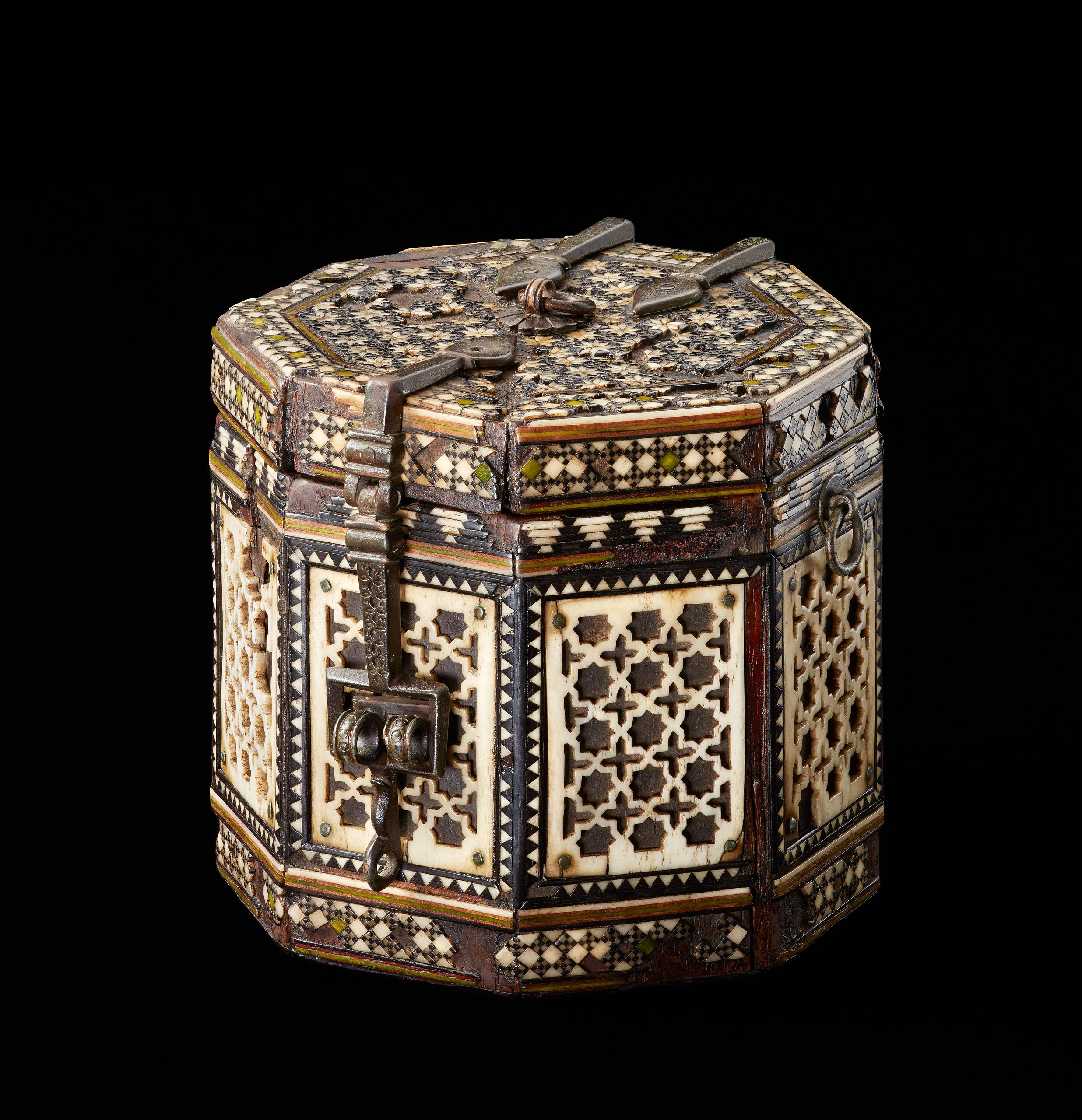
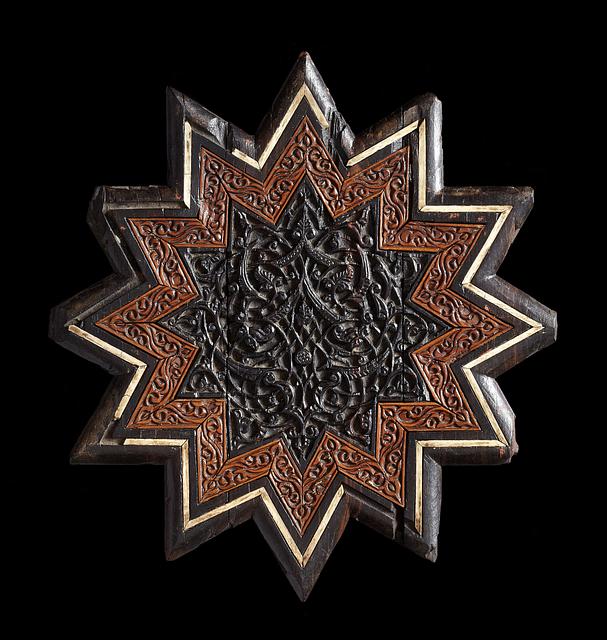
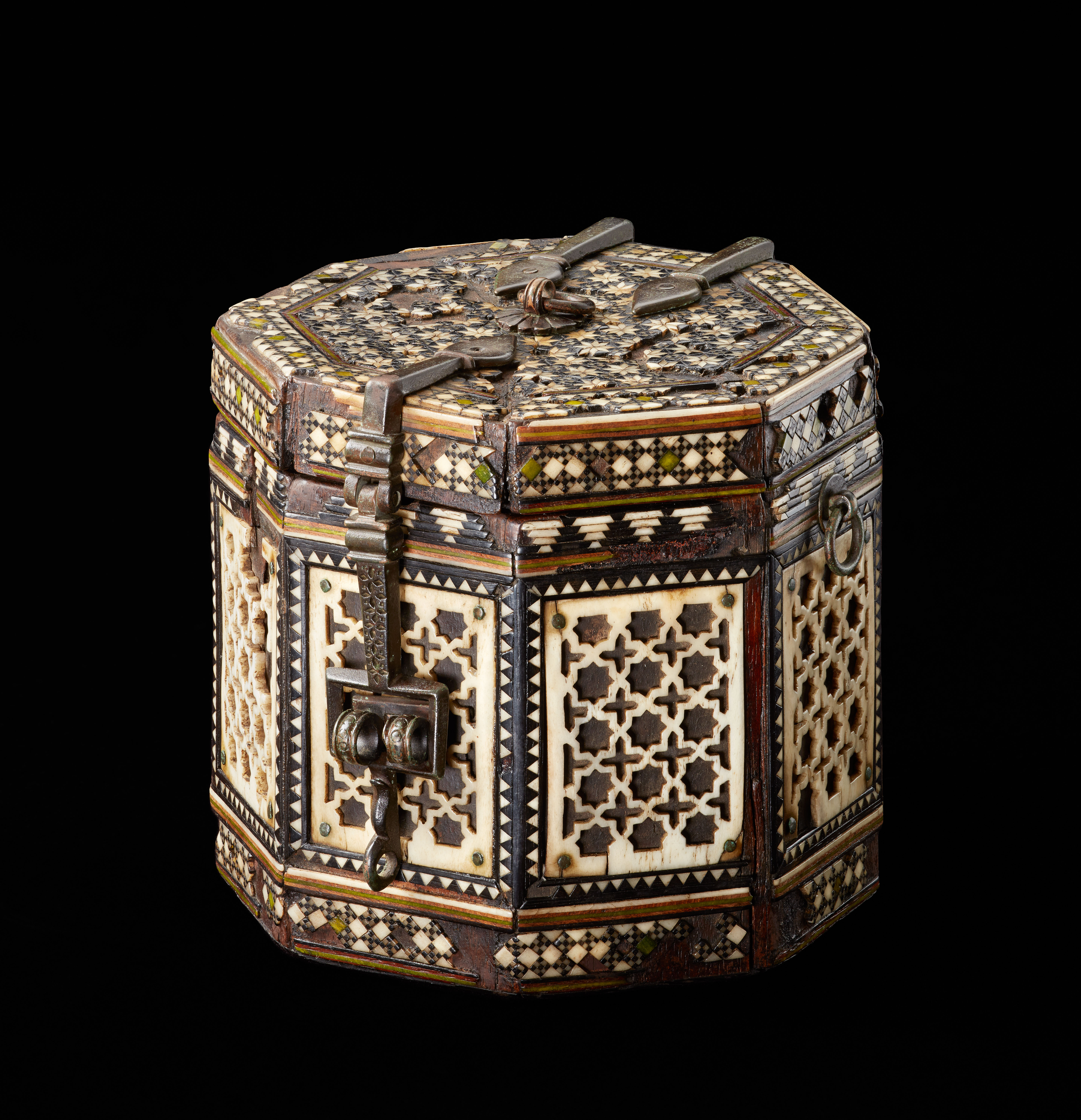
Octagonal box, wood inlaid with various types of wood and ivory and mounted with openwork ivory plaques. Iron fittings
Spain, Granada; 14th century
H: 11.2; Maximum W: 12.8 cm
Inventory number 1/2017
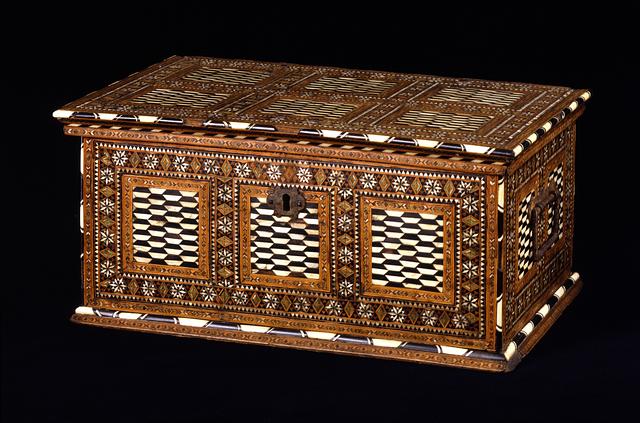
The box belongs to a small group of octagonal containers from Nasrid Spain, all made in the same or closely related technique, and the box in the David Collection is almost identical to one found in the Instituto de Valencia de Don Juan.1 They are covered with fine, mosaic-like inlays and in some cases have larger, openwork panels on the sides, where the light ivory contrasts with the dark wood underneath. Both the panels and the inlays were designed with the same types of geometrical patterns that can also be found e.g. on the period’s tile decorations in the Alhambra in Granada and on other inlaid objects, and the color scheme is also characteristic of Nasrid art.
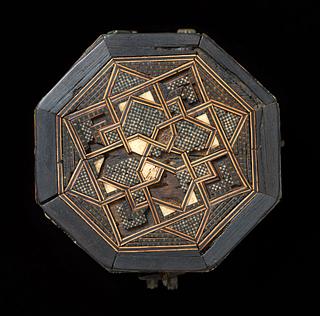
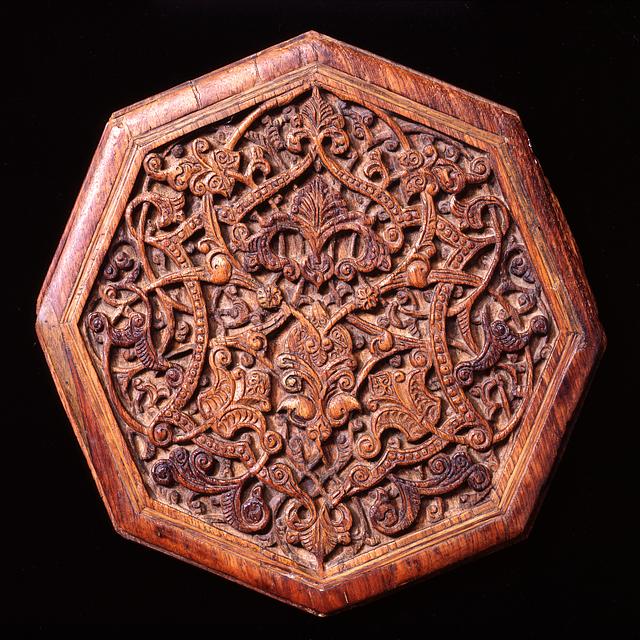
Some of the containers have stood on little ball feet, though this does not seem to have been the case here. The intact base, on the other hand, was inlaid with a complex, geometrical star pattern.
The box has finely worked iron hinges designed so that it could be locked.
As is true of contemporary and related cylindrical ivory boxes from Mamluk Egypt or Nasrid Spain, their use is uncertain (see 25/1999). The refined and painstaking workmanship, however, indicate that its contents were valuable. There is general agreement that a small number of related metal containers were used as inkwells. (See 16/2016.)
Some of the containers have stood on little ball feet, though this does not seem to have been the case here. The intact base, on the other hand, was inlaid with a complex, geometrical star pattern.
The box has finely worked iron hinges designed so that it could be locked.
As is true of contemporary and related cylindrical ivory boxes from Mamluk Egypt or Nasrid Spain, their use is uncertain (see 25/1999). The refined and painstaking workmanship, however, indicate that its contents were valuable. There is general agreement that a small number of related metal containers were used as inkwells. (See 16/2016.)
Published in
Published in
Unpublished
Footnotes
Footnotes
1.
See José Ferrandis: Marfiles Árabes de Occidente, Madrid, 1940, vol. 2, nos. 169-171.