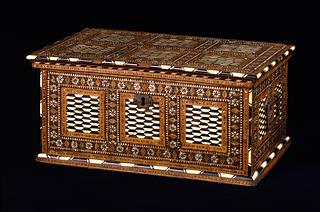
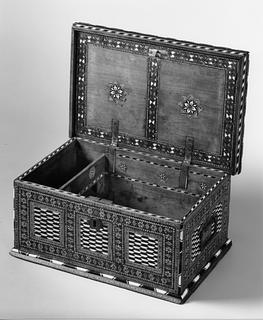
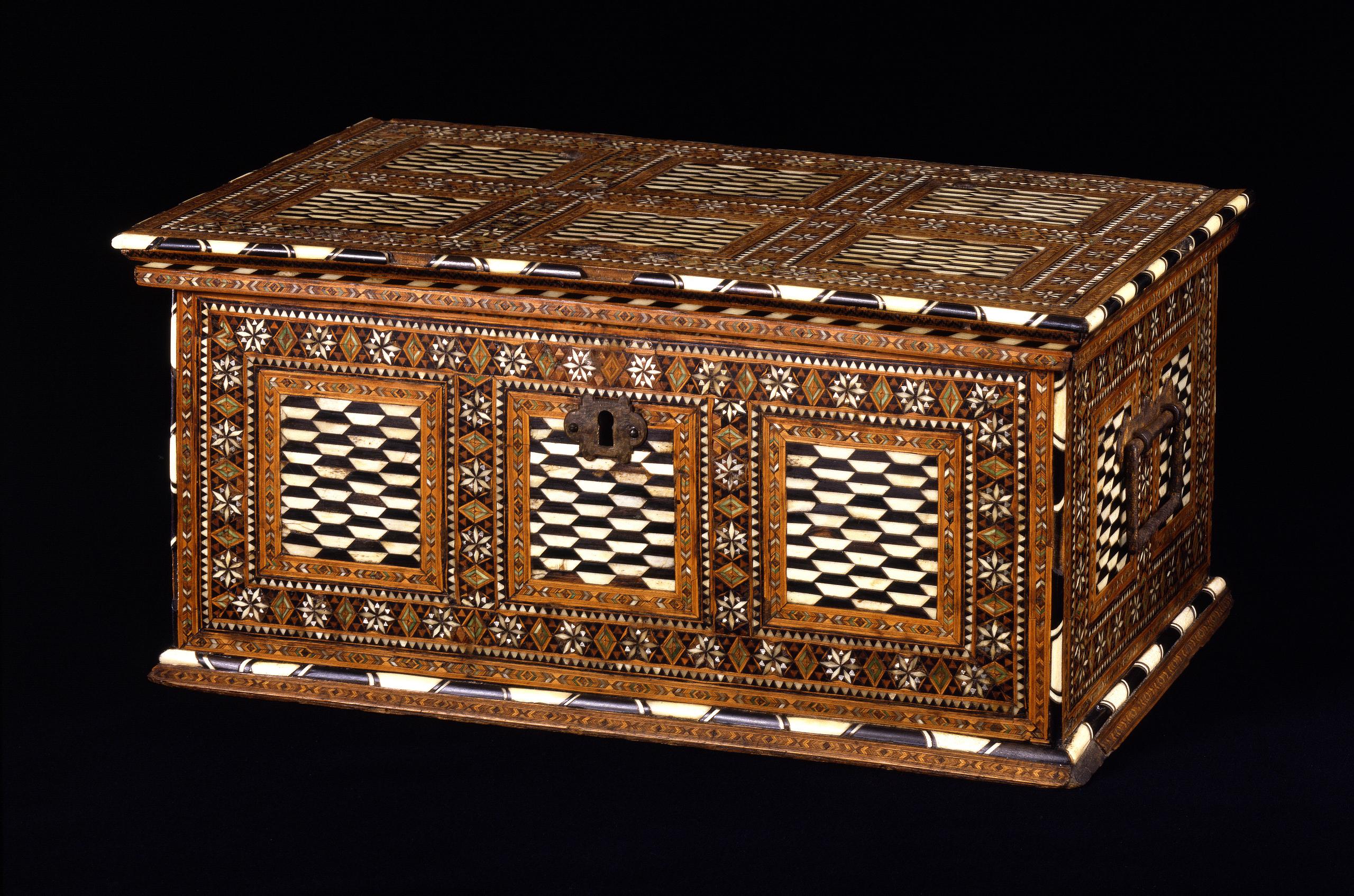
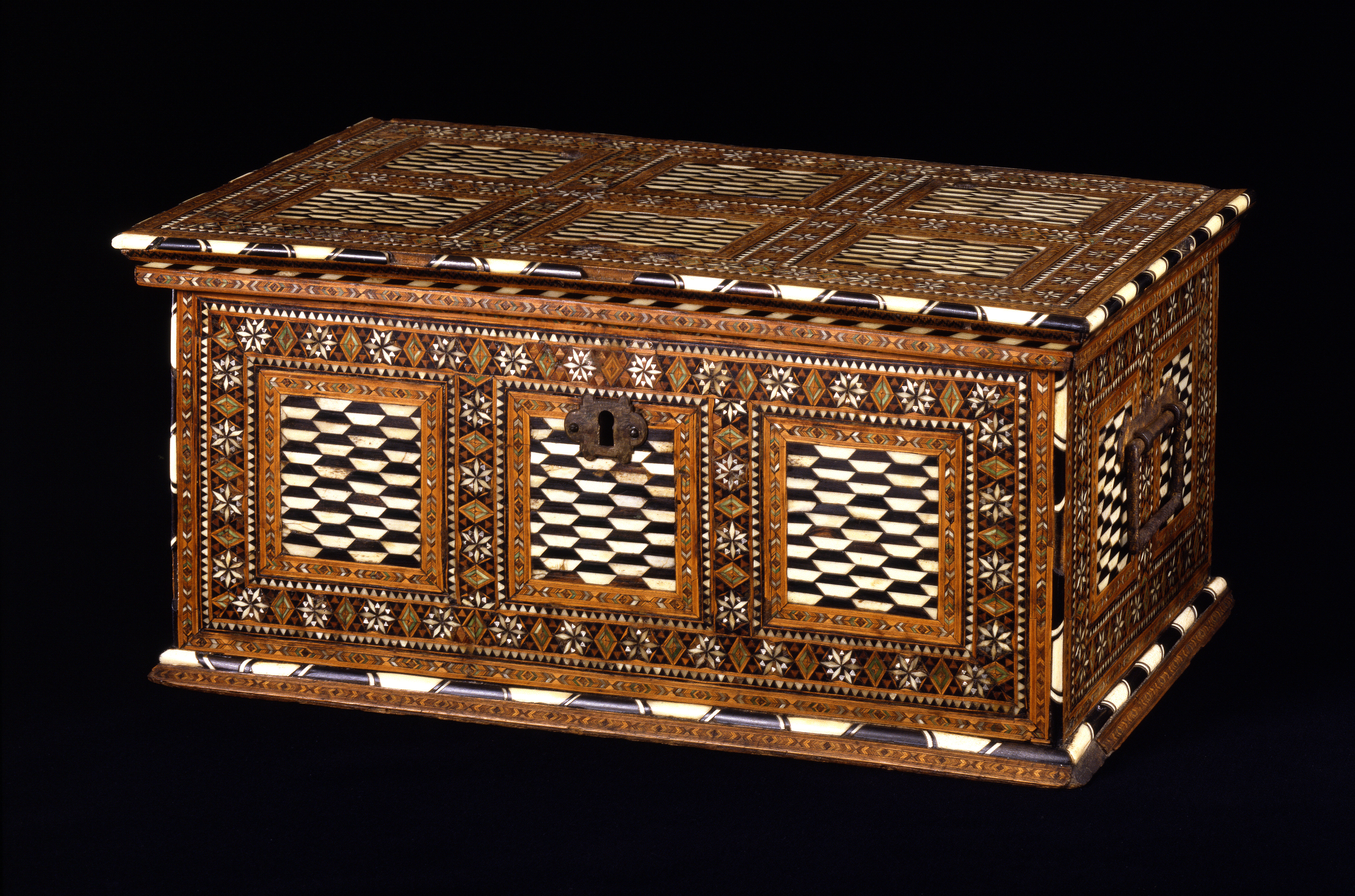
Wooden casket, inlaid with several types of wood, some stained, metal, and bone
Spain, Granada; 15th-16th century
H: 20; B: 43.3; D: 28 cm
Inventory number 84/2003
A geometric decoration like the one on this casket was produced by gluing precisely carved rods of wood, bone, and metal to form a block with a cross-section in the desired pattern, after which fine slices were cut and used to veneer the surface.
This type of decoration was used in large parts of the Islamic world. Under the Nasrids in Spain, inlay work – like many other forms of artistic expression – was characterized by a wealth of color. The inlaying technique lived on in Granada after the fall of the Nasrid realm in 1492, since Muslim artisans began to work for a Christian clientele. This casket might date to the Christian period.
This type of decoration was used in large parts of the Islamic world. Under the Nasrids in Spain, inlay work – like many other forms of artistic expression – was characterized by a wealth of color. The inlaying technique lived on in Granada after the fall of the Nasrid realm in 1492, since Muslim artisans began to work for a Christian clientele. This casket might date to the Christian period.
Published in
Published in
Sheila S. Blair and Jonathan M. Bloom (eds.): Cosmophilia. Islamic Art from the David Collection, Copenhagen, McMullen Museum of Art, Boston College, Boston 2006, cat.no. 49;