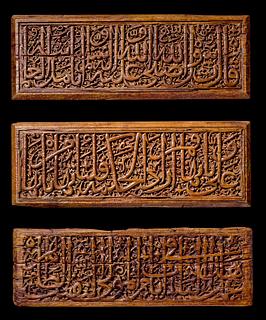
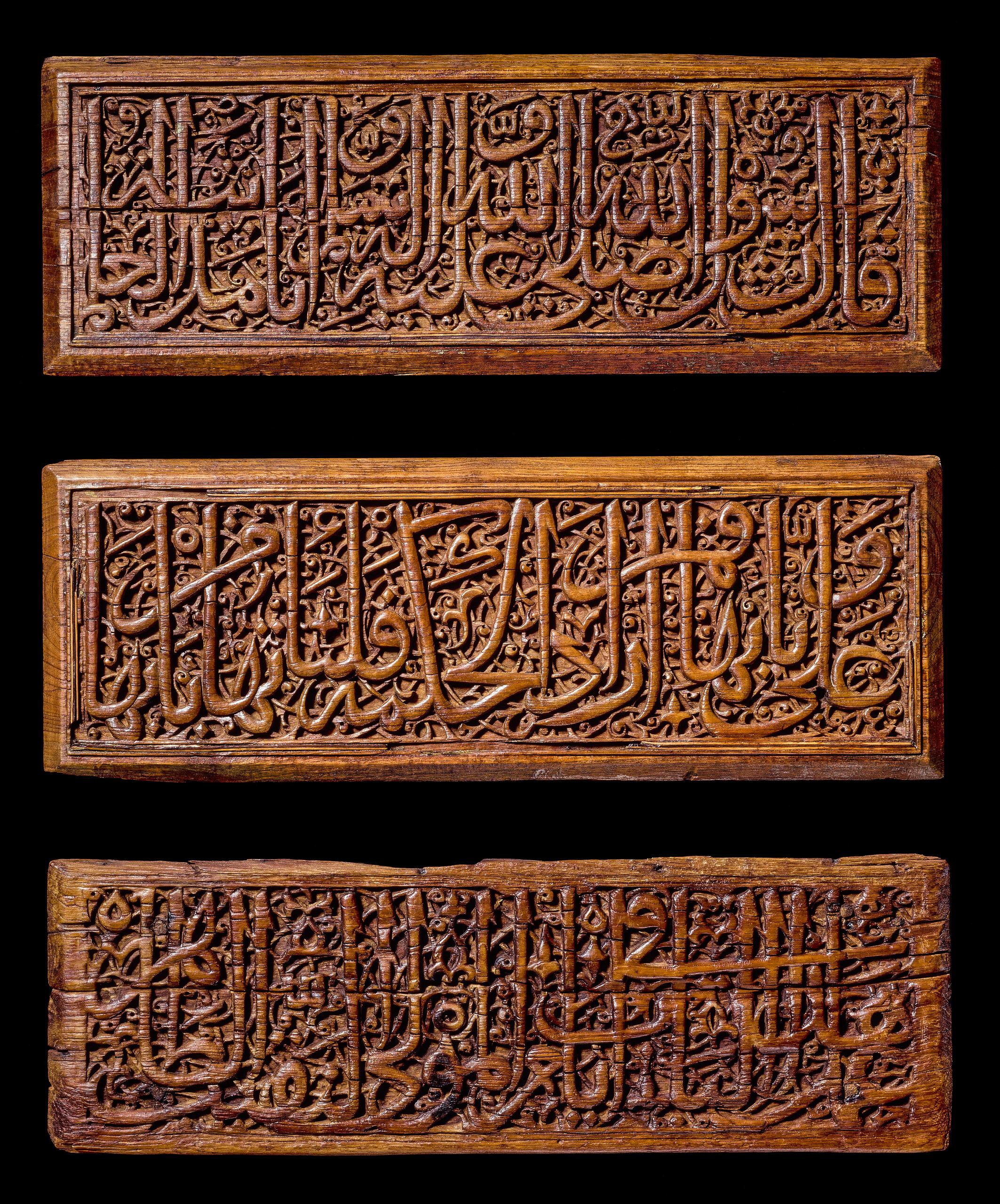
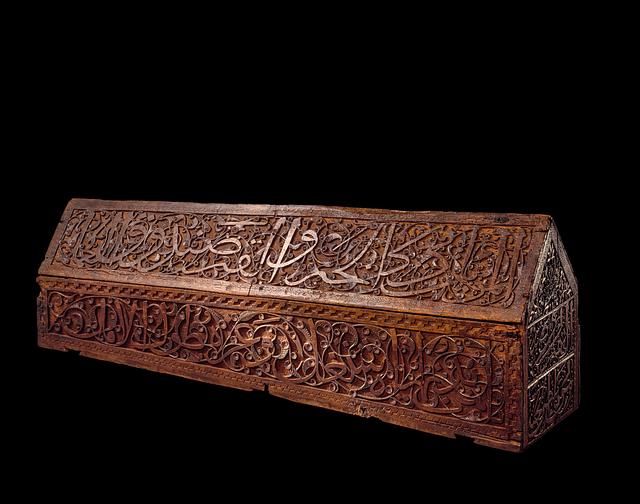
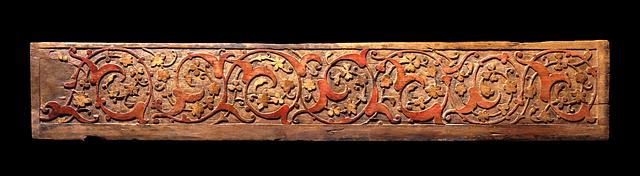
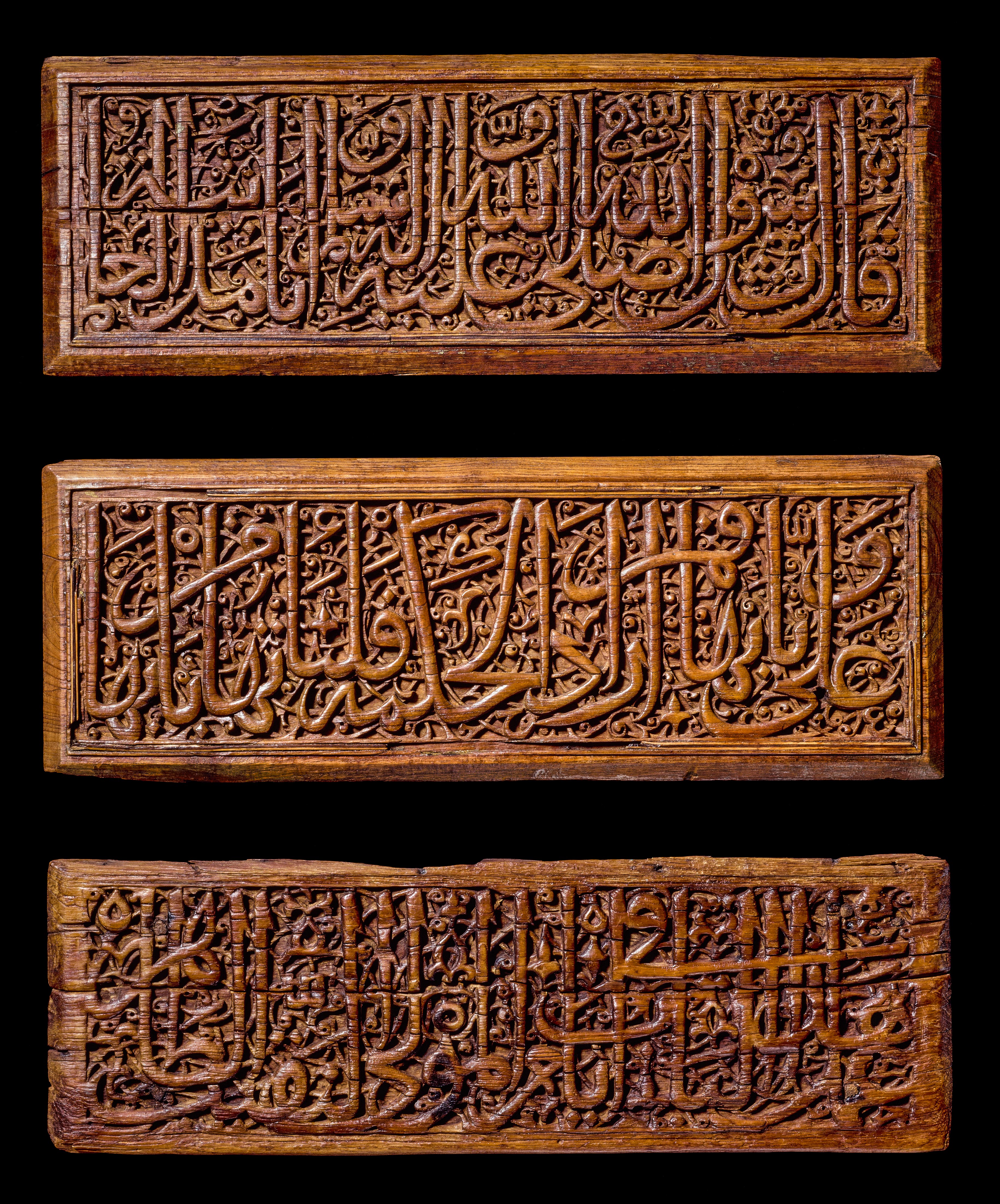
Three panels of carved wood from a double door
Iraq or Syria; 13th-14th century
Each panel: H: c. 20.5; W: 58.5 cm
Inventory number 3a/1994, 3b/1994 & 3c/1994
The panels come from a double door on which the two best preserved were at the top, while the third and a fourth, which has been lost, were in the far more exposed position at the bottom.
The cursive Tuluth calligraphy is found on a spiral network with an inconceivably dense and fine structure. The text includes a phrase that translates as, “I am the city of knowledge and Ali is its gateway,” which makes it probable that the doors come from a Shiite shrine.
The fourth panel might have told us who commissioned the doors and when, but the panels’ style indicates that they come from Syria or Iraq and date to the 13th-14th century.
The cursive Tuluth calligraphy is found on a spiral network with an inconceivably dense and fine structure. The text includes a phrase that translates as, “I am the city of knowledge and Ali is its gateway,” which makes it probable that the doors come from a Shiite shrine.
The fourth panel might have told us who commissioned the doors and when, but the panels’ style indicates that they come from Syria or Iraq and date to the 13th-14th century.
Published in
Published in
Kjeld von Folsach, Torben Lundbæk and Peder Mortensen (eds.): Sultan, Shah and Great Mughal: the history and culture of the Islamic world, The National Museum, Copenhagen 1996, cat. 49;
Kjeld von Folsach: Art from the World of Islam in The David Collection, Copenhagen 2001, cat. 429;
(Only a og b):
Farhad Daftary, Amyn B. Sajoo og Shainool Jiwa (eds.): The Shi'i world: pathways in tradition and modernity, London 2015, p. 245;
Joachim Meyer, Rasmus Bech Olsen and Peter Wandel: Beyond words: calligraphy from the World of Islam, The David Collection, Copenhagen 2024, cat. 16, pp. 140-141 (only b);
Kjeld von Folsach: Art from the World of Islam in The David Collection, Copenhagen 2001, cat. 429;
(Only a og b):
Farhad Daftary, Amyn B. Sajoo og Shainool Jiwa (eds.): The Shi'i world: pathways in tradition and modernity, London 2015, p. 245;
Joachim Meyer, Rasmus Bech Olsen and Peter Wandel: Beyond words: calligraphy from the World of Islam, The David Collection, Copenhagen 2024, cat. 16, pp. 140-141 (only b);