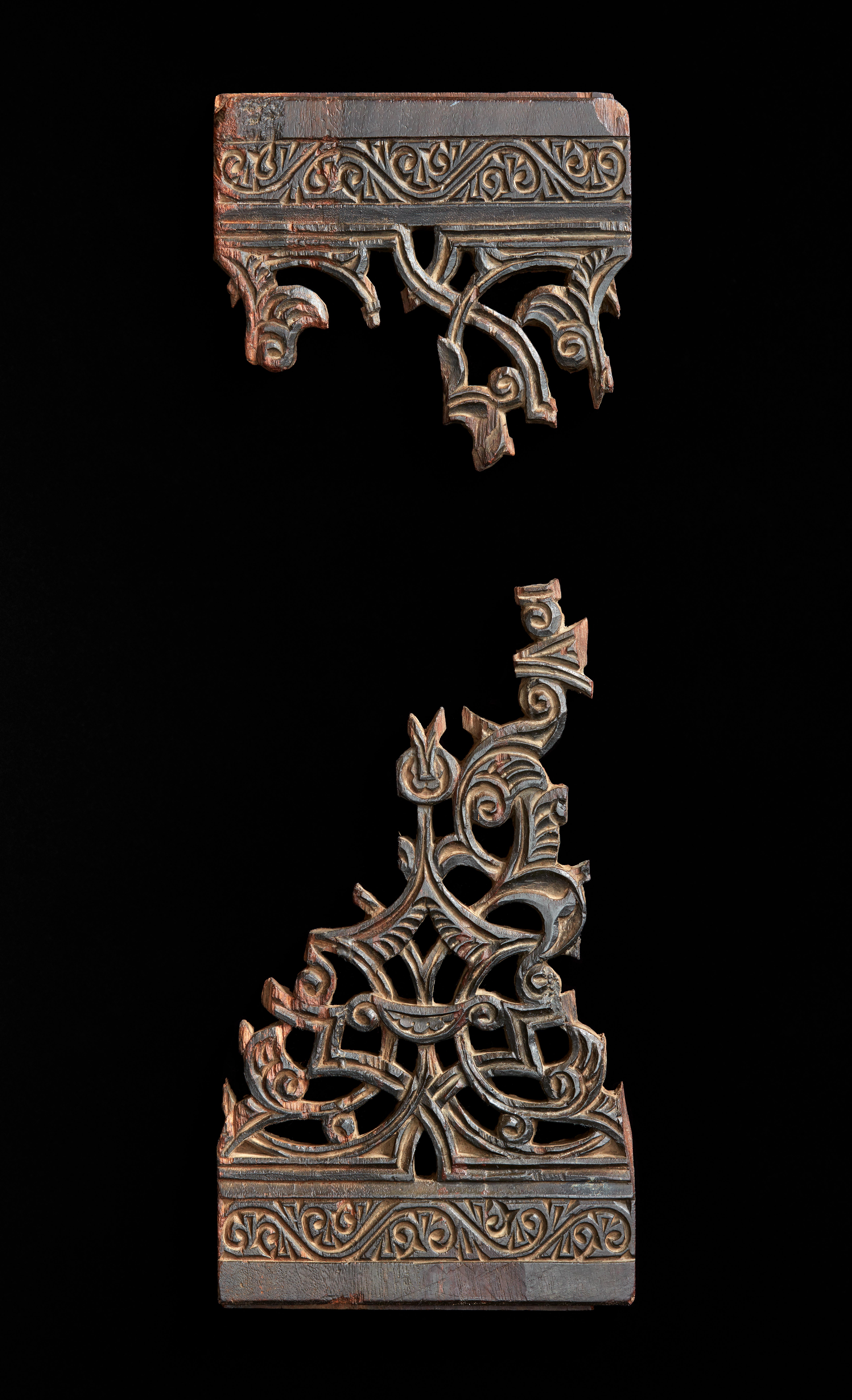
Two panel fragments of carved wood
Egypt; 13th-14th century
H: 13.3; B: 14.3; D: 1.5 cm (13a/2019)
H: 2.5; B: 14.3; D: 1.5 cm (13b/2019)
H: 2.5; B: 14.3; D: 1.5 cm (13b/2019)
Inventory number 13a/2019 & 13b/2019
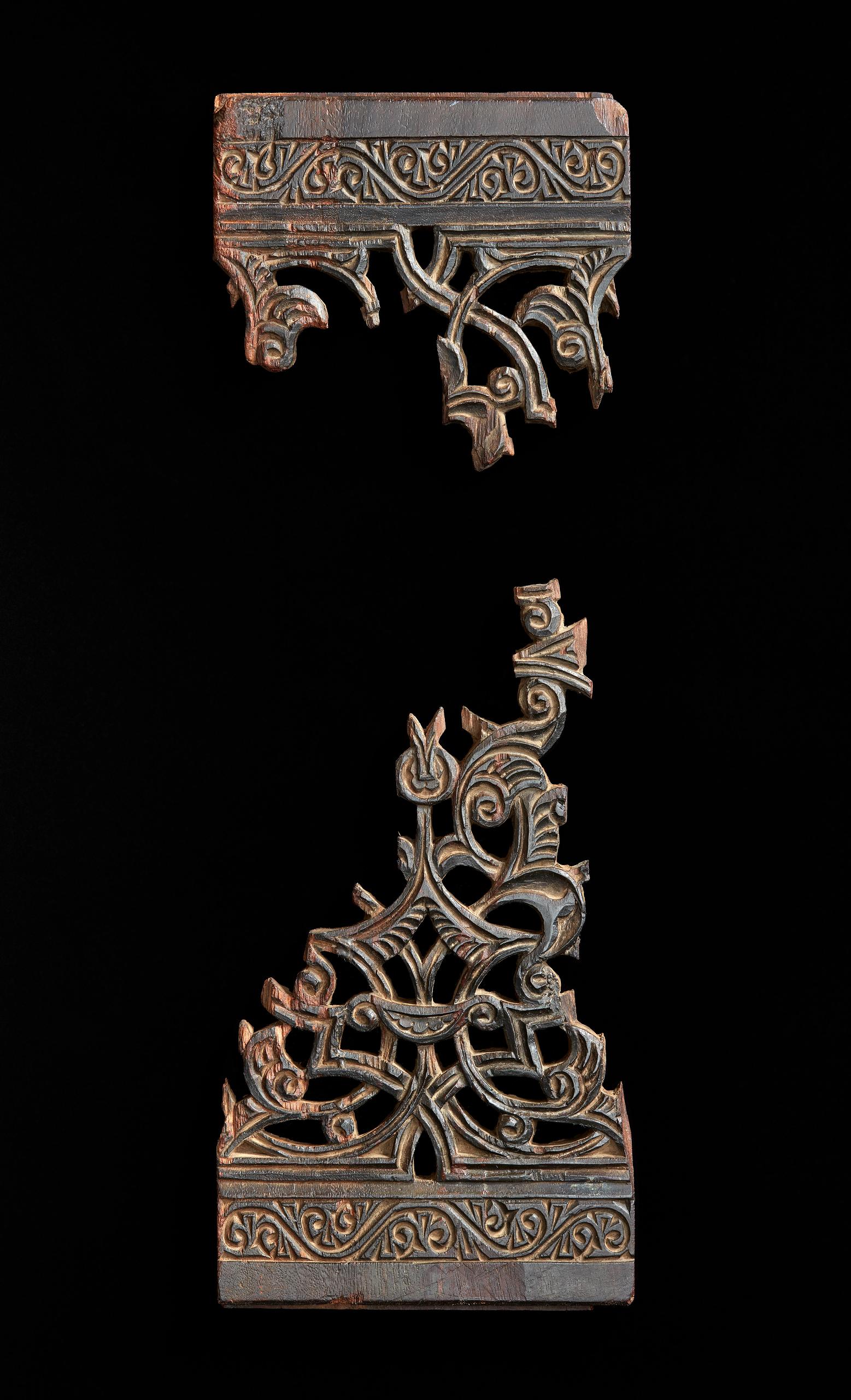
These two panel fragments are decorated with a complicated, openwork arabesque pattern built up around a vertical symmetry axis. The pattern is dominated by split leaves with curled ends that shoot from several overlapping stems. In addition, a wavy plant stem with several inwardly curling side shoots runs in a narrow band along the edge of both fragments.
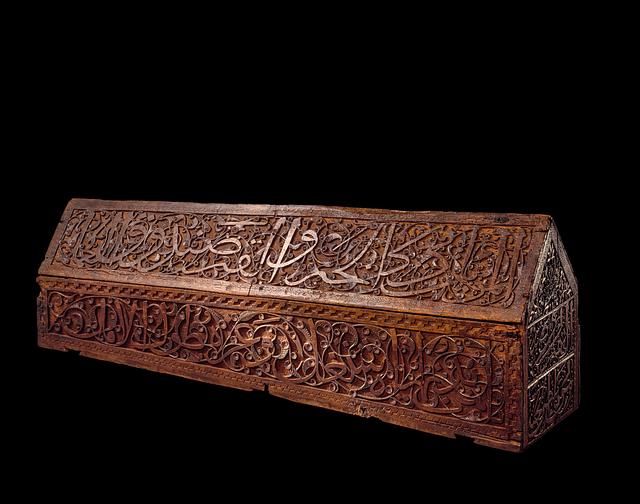
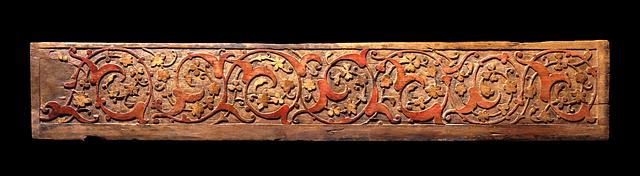
Both the overall composition and the individual plant forms are closely related to other carved pieces from Mamluk Egypt (7/1976, 6/2008), but similar arabesque patterns are also known for example from contemporary Iranian tiles (13/1987).
The dimensions, decorations, and wear and tear of the two fragments indicate that they originally came from the same narrow panel. It might, together with several identical panels, have formed a frieze on a door, a window, or a partition. Woodwork with composite friezes like this has for example been preserved in the Maridani mosque in Cairo that was built in around 1340.1
Both the overall composition and the individual plant forms are closely related to other carved pieces from Mamluk Egypt (7/1976, 6/2008), but similar arabesque patterns are also known for example from contemporary Iranian tiles (13/1987).
The dimensions, decorations, and wear and tear of the two fragments indicate that they originally came from the same narrow panel. It might, together with several identical panels, have formed a frieze on a door, a window, or a partition. Woodwork with composite friezes like this has for example been preserved in the Maridani mosque in Cairo that was built in around 1340.1