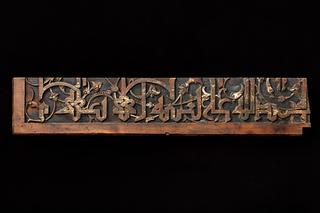
Carved wooden panel with remnants of paint
Egypt; 13th–14th century
H: 16.5; W: 83.5; D: 2 cm
Inventory number 12/2019
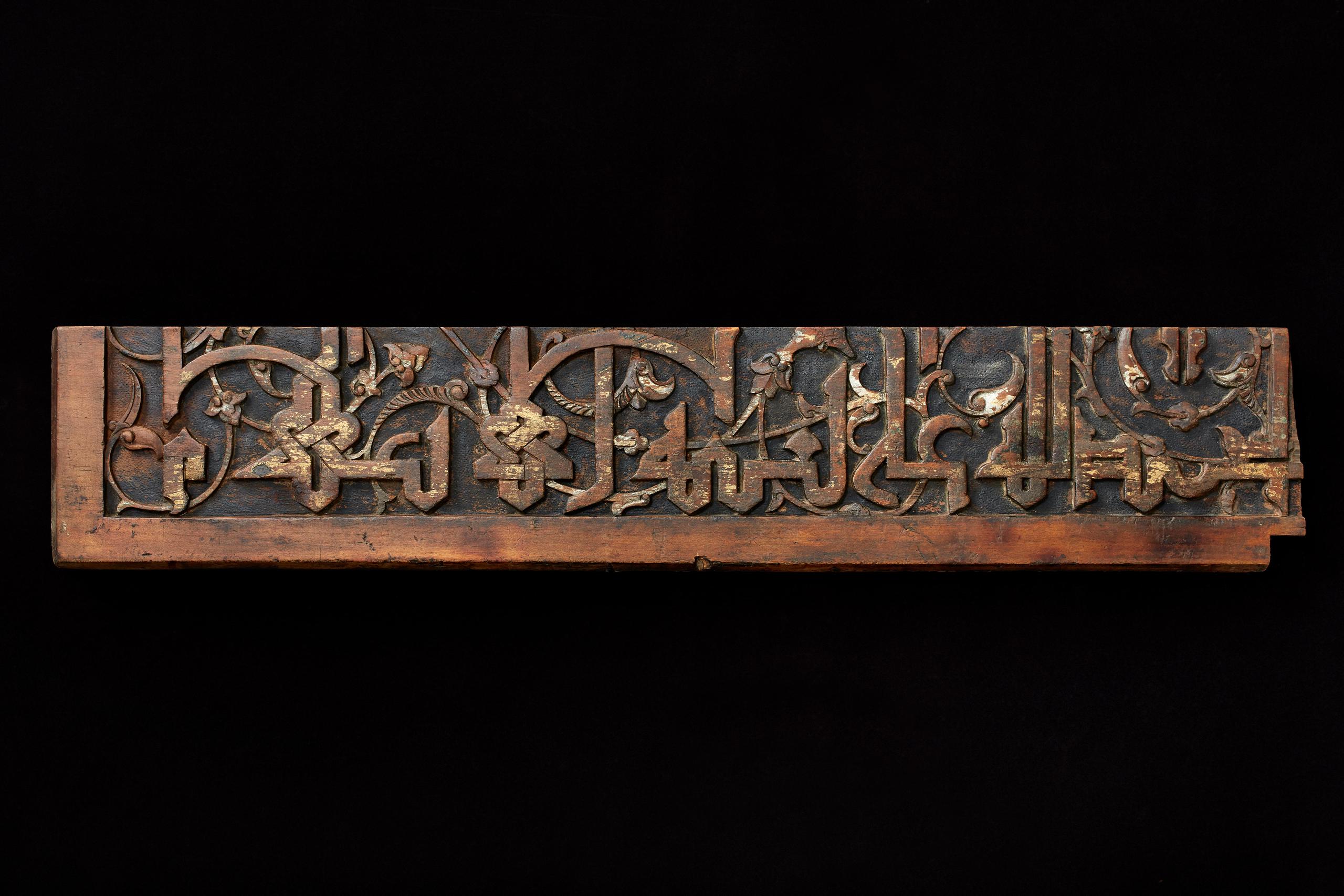
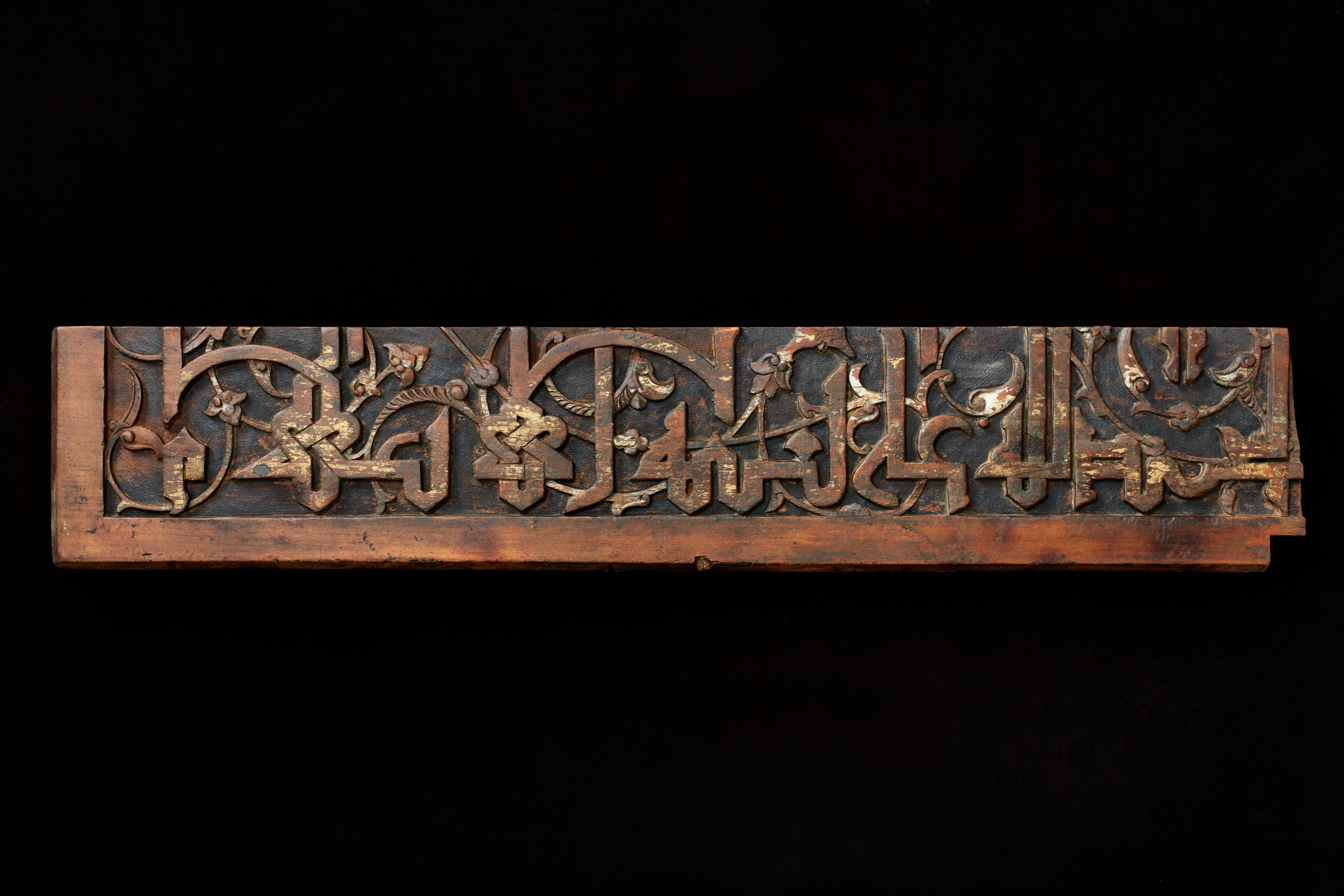
The main decoration of this panel consists of a crisply carved inscription in Kufi calligraphy with interwoven elements and decoratively rounded endings on several letters. This type of ornamented Kufi is difficult to read and in the late Middle Ages it was mainly used for purely decorative inscriptions with easily recognisable content.1 This is also the case here, where the text consists of a short pious phrase: ‘Praise be to God for the blessing of Islam’.
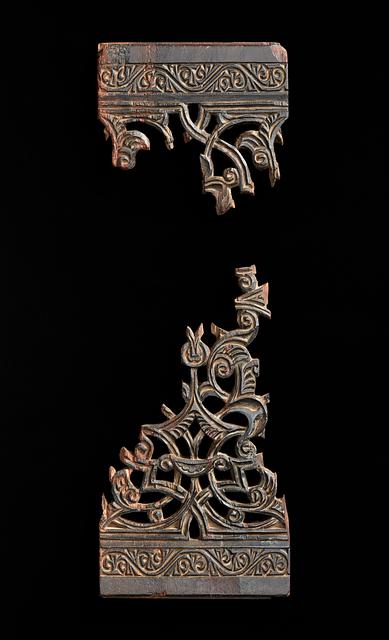
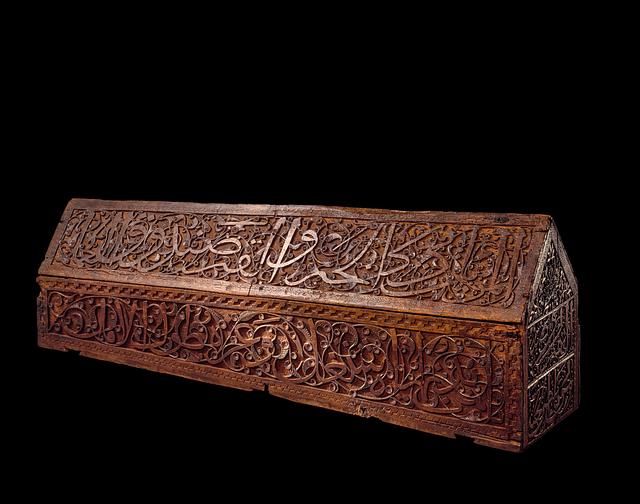
Behind the inscription is a deeper relief with plant stems bearing bi- and trilobed leaves and round flower heads. The combination of highlighted calligraphy and underlying plant patterns is typical of the period, and similar decorations appear on e.g. three door panels from Iraq or Syria (3a-c/1994) as well as on a cenotaph from Turkey (26/1976). In these cases, however, the inscriptions are done in the more readable Thuluth script.
Pigment remains reveal that the three layers of the panel have been painted in different colours: the inscription was originally yellow, possibly with a metallic tinge; the plant ornaments were light green, and the background still has its deep black-green colour.
The wide frame along the lower and left edges of the panel shows it to be a fragment of a larger panel, which was originally both taller and wider than the present section.
Behind the inscription is a deeper relief with plant stems bearing bi- and trilobed leaves and round flower heads. The combination of highlighted calligraphy and underlying plant patterns is typical of the period, and similar decorations appear on e.g. three door panels from Iraq or Syria (3a-c/1994) as well as on a cenotaph from Turkey (26/1976). In these cases, however, the inscriptions are done in the more readable Thuluth script.
Pigment remains reveal that the three layers of the panel have been painted in different colours: the inscription was originally yellow, possibly with a metallic tinge; the plant ornaments were light green, and the background still has its deep black-green colour.
The wide frame along the lower and left edges of the panel shows it to be a fragment of a larger panel, which was originally both taller and wider than the present section.
Published in
Published in
Unpublished;
Footnotes
Footnotes
1.
Sheila S. Blair: Islamic inscriptions, Edinburgh 1998, pp. 88-91.