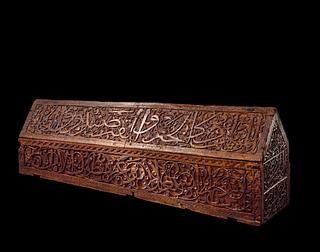
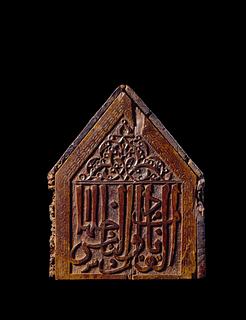
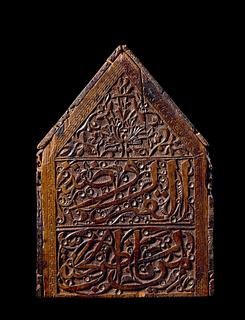
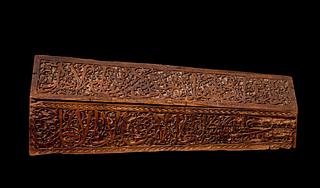
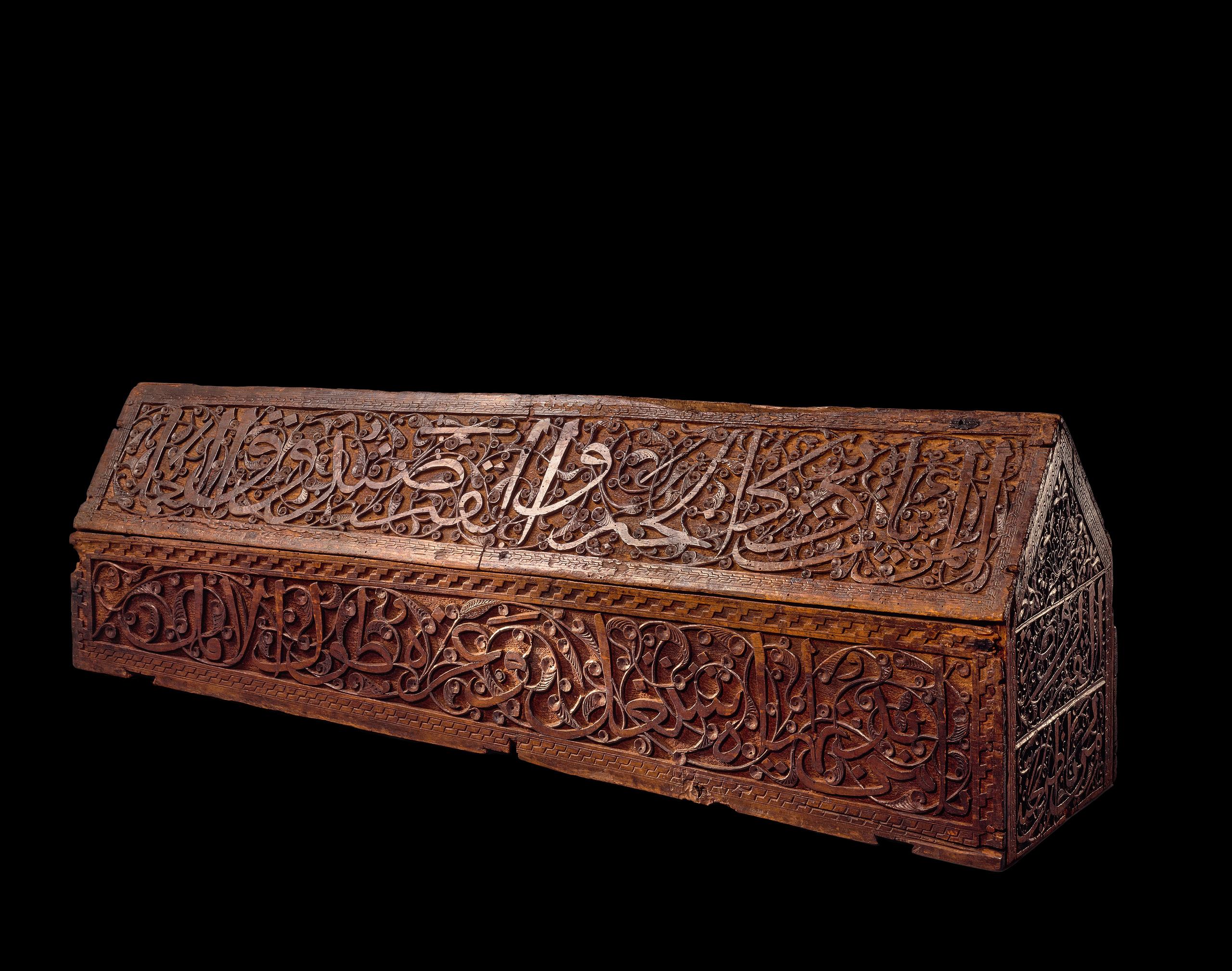
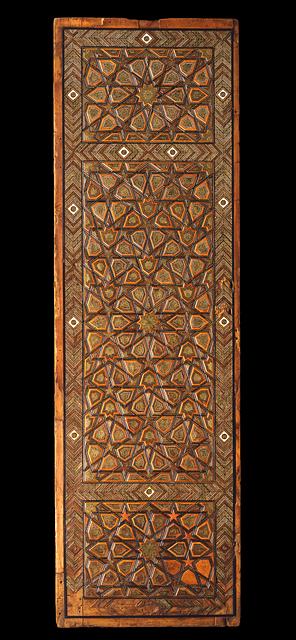
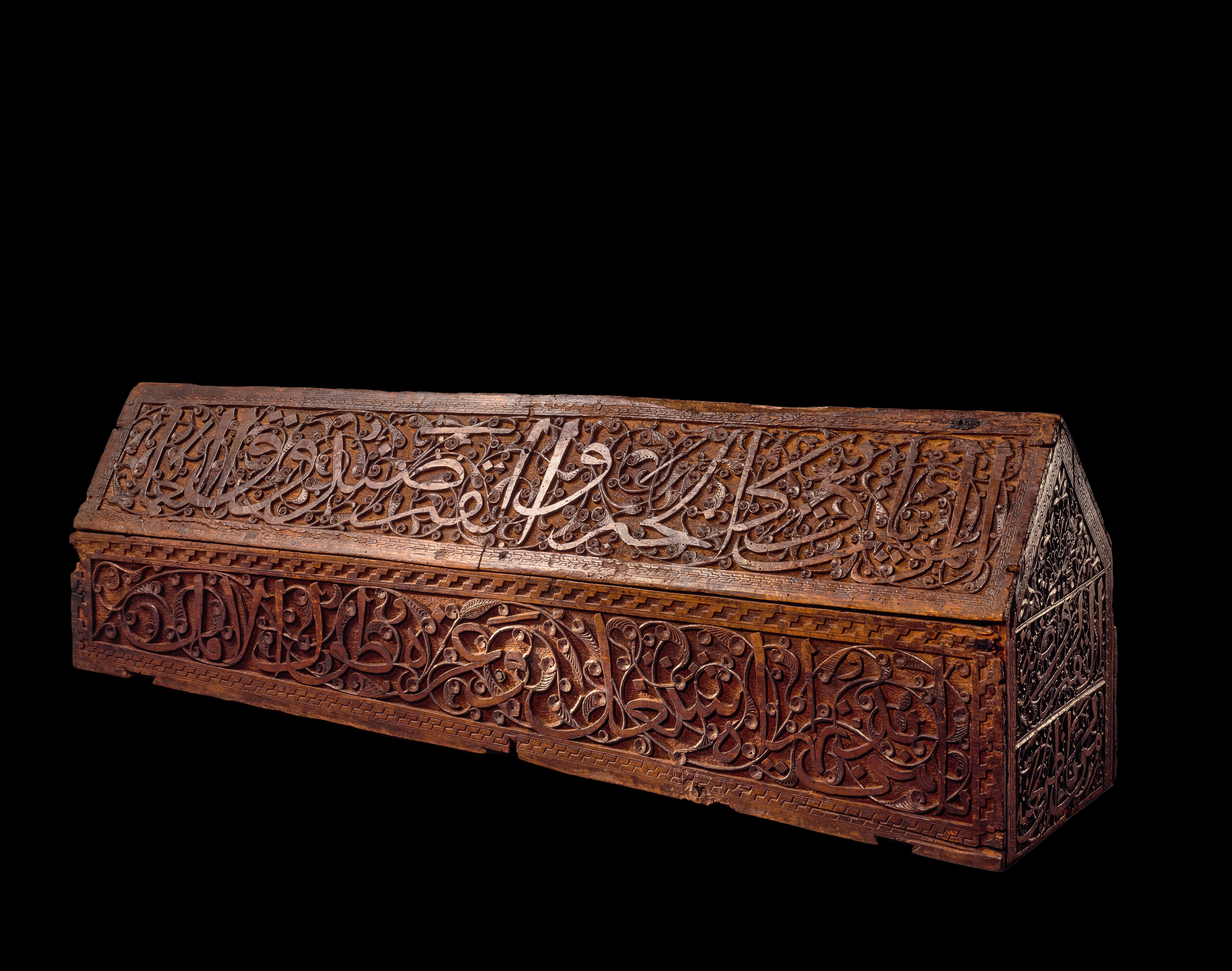
Cenotaph, carved walnut, from the mausoleum of Mahmud Khayrani in Aksehir
Turkey; c. 1340
H: 48.5; W: 36.5; L: 139 cm
Inventory number 26/1976
This cenotaph – a coffin-shaped monument placed over a grave – originally stood on a larger and equally richly carved box-shaped part, side by side with two similar sepulchral monuments of wood.
The wooden coffin bears witness to the high quality of the woodworking that was done in Anatolia under the Seljuks of Rum. The many gently receding spirals that form the vines’ shoots and ends of the leaves are typical features. The inscriptions on the cenotaph use poetical phrases to describe the various aspects of death and paradise, while the name of the deceased, Sayyid Ali ibn Muhammad ibn Mahmud, is inscribed on the box-shaped base, which is found today in the Museum of Turkish and Islamic Art in Istanbul.
The wooden coffin bears witness to the high quality of the woodworking that was done in Anatolia under the Seljuks of Rum. The many gently receding spirals that form the vines’ shoots and ends of the leaves are typical features. The inscriptions on the cenotaph use poetical phrases to describe the various aspects of death and paradise, while the name of the deceased, Sayyid Ali ibn Muhammad ibn Mahmud, is inscribed on the box-shaped base, which is found today in the Museum of Turkish and Islamic Art in Istanbul.
Published in
Published in
Friedrich Sarre: Erzeugnisse islamischer Kunst. Teil 2, Seldschukische Kleinkunst, Berlin 1909, p. 35, pl. XIV;
Oliver Hoare, David Sulzberger: 33 masterpieces of Islamic art from Ahuan Islamic Art 1974-1984, London 1984, p. 4;
Kjeld von Folsach: Davids Samling gennem 24 år, 1962-1985 = The David Collection: a 24-year period: 1962-1985, København 1985, pp. 60-61;
Art from the World of Islam. 8th-18th century, Louisiana, Humlebæk 1987, cat. 166;
Kjeld von Folsach: Islamic art. The David Collection, Copenhagen 1990, cat. 293;
Kjeld von Folsach, Torben Lundbæk and Peder Mortensen (eds.): Sultan, Shah and Great Mughal: the history and culture of the Islamic world, The National Museum, Copenhagen 1996, cat. 380;
Kjeld von Folsach: Art from the World of Islam in The David Collection, Copenhagen 2001, cat. 433;
Joachim Meyer, Rasmus Bech Olsen and Peter Wandel: Beyond words: calligraphy from the World of Islam, The David Collection, Copenhagen 2024, cat. 70, pp. 214-215;
Oliver Hoare, David Sulzberger: 33 masterpieces of Islamic art from Ahuan Islamic Art 1974-1984, London 1984, p. 4;
Kjeld von Folsach: Davids Samling gennem 24 år, 1962-1985 = The David Collection: a 24-year period: 1962-1985, København 1985, pp. 60-61;
Art from the World of Islam. 8th-18th century, Louisiana, Humlebæk 1987, cat. 166;
Kjeld von Folsach: Islamic art. The David Collection, Copenhagen 1990, cat. 293;
Kjeld von Folsach, Torben Lundbæk and Peder Mortensen (eds.): Sultan, Shah and Great Mughal: the history and culture of the Islamic world, The National Museum, Copenhagen 1996, cat. 380;
Kjeld von Folsach: Art from the World of Islam in The David Collection, Copenhagen 2001, cat. 433;
Joachim Meyer, Rasmus Bech Olsen and Peter Wandel: Beyond words: calligraphy from the World of Islam, The David Collection, Copenhagen 2024, cat. 70, pp. 214-215;