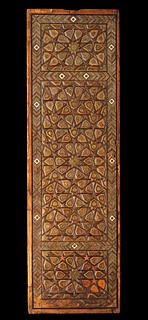
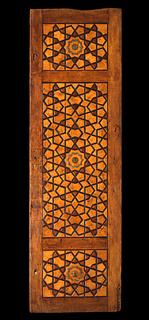
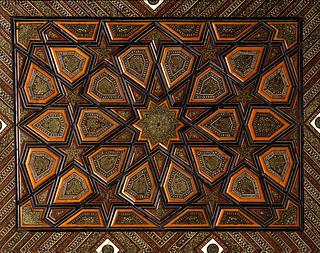
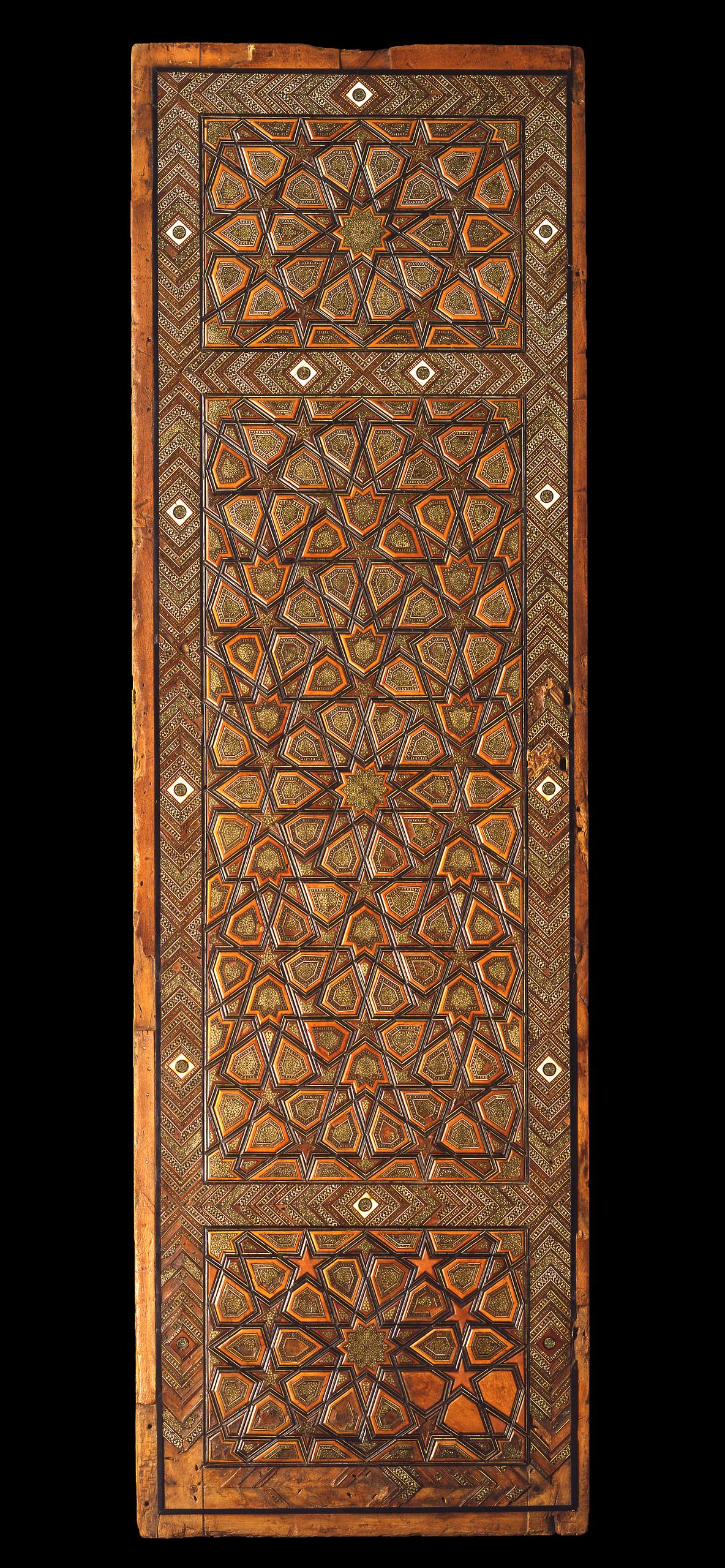
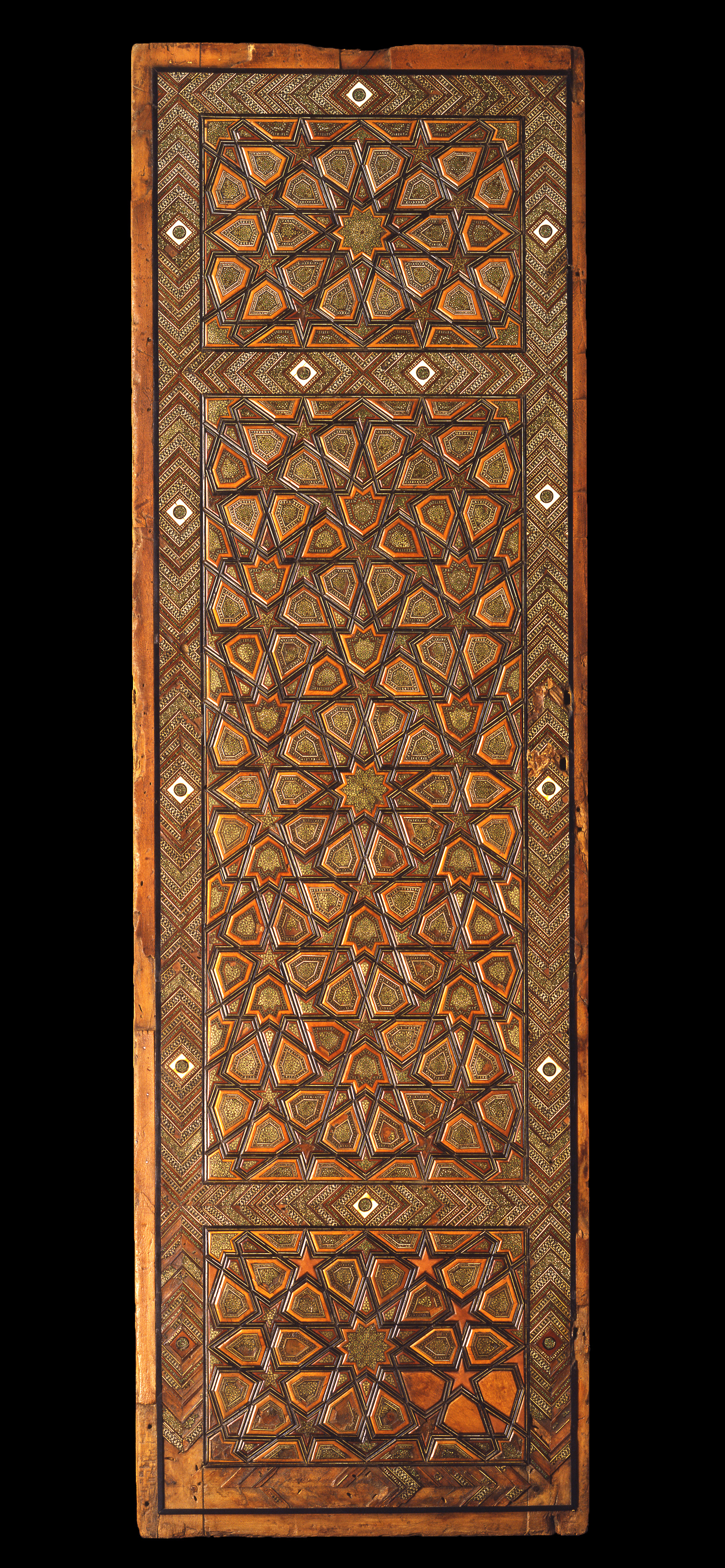
One side of a double door made of several types of wood, inlaid with brass, various types of bone, and wood
Iran; 17th century
H: 242.5; W: 74; D: 8.5 cm
Inventory number 35/2000
Both the front and the back are covered with closely related geometric patterns. The wooden sections on the front contain fine inlays using the khatamkari technique, which was probably developed in the 15th-16th century in the form shown here, and was often used to embellish Shiite shrines in Iran and Iraq.
Very little has been preserved that dates to earlier than the 19th century, when the technique enjoyed a renaissance. The perfection of the geometric patterns, which range here from very small to large, has traditionally been a metaphor of the infinity of God.
Very little has been preserved that dates to earlier than the 19th century, when the technique enjoyed a renaissance. The perfection of the geometric patterns, which range here from very small to large, has traditionally been a metaphor of the infinity of God.
Published in
Published in
Kjeld von Folsach: Art from the World of Islam in The David Collection, Copenhagen 2001, cat.no. 448;
Sheila S. Blair og Jonathan M. Bloom (eds.): Cosmophilia. Islamic Art from the David Collection, Copenhagen, McMullen Museum of Art, Boston College, Boston 2006, cat.no. 41;
Sheila S. Blair og Jonathan M. Bloom (eds.): Cosmophilia. Islamic Art from the David Collection, Copenhagen, McMullen Museum of Art, Boston College, Boston 2006, cat.no. 41;
Ivory, Wood, and Papier-mâché
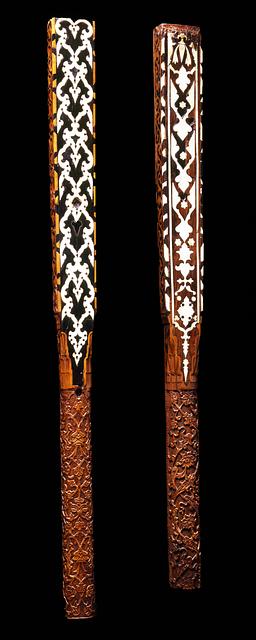
Fragmentary center posts, carved fruitwood, inlaid with other types of wood, ivory, and a black, pitch-like substance
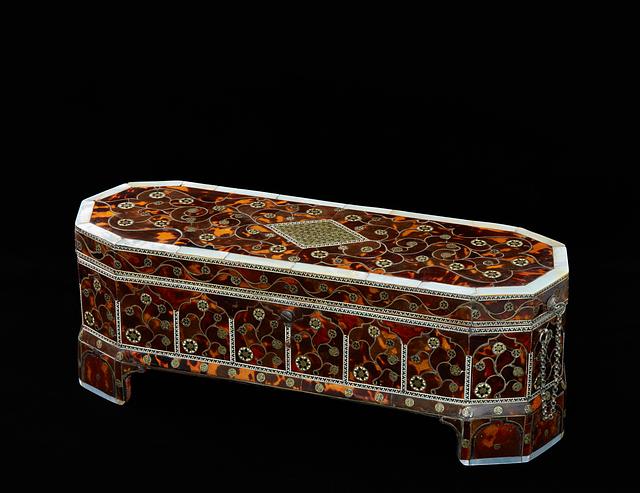_photo-Pernille-Klemp.jpg)
Pen case, wood decorated with tortoise shell, ivory, mother-of-pearl, ebony, and brass
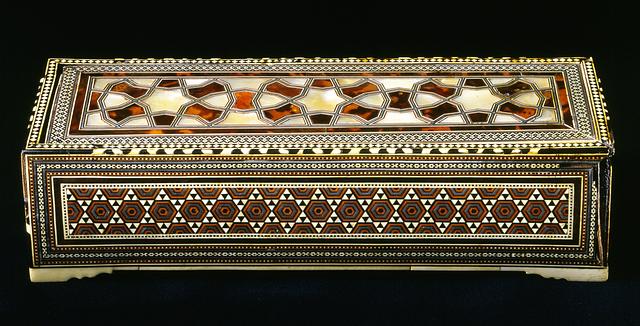
Pen case, wood, inlaid with ivory, mother-of-pearl, tortoise shell, ebony, and zinc
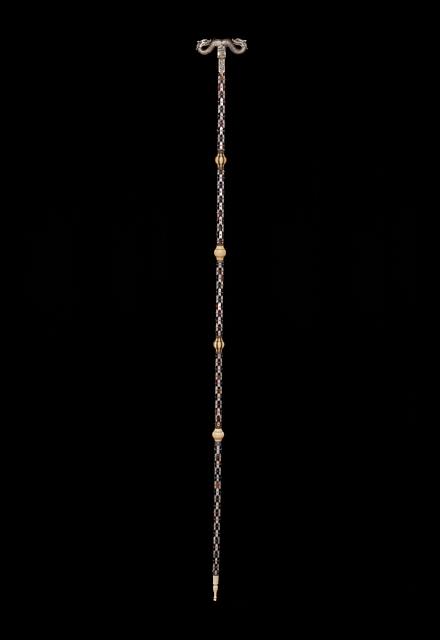
Wooden crozier mounted with plaques of tortoise shell and mother of pearl, with turned elements of ivory, and with a two-part top of cast silver