Theodor Philipsen (1840–1920)
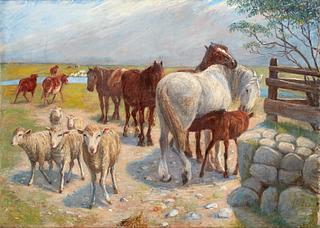
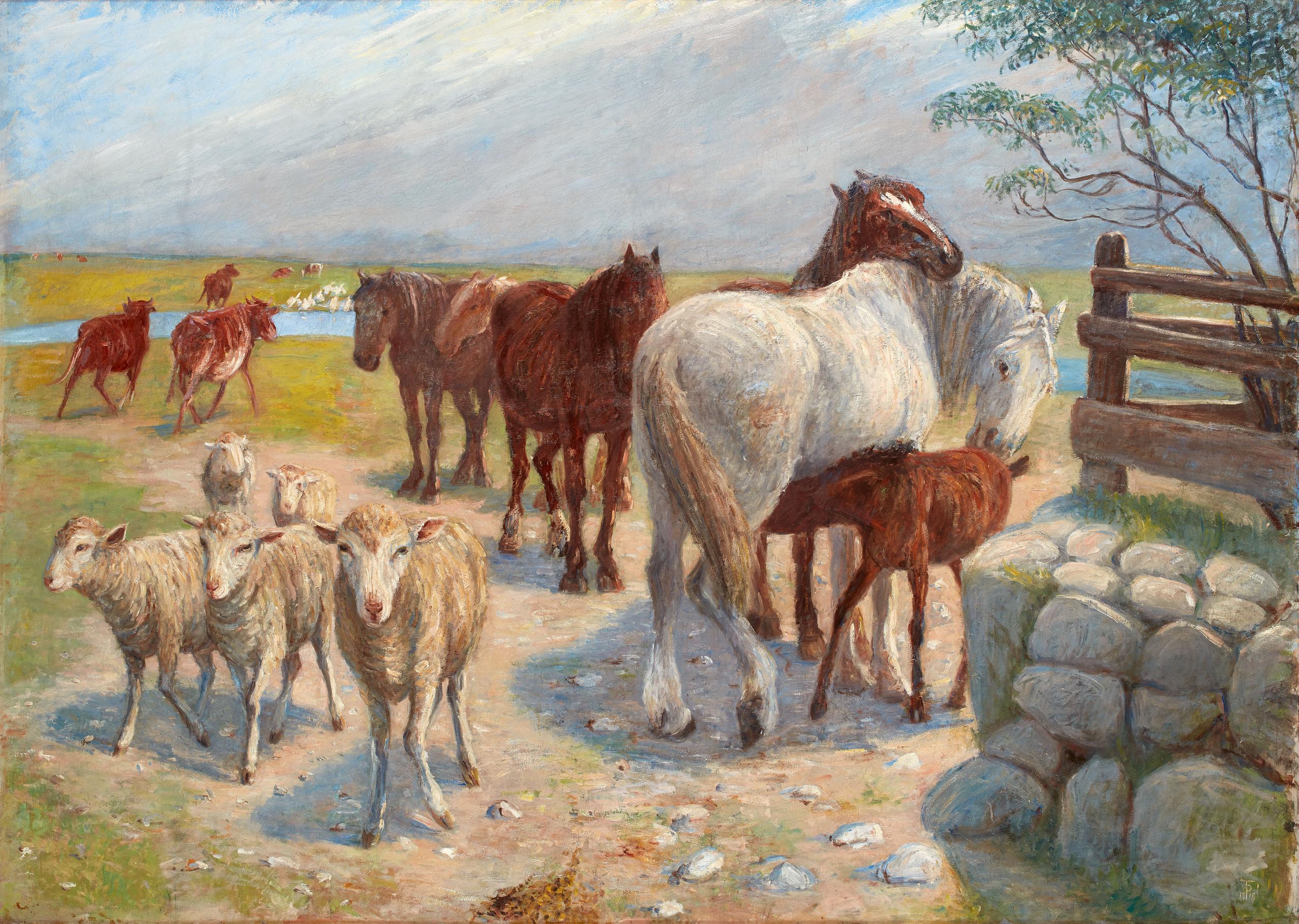
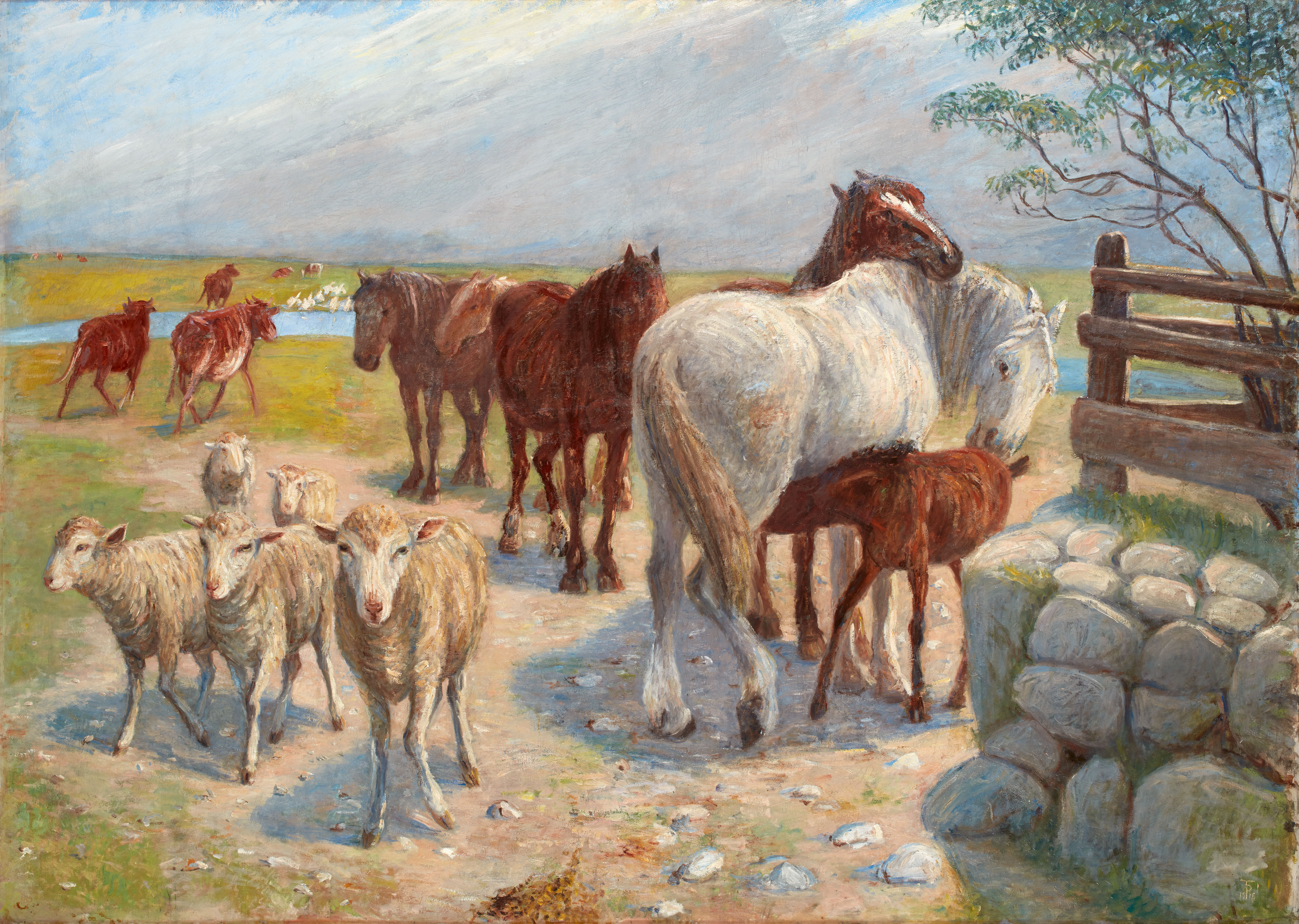
Horses behind The Waterer’s Close, 1915
Oil on canvas
128.5 x 179.5 cm
Inventory number B 402
Today, art historians speak of two poles in Theodor Philipsen’s imagery. One consists of scenes from outside of Denmark, where he painted various European cities and localities, while the other focuses on his native Denmark and depictions of its countryside – in particular the local area Kastrup-Amager with the island of Saltholm playing the main role.1
Philipsen first became aware of Saltholm in 1880. In the years that followed, he would spend almost every summer painting on the island, from dusk till dawn and for months on end.2 Nevertheless, his work from Saltholm did not reach its acme until the 1890s. One of the subjects to which Philipsen repeatedly returned was the watering site known as Hollænderbrønden – the Dutch Well. It was looked after daily by a waterer who ensured that the animals could drink water from the well. The waterer lived in a small cottage in a fenced-off area near the well, which went by the name The Waterer’s Close. This is the area seen on the right-hand side of Horses behind the Waterer’s Close, a work painted relatively late in Philipsen’s life – just a few years before he stopped working as a painter altogether due to impaired vision.
The David Collection is home to a total of thirteen works by Theodor Philipsen, including seven painting. Most of these works were acquired by C.L. David during the 1950s.
Philipsen first became aware of Saltholm in 1880. In the years that followed, he would spend almost every summer painting on the island, from dusk till dawn and for months on end.2 Nevertheless, his work from Saltholm did not reach its acme until the 1890s. One of the subjects to which Philipsen repeatedly returned was the watering site known as Hollænderbrønden – the Dutch Well. It was looked after daily by a waterer who ensured that the animals could drink water from the well. The waterer lived in a small cottage in a fenced-off area near the well, which went by the name The Waterer’s Close. This is the area seen on the right-hand side of Horses behind the Waterer’s Close, a work painted relatively late in Philipsen’s life – just a few years before he stopped working as a painter altogether due to impaired vision.
The David Collection is home to a total of thirteen works by Theodor Philipsen, including seven painting. Most of these works were acquired by C.L. David during the 1950s.
Published in
Published in
Erik Zahle: ”Billedkunst” in C.L. Davids Samling. Nogle Studier, [1], København 1948, pp. 209, 211, 244-245.
C.L. David: C.L. Davids Samling, København 1960, p. 26;
Finn Terman Frederiksen: Med solen i øjnene: en Theodor Philipsen-studie, Randers 1992, cat.no. 681, p. 185.
Finn Terman Frederiksen: Theodor Philipsen. En traditionsbevidst nyskaber, Randers Kunstmuseum, Randers 2016, BFL 931, p. 484.
C.L. David: C.L. Davids Samling, København 1960, p. 26;
Finn Terman Frederiksen: Med solen i øjnene: en Theodor Philipsen-studie, Randers 1992, cat.no. 681, p. 185.
Finn Terman Frederiksen: Theodor Philipsen. En traditionsbevidst nyskaber, Randers Kunstmuseum, Randers 2016, BFL 931, p. 484.
Footnotes
Footnotes
1.
Finn Terman Frederiksen: Theodor Philipsen. En traditionsbevidst nyskaber, Randers Kunstmuseum, Randers 2016, p. 354.
2.
Finn Terman Frederiksen: Theodor Philipsen. En traditionsbevidst nyskaber, Randers Kunstmuseum, Randers 2016, p. 304.
Paintings and drawings
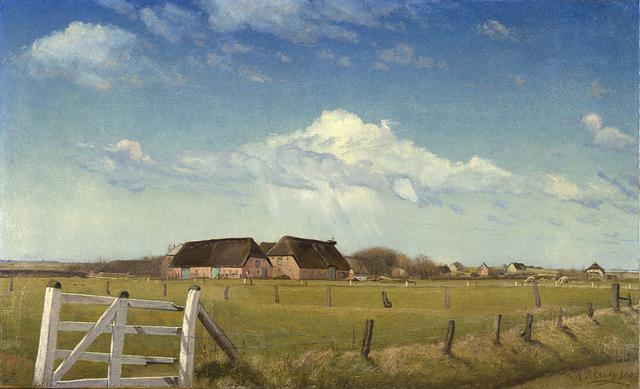
L.A. Ring (1854–1933)
Fenced-in Pastures by a Farm with a Stork’s Nest on the Roof, Skærbæk, 1903
Oil on canvas
Fenced-in Pastures by a Farm with a Stork’s Nest on the Roof, Skærbæk, 1903
Oil on canvas
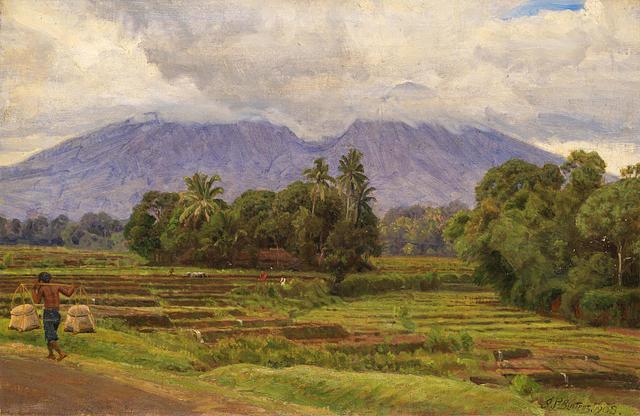
Joakim Skovgaard (1856–1933)
Evening Falls. Indigenous Houses on the Outskirts of Buitenzorg, Java, 1908
Oil on canvas
Evening Falls. Indigenous Houses on the Outskirts of Buitenzorg, Java, 1908
Oil on canvas
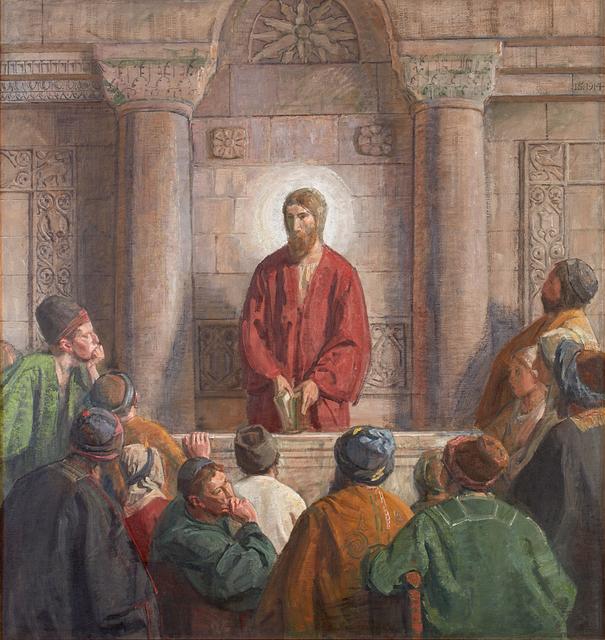
Joakim Skovgaard (1856–1933)
Jesus in the Synagogue, 1914
Oil on canvas
Jesus in the Synagogue, 1914
Oil on canvas
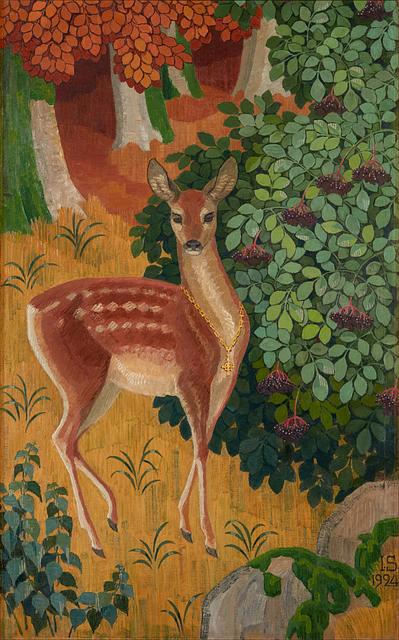
Joakim Skovgaard (1856–1933)
The Maiden in the Deerskin, 1924
Oil on canvas
The Maiden in the Deerskin, 1924
Oil on canvas