Theodor Philipsen (1840–1920)
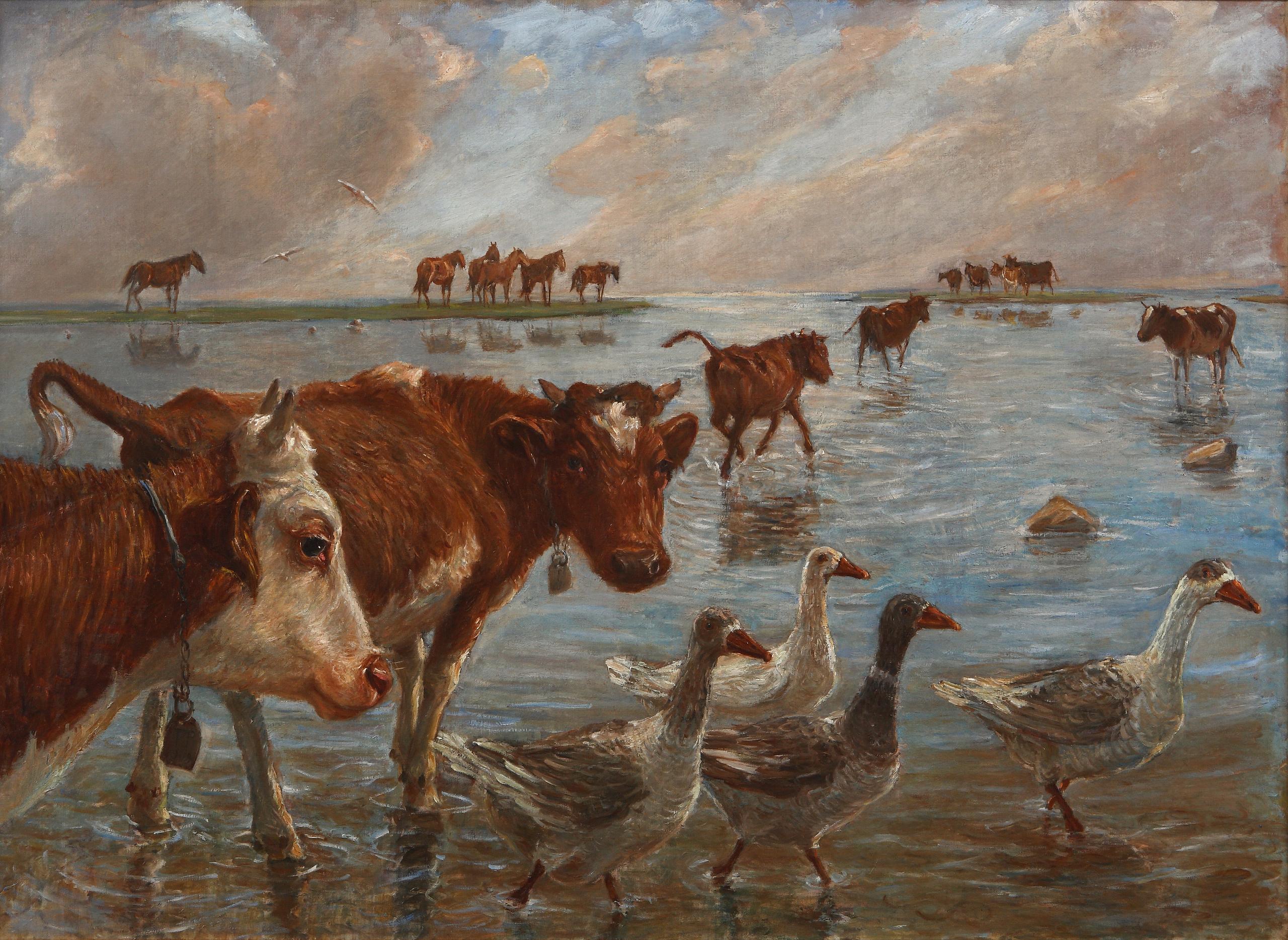
Stampede Weather, 1909
Oil on canvas
127,5 x 173,5 cm
Inventory number B 397
The small island of Saltholm in Øresund was an inexhaustible source of inspiration for Theodor Philipsen. Large herds of cattle from the farms on Amager were ferried over to the island, where they could roam freely during the summer months. Grazing livestock played the lead role in this distinctive circle of subject matter, which is today considered the undisputed acme of Philipsen’s art; a theme developed in step with his adoption of the Impressionist technique.
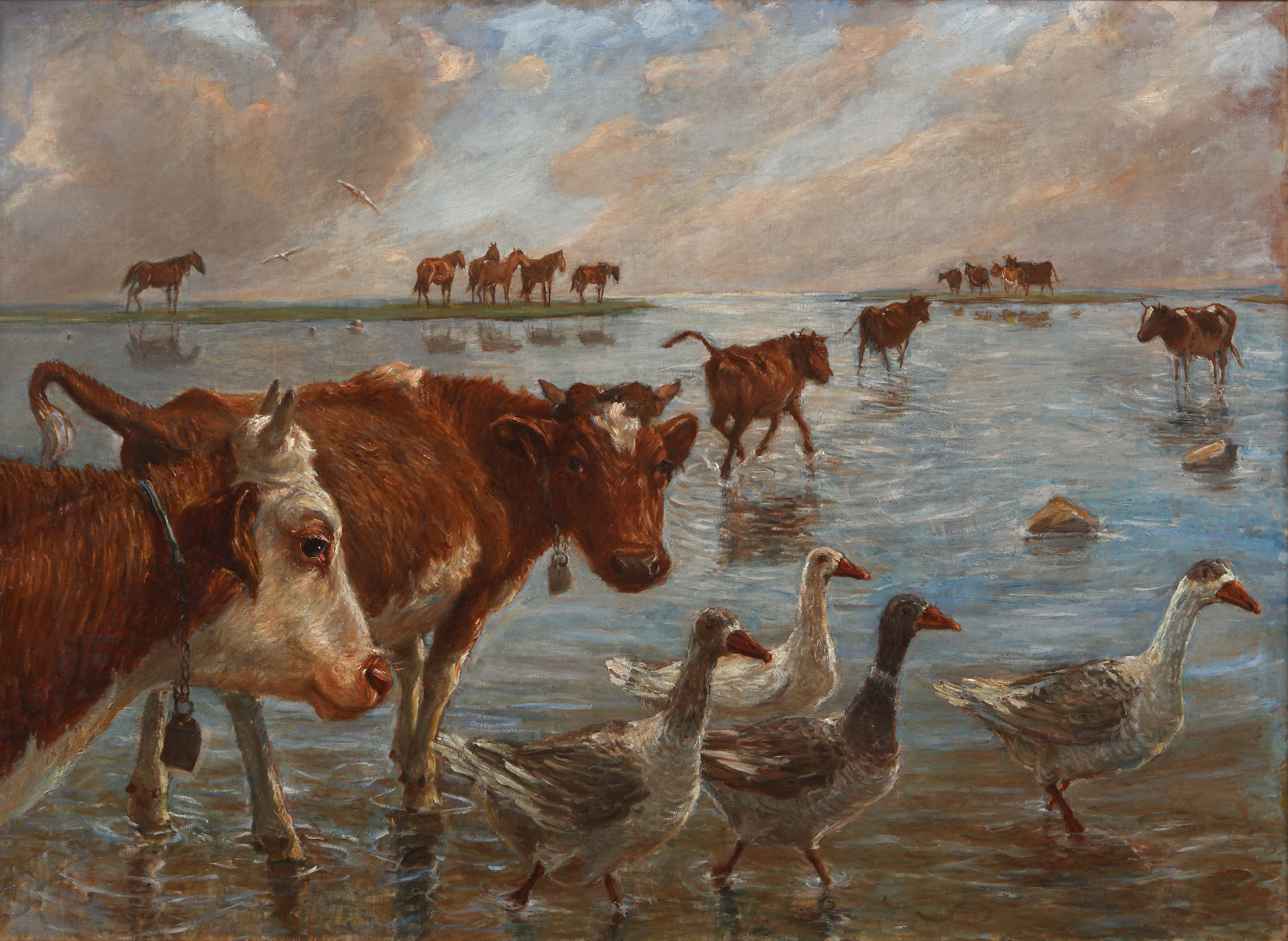
Philipsen found the subject of Stampede Weather on Saltholm, where geese, cows, horses and seagulls can all be seen in the flat island landscape. The most expressive element of the picture is the two cows to the left in the foreground, which appear to have noticed the painter’s presence and turned their gaze towards him. Also striking are the running cows in the picture’s middle distance as well as their shadows on the surface of the water, which add a prominent diagonal movement and sense of depth ending at the group of cows on the islets on the horizon. Finally, Stampede Weather exudes a sense of unrest and turmoil, felt in the drifting clouds in the sky, the patterns forming on the water and among the stampeding animals.
Stampede Weather was not painted out of doors, but back at Philipsen’s studio, as is evident from its careful composition and high degree of finish.1 There is nothing to suggest that it was painted by an artist who was, by this time, severely afflicted by impaired vision.
Philipsen found the subject of Stampede Weather on Saltholm, where geese, cows, horses and seagulls can all be seen in the flat island landscape. The most expressive element of the picture is the two cows to the left in the foreground, which appear to have noticed the painter’s presence and turned their gaze towards him. Also striking are the running cows in the picture’s middle distance as well as their shadows on the surface of the water, which add a prominent diagonal movement and sense of depth ending at the group of cows on the islets on the horizon. Finally, Stampede Weather exudes a sense of unrest and turmoil, felt in the drifting clouds in the sky, the patterns forming on the water and among the stampeding animals.
Stampede Weather was not painted out of doors, but back at Philipsen’s studio, as is evident from its careful composition and high degree of finish.1 There is nothing to suggest that it was painted by an artist who was, by this time, severely afflicted by impaired vision.
Published in
Published in
Karl Madsen: Maleren Theodor Philipsen, København 1912, p. 77;
Arbejder af Theodor Philipsen (1840-1920): Udstilling paa Charlottenborg Maj-Juni 1946, arranged by Kunstforeningen, Charlottenborg, København 1946, cat.no. 139;
Erik Zahle: ”Malerisamlingens vækst” in C.L. Davids Samling, Tredie del, København 1958, pp. 126, 154-155;
C.L. David: C.L. Davids Samling, København 1960, p. 26;
Finn Terman Frederiksen: Med solen i øjnene: en Theodor Philipsen-studie, Randers 1992, cat.no. 620, pp. 161, 182;
Finn Terman Frederiksen in Kjeld von Folsach and Nana Lund (eds.): Dansk kunst i Davids Samling – fra Philipsen til Saxbo, København 1995, cat.no. 6, pp. 60-61;
Finn Terman Frederiksen: Theodor Philipsen. En traditionsbevidst nyskaber, Randers Kunstmuseum, Randers 2016, fig. 32, pp. 335, 368-369, BFL 846, pp. 479-480;
Arbejder af Theodor Philipsen (1840-1920): Udstilling paa Charlottenborg Maj-Juni 1946, arranged by Kunstforeningen, Charlottenborg, København 1946, cat.no. 139;
Erik Zahle: ”Malerisamlingens vækst” in C.L. Davids Samling, Tredie del, København 1958, pp. 126, 154-155;
C.L. David: C.L. Davids Samling, København 1960, p. 26;
Finn Terman Frederiksen: Med solen i øjnene: en Theodor Philipsen-studie, Randers 1992, cat.no. 620, pp. 161, 182;
Finn Terman Frederiksen in Kjeld von Folsach and Nana Lund (eds.): Dansk kunst i Davids Samling – fra Philipsen til Saxbo, København 1995, cat.no. 6, pp. 60-61;
Finn Terman Frederiksen: Theodor Philipsen. En traditionsbevidst nyskaber, Randers Kunstmuseum, Randers 2016, fig. 32, pp. 335, 368-369, BFL 846, pp. 479-480;
Footnotes
Footnotes
1.
Finn Terman Frederiksen: Theodor Philipsen. En traditionsbevidst nyskaber, Randers Kunstmuseum, Randers 2016, p. 369.
Paintings and drawings
Theodor Philipsen (1840–1920)
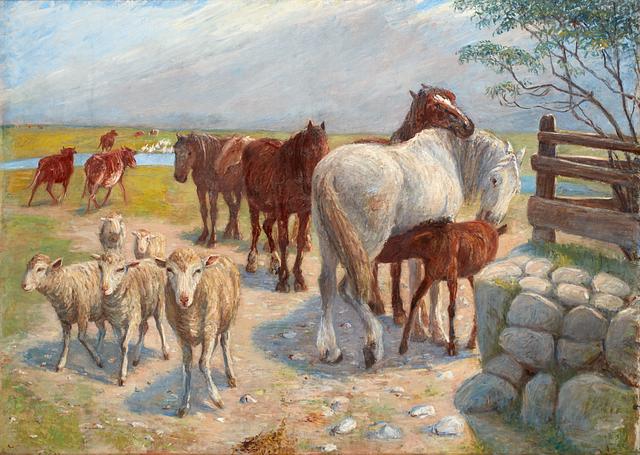
Horses behind The Waterer’s Close, 1915
Oil on canvas
Horses behind The Waterer’s Close, 1915
Oil on canvas
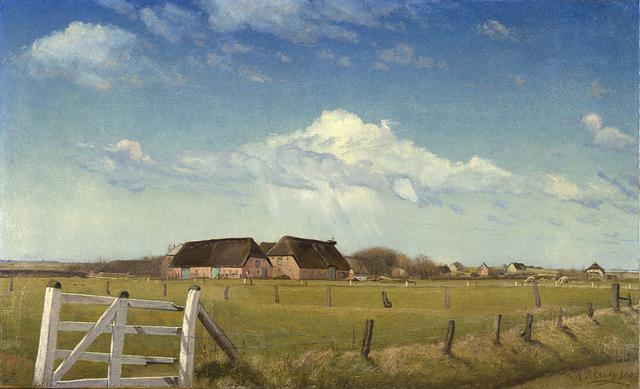
L.A. Ring (1854–1933)
Fenced-in Pastures by a Farm with a Stork’s Nest on the Roof, Skærbæk, 1903
Oil on canvas
Fenced-in Pastures by a Farm with a Stork’s Nest on the Roof, Skærbæk, 1903
Oil on canvas
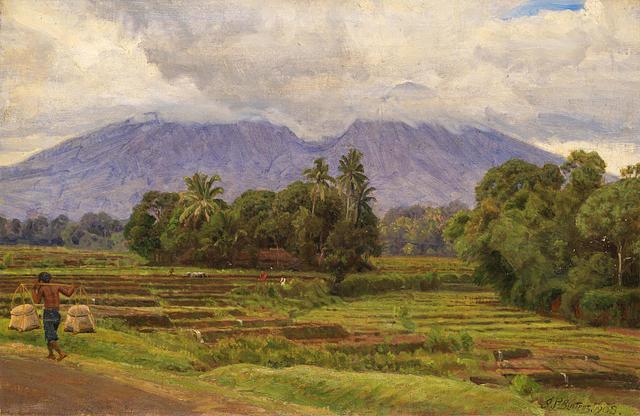
Joakim Skovgaard (1856–1933)
Evening Falls. Indigenous Houses on the Outskirts of Buitenzorg, Java, 1908
Oil on canvas
Evening Falls. Indigenous Houses on the Outskirts of Buitenzorg, Java, 1908
Oil on canvas
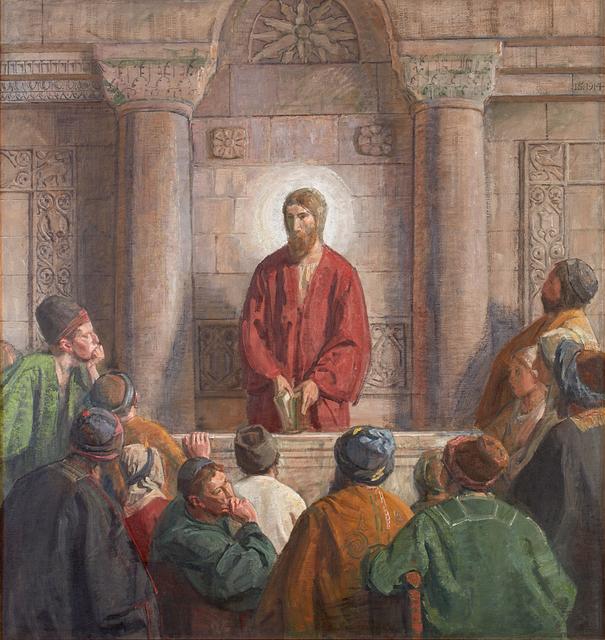
Joakim Skovgaard (1856–1933)
Jesus in the Synagogue, 1914
Oil on canvas
Jesus in the Synagogue, 1914
Oil on canvas