Theodor Philipsen (1840–1920)
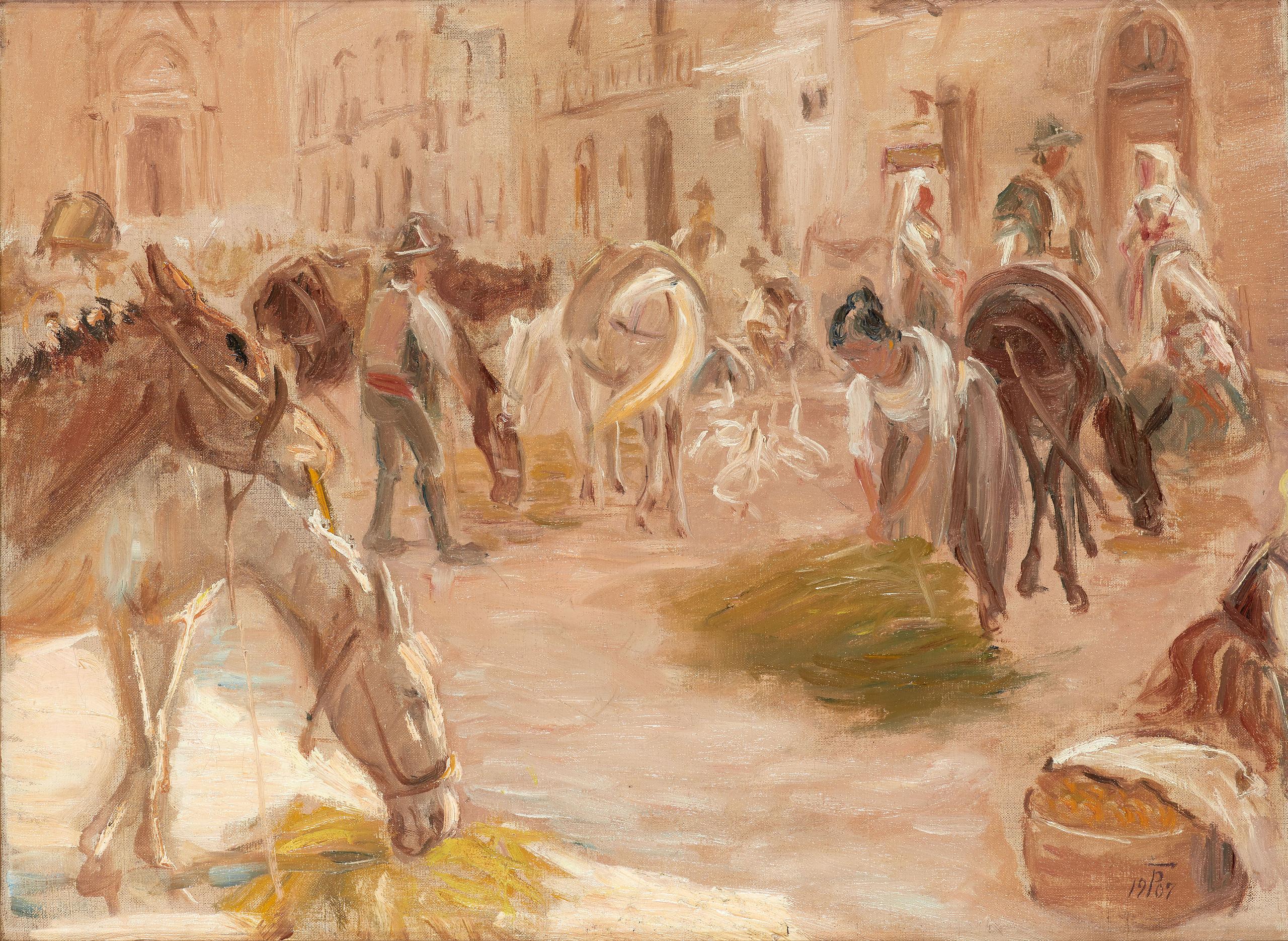
Donkeys in the Market Square of Sulmona, 1907
Oil on canvas
34 x 45 cm
Inventory number B 160
In 1907, Theodor Philipsen once again set out for Italy, where he stayed from April to November. He was based in Rome for several months, from where he made several excursions to other cities, including Florence, Celano, Scanno and Naples. During the summer, he also visited the city of Sulmona, located at the foot of the Majella Mountains. Here he painted twelve pictures,1 several of which depicted the city square and scenes of its market life.2
Donkeys in the Market Square of Sulmona show a small section of the square. However, market stalls are not the most prominent feature of Philipsen’s painting; that distinction goes to people and mules. Two donkeys have been pulled into the foreground in the left side of the painting. Fed with straw, they are awash in strong daylight. The rest of the picture is in shade, which, in keeping with the southern location, is depicted using a warm, golden overall tone. Philipsen’s distinctive palette and impressionistic manner of painting imbue the scene with a vibrant, sketch-like feel, and it is obvious that it was painted on-site in front of the subject matter rather than in a studio.
In the autumn of 1907, before returning to Denmark, the 67-year-old Philipsen experienced visual disturbances. In Copenhagen, he was diagnosed with glaucoma, especially in one eye. While an operation improved his vision, it remained impaired, so in 1909 he underwent another operation, this time on both eyes. The outcome was successful, prompting a subsequent productive period, but his vision continued to weaken gradually. By 1917, Philipsen was almost completely blind, and he gave up painting.
Donkeys in the Market Square of Sulmona show a small section of the square. However, market stalls are not the most prominent feature of Philipsen’s painting; that distinction goes to people and mules. Two donkeys have been pulled into the foreground in the left side of the painting. Fed with straw, they are awash in strong daylight. The rest of the picture is in shade, which, in keeping with the southern location, is depicted using a warm, golden overall tone. Philipsen’s distinctive palette and impressionistic manner of painting imbue the scene with a vibrant, sketch-like feel, and it is obvious that it was painted on-site in front of the subject matter rather than in a studio.
In the autumn of 1907, before returning to Denmark, the 67-year-old Philipsen experienced visual disturbances. In Copenhagen, he was diagnosed with glaucoma, especially in one eye. While an operation improved his vision, it remained impaired, so in 1909 he underwent another operation, this time on both eyes. The outcome was successful, prompting a subsequent productive period, but his vision continued to weaken gradually. By 1917, Philipsen was almost completely blind, and he gave up painting.
Published in
Published in
Th. Philipsen Udstilling: Kunstforeningen februar-marts 1911, Kunstforeningen, København 1911, cat.no. 308, p. 27;
Arbejder af Theodor Philipsen (1840-1920): Udstilling paa Charlottenborg Maj-Juni 1946, arranged by Kunstforeningen, Charlottenborg, København 1946, cat.no. 131;
Erik Zahle: ”Malerisamlingens vækst” in C.L. Davids Samling, Tredie del, København 1958, pp. 126, 156-157;
Vibeke Skov's List of Works in Finn Terman Frederiksen: Med solen i øjnene: en Theodor Philipsen-studie, Randers 1992, cat.no. 589, p. 181;
Finn Terman Frederiksen: Theodor Philipsen. En traditionsbevidst nyskaber, Randers Kunstmuseum, Randers 2016, BFL 799, p. 477;
Arbejder af Theodor Philipsen (1840-1920): Udstilling paa Charlottenborg Maj-Juni 1946, arranged by Kunstforeningen, Charlottenborg, København 1946, cat.no. 131;
Erik Zahle: ”Malerisamlingens vækst” in C.L. Davids Samling, Tredie del, København 1958, pp. 126, 156-157;
Vibeke Skov's List of Works in Finn Terman Frederiksen: Med solen i øjnene: en Theodor Philipsen-studie, Randers 1992, cat.no. 589, p. 181;
Finn Terman Frederiksen: Theodor Philipsen. En traditionsbevidst nyskaber, Randers Kunstmuseum, Randers 2016, BFL 799, p. 477;
Footnotes
Footnotes
1.
According to an inventory taken by Finn Terman Frederiksen in his book Theodor Philipsen. En traditionsbevidst nyskaber, Randers Kunstmuseum, Randers 2016, p. 417.
2.
Another example would be Theodor Philipsen’s painting Market Day, Sulmona, 1907, Ny Carlsberg Glyptotek, inv.no. MIN 2738.
Paintings and drawings
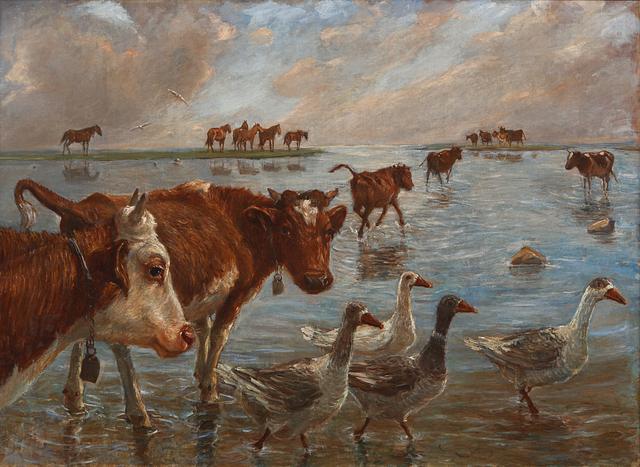
Theodor Philipsen (1840–1920)
Stampede Weather, 1909
Oil on canvas
Stampede Weather, 1909
Oil on canvas
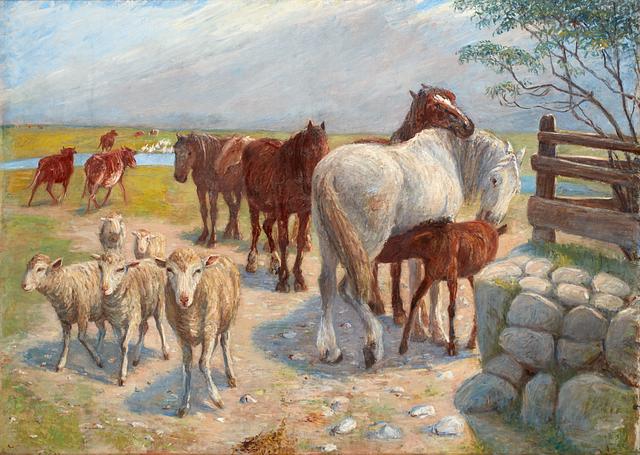
Theodor Philipsen (1840–1920)
Horses behind The Waterer’s Close, 1915
Oil on canvas
Horses behind The Waterer’s Close, 1915
Oil on canvas
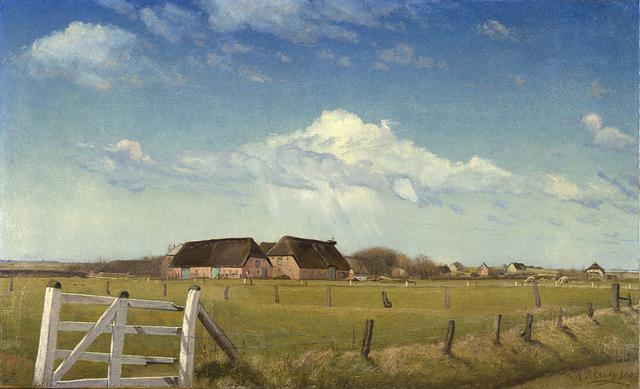
L.A. Ring (1854–1933)
Fenced-in Pastures by a Farm with a Stork’s Nest on the Roof, Skærbæk, 1903
Oil on canvas
Fenced-in Pastures by a Farm with a Stork’s Nest on the Roof, Skærbæk, 1903
Oil on canvas
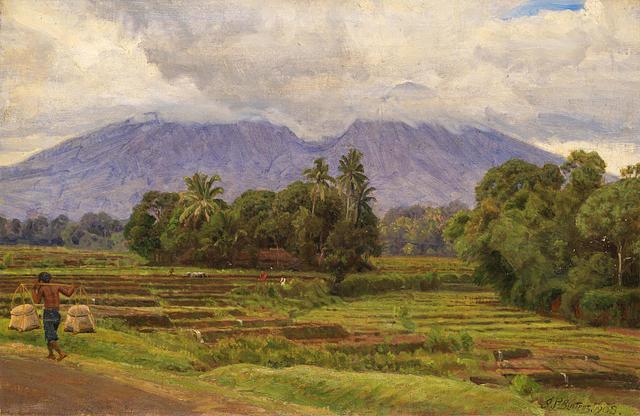
Joakim Skovgaard (1856–1933)
Evening Falls. Indigenous Houses on the Outskirts of Buitenzorg, Java, 1908
Oil on canvas
Evening Falls. Indigenous Houses on the Outskirts of Buitenzorg, Java, 1908
Oil on canvas