Johan Thomas Lundbye (1818–1848)
The Citadel Gate, 1842
Oil on paper
23.7 x 33.3 cm
Inventory number 57/2013
In Danish art history, scenes from the Copenhagen fortress known as the Citadel are most often associated with the painter Christen Købke (1810–1848), who spent the greater part of his childhood here. This scene, however, was done by the hand of another artist, namely the painter Johan Thomas Lundbye, for whom the Citadel would also become a place of great importance. At the age of eight, Lundbye moved with his family from their hometown of Kalundborg to Copenhagen, specifically to the Citadel. When his parents moved on to Frederiksværk in 1836, Lundbye briefly stayed at the Citadel with his older brother Carl. He subsequently moved to other addresses in the capital. In 1841, after the death of his father, Lundbye’s mother moved back to the Citadel, which is why the artist was in the neighbourhood in the summer of 1842 when he painted The Citadel Gate.1
On 12 July 1842 Lundbye wrote the following diary entry: ‘... am currently working on a small painting depicting the Citadel Gate seen from the Zealand Ravelin; doing my studies for the piece was quite gruelling as I had to sit in the road, where many people passed by and looked at me and my work [...] I have been pleased and amused by the undertaking because I too have a great fondness for the Citadel, where I spent my childhood and the first flush of youth’.2
The painting in The David Collection is one of the studies mentioned in the diary, created by Lundbye in preparation for the final painting, The Citadel Gate seen from the Zealand Ravelin.3
It is clear to see that the painter’s main focus was the nature and the area he knew so well. The tall trees with leafy crowns in different shades of green are dominant features of the small painting, which also features the Citadel’s south-facing entrance, the King’s Gate (also known as the Zealand Gate), a structure completed in 1663. The colour scheme is striking. The two complementary colours green and red imbue the scene with a delicate dynamism, and the blushing light of the summer sky falls upon the treetops, the brickwork and the water, creating a particularly warm, romantic atmosphere.
On 12 July 1842 Lundbye wrote the following diary entry: ‘... am currently working on a small painting depicting the Citadel Gate seen from the Zealand Ravelin; doing my studies for the piece was quite gruelling as I had to sit in the road, where many people passed by and looked at me and my work [...] I have been pleased and amused by the undertaking because I too have a great fondness for the Citadel, where I spent my childhood and the first flush of youth’.2
The painting in The David Collection is one of the studies mentioned in the diary, created by Lundbye in preparation for the final painting, The Citadel Gate seen from the Zealand Ravelin.3
It is clear to see that the painter’s main focus was the nature and the area he knew so well. The tall trees with leafy crowns in different shades of green are dominant features of the small painting, which also features the Citadel’s south-facing entrance, the King’s Gate (also known as the Zealand Gate), a structure completed in 1663. The colour scheme is striking. The two complementary colours green and red imbue the scene with a delicate dynamism, and the blushing light of the summer sky falls upon the treetops, the brickwork and the water, creating a particularly warm, romantic atmosphere.
Published in
Published in
Karl Madsen: Johan Thomas Lundbye 1818-1848, Kunstforeningen, København 1895, pp. 95 and 98 and cat. 119, p. 255;
Fortegnelse over en samling malerier, studier, akvareller m.m., af hvilke størstedelen har tilhørt afdøde direktør, bagermester Valdemar Gætje, Winkel & Magnussen, København 1905, cat. 44;
Johan Thomas Lundbye: Et Aar af mit Liv, indledning og noter af Mogens Lebech, København 1967, p. 85;
Eva Henschen, Torben Melander and Stig Miss (eds.): Johan Thomas Lundbye 1818-1848: … at male det kjære Danmark, Thorvaldsens Museum, København 1994, cat. 38, p. 63;
Fortegnelse over en samling malerier, studier, akvareller m.m., af hvilke størstedelen har tilhørt afdøde direktør, bagermester Valdemar Gætje, Winkel & Magnussen, København 1905, cat. 44;
Johan Thomas Lundbye: Et Aar af mit Liv, indledning og noter af Mogens Lebech, København 1967, p. 85;
Eva Henschen, Torben Melander and Stig Miss (eds.): Johan Thomas Lundbye 1818-1848: … at male det kjære Danmark, Thorvaldsens Museum, København 1994, cat. 38, p. 63;
Footnotes
Footnotes
1.
Lundbye’s painting The Citadel Gate seen from the Zealand Ravelin, 1842, was commissioned by the Danish Corps of Engineers. The subsequent fate of the painting is unknown.
2.
Jesper Svenningsen: Seks år af et liv. Johan Thomas Lundbye. Dagbøger om tro, skæbne, kunst og kærlighed, Copenhagen 2018, pp. 91–92. Translated by René Lauritsen.
3.
Later that year, Lundbye moved back to the Citadel; see his diary entry from 25 October 1842. See Jesper Svenningsen: Seks år af et liv. Johan Thomas Lundbye. Dagbøger om tro, skæbne, kunst og kærlighed, Copenhagen 2018, p. 127.


Danish Paintings and Drawings
Johan Thomas Lundbye (1818–1848)
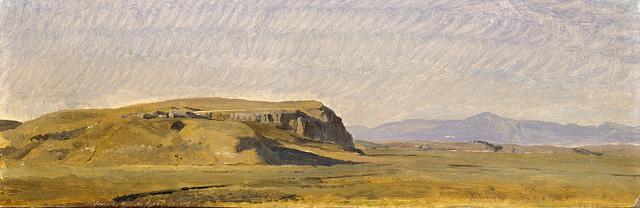
Landscape from the Campagna, 1845
Oil on paper
Landscape from the Campagna, 1845
Oil on paper
Johan Thomas Lundbye (1818–1848)
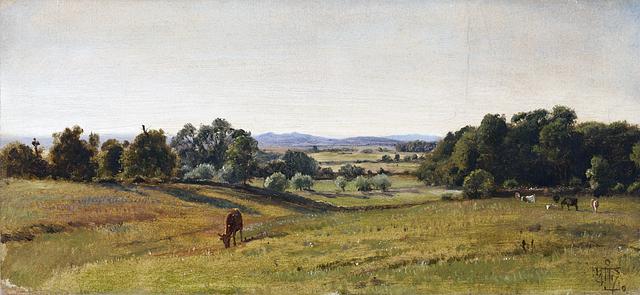
View from ‘Lundbye’s Mound’ in the Garden of Dortheaslyst, 1847
Oil on paper
View from ‘Lundbye’s Mound’ in the Garden of Dortheaslyst, 1847
Oil on paper
Martinus Rørbye (1803-1848)
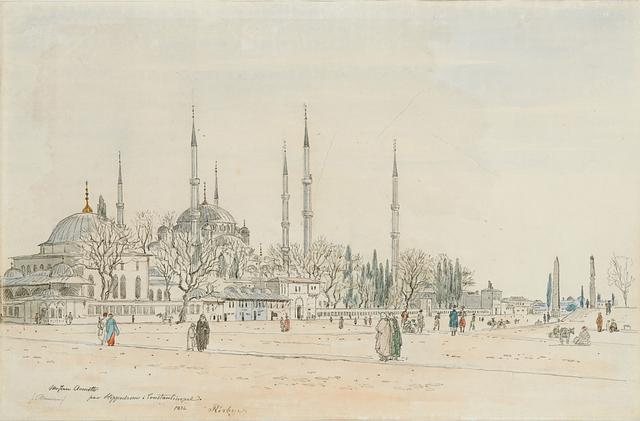
The Mosque of Acmette at the Hippodrome in Constantinople, 1836
Pencil on paper, partly coloured
The Mosque of Acmette at the Hippodrome in Constantinople, 1836
Pencil on paper, partly coloured
Martinus Rørbye (1803–1848)
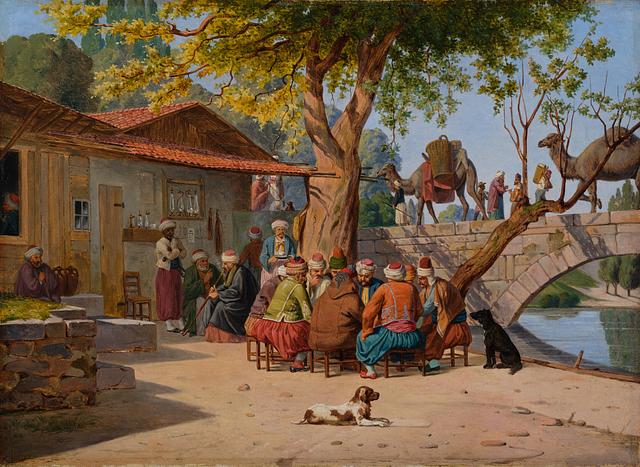
The Caravan Bridge at Smyrna, c. 1837
Oil on canvas
The Caravan Bridge at Smyrna, c. 1837
Oil on canvas