Martinus Rørbye (1803-1848)
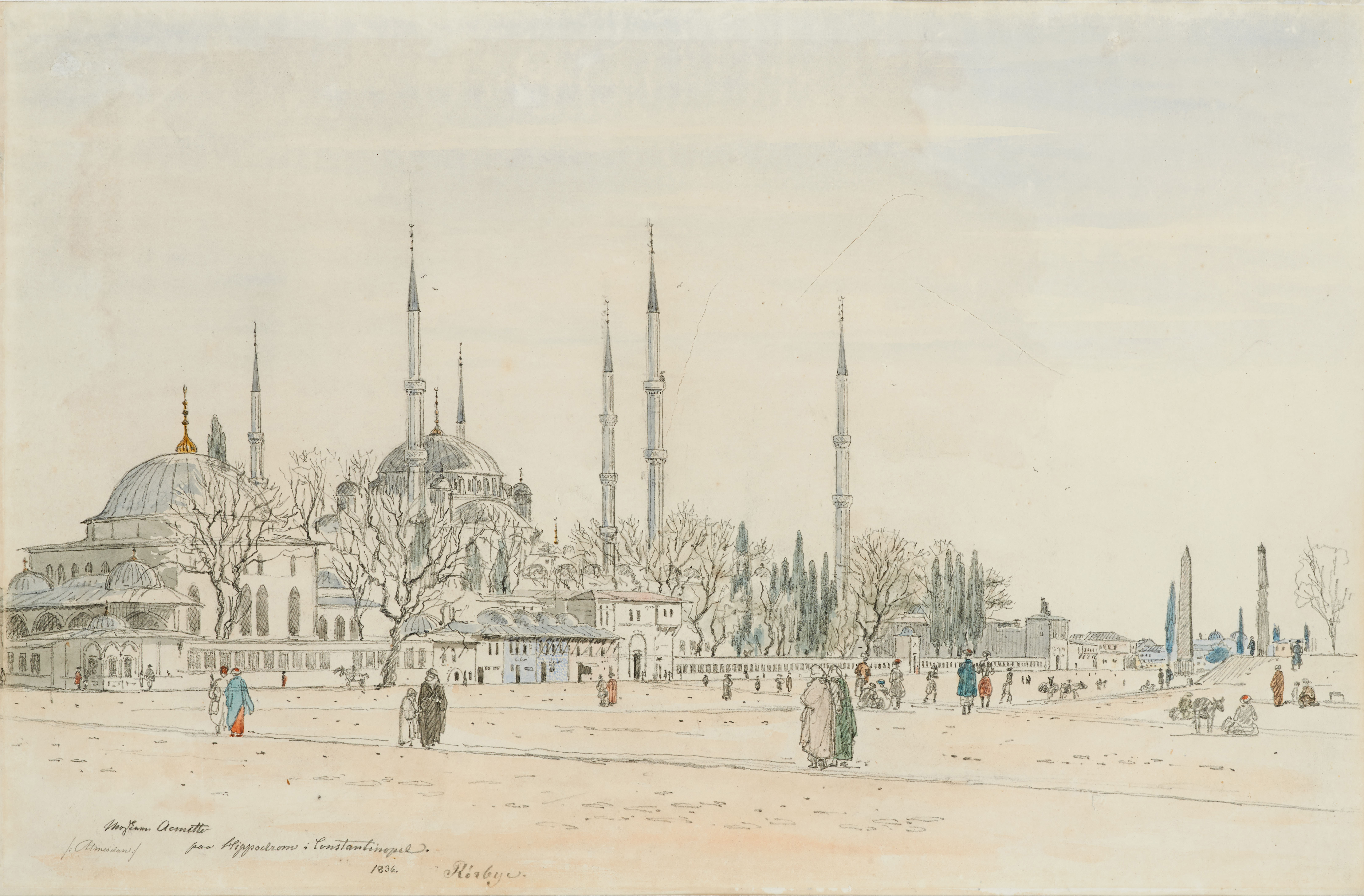
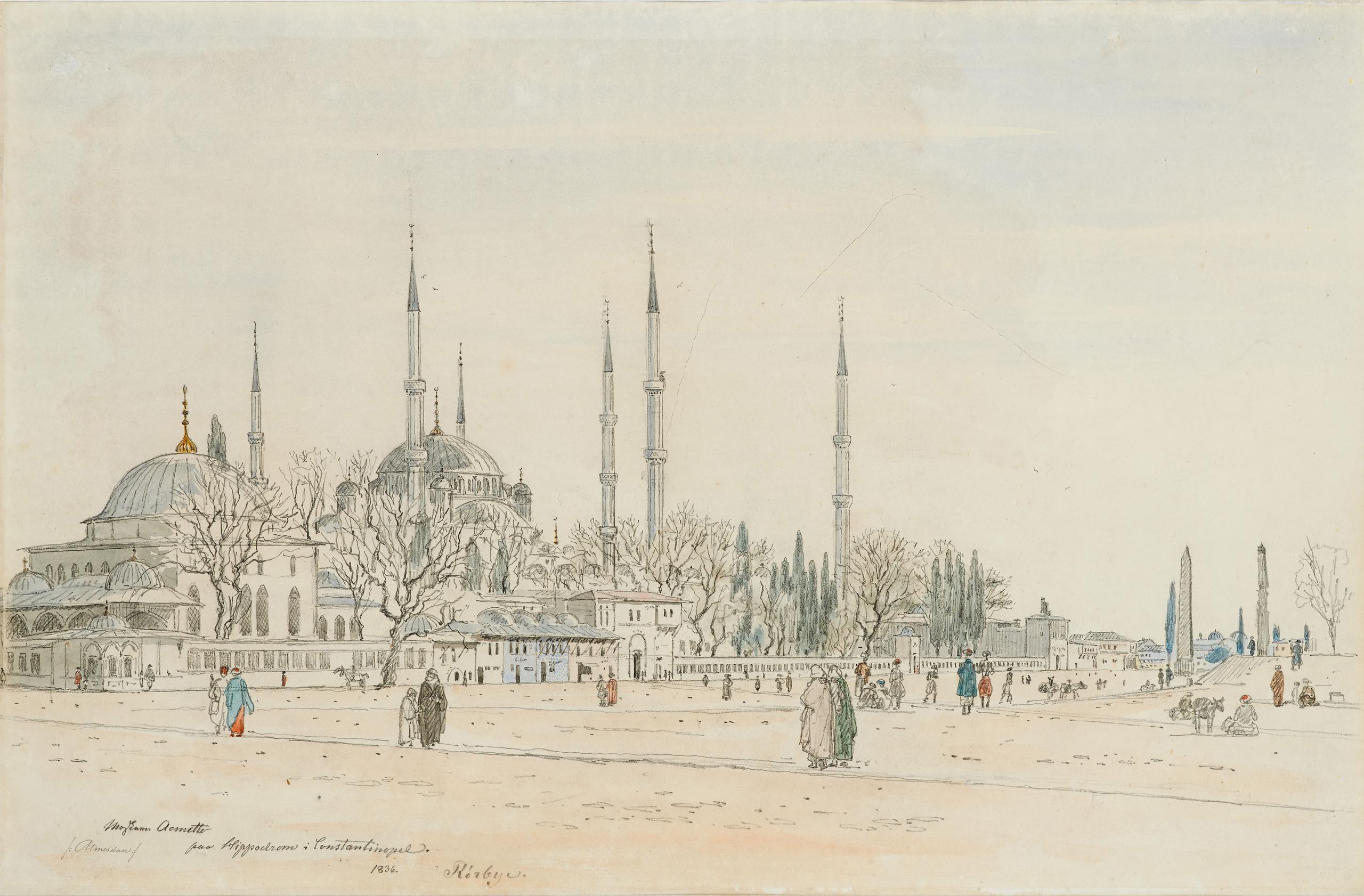
The Mosque of Acmette at the Hippodrome in Constantinople, 1836
Pencil on paper, partly coloured
27 x 41.5 cm
Inventory number 16/1990
In 1834, Martinus Rørbye – like C.W. Eckersberg and many other artists of the Danish Golden Age – chose to travel abroad, specifically to Rome. Having spent some six months in the Italian capital, he set out with the Danish architect Gottlieb Bindesbøll (1800–1856) on a tour of other Italian cities, and at the beginning of October 1835, the two traveling companions happened upon an opportunity to go to Greece and Turkey. At that time, few people apart from archaeologists, architects and philologists would even dream of ever reaching these two distant destinations.1 But Rørbye and Bindesbøll set off on what would become a trip lasting a total of seven months, from October 1835 to May 1836.
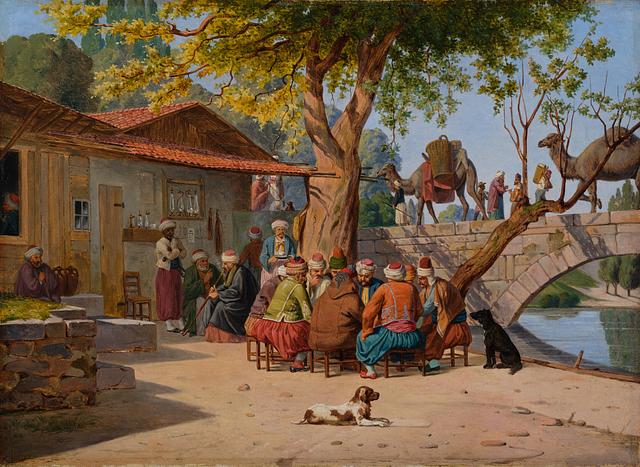
Together with Bindesbøll, Rørbye arrived in Constantinople (present-day Istanbul) on 20 December 1835, where they would stay for approximately six weeks. The weather was rainy, windy and freezing cold, so Rørbye did not get to do a great deal of work outdoors during his early days in the Turkish capital. When he did venture outside of their lodgings, he often sought out indoor venues such as coffee houses, whose interiors and clientele became his favourite subject.2 Later, when the weather allowed him to work outdoors, he drew diligently and extensively, doing as many sketches as he possibly could, including several depictions of the city’s many mosques.
Just before Rørbye left Constantinople, he created this drawing of the Mosque of Acmette (Sultan Ahmed’s Mosque) at the Hippodrome.3 Today, the building is known as the Blue Mosque. Rørbye has depicted it from the left so that we can see Sultan Ahmed's mausoleum on the left corner, with a well in front and a number of small dome structures that belonged to the original mosque complex. The hippodrome itself is one of the most famous monuments from Byzantine times; the structure is just under 500 metres long and 120 meters wide.
Rørbye did not produce finished oil paintings during his short stay in Turkey. He did, however, produce a unique body of sketch material in the form of drawings, watercolours and a few oil sketches. The material testifies partly to his industriousness, partly to his fascination with the world that had opened up to him, a world strange and exotic in his eyes. His diligence would benefit him after his return to Denmark in November 1837, where he repeatedly turned to his oriental scenes as subject matter for larger compositions, for example when he had to create an admission piece (18/2021) for the Academy the following year.4
Together with Bindesbøll, Rørbye arrived in Constantinople (present-day Istanbul) on 20 December 1835, where they would stay for approximately six weeks. The weather was rainy, windy and freezing cold, so Rørbye did not get to do a great deal of work outdoors during his early days in the Turkish capital. When he did venture outside of their lodgings, he often sought out indoor venues such as coffee houses, whose interiors and clientele became his favourite subject.2 Later, when the weather allowed him to work outdoors, he drew diligently and extensively, doing as many sketches as he possibly could, including several depictions of the city’s many mosques.
Just before Rørbye left Constantinople, he created this drawing of the Mosque of Acmette (Sultan Ahmed’s Mosque) at the Hippodrome.3 Today, the building is known as the Blue Mosque. Rørbye has depicted it from the left so that we can see Sultan Ahmed's mausoleum on the left corner, with a well in front and a number of small dome structures that belonged to the original mosque complex. The hippodrome itself is one of the most famous monuments from Byzantine times; the structure is just under 500 metres long and 120 meters wide.
Rørbye did not produce finished oil paintings during his short stay in Turkey. He did, however, produce a unique body of sketch material in the form of drawings, watercolours and a few oil sketches. The material testifies partly to his industriousness, partly to his fascination with the world that had opened up to him, a world strange and exotic in his eyes. His diligence would benefit him after his return to Denmark in November 1837, where he repeatedly turned to his oriental scenes as subject matter for larger compositions, for example when he had to create an admission piece (18/2021) for the Academy the following year.4
Published in
Published in
Fortegnelse Martinus Rörbye's efterladte Samling af Kunstsager, Copenhagen 1849, V, 10, no. 4;
Jørgen B. Hartmann: ”Fra Maleren Martinus Rørbyes Vandreaar. Meddelt paa grundlag af rejsedagbøger og breve,” Personalhistorisk Tidsskrift, 70, 1950, p. 98, no. 69;
Birgitte von Folsach: By the Light of the Crescent Moon. Images of the Near East in Danish Art and Literature, 1800-1875, The David Collection, Copenhagen 1996, p. 54 and pp. 116-117, cat. 46;
Birgitte von Folsach: ”Martinus Rørbye blandt grækere og ’Musselmænd,’" in Birgitte von Folsach and Sidsel Maria Søndergaard (ed.): Martinus Rørbye. Det nære og det fjerne, Nivaagaard, Ribe Kunstmuseum, Øregaard Museum, Hellerup 2014, fig. 158, pp. 216-217 and cat. 78;
Martinus Rørbye: Dagbog B, side 15 recto, 25. januar 1836 (Det kgl. Bibliotek, NKS 2923, 4º), published in Jesper Svenningsen (ed.): Martinus Rørbye’s Travel Journals and Letters, Primary Sources in Danish Art History [online];
Mogens Pelt: “A World in Upheaval,” in Anette Lindbøg Karlsen and Joachim Meyer (ed.): Rørbye & Bindesbøll. The Journey to Constantinople, The David Collection, Copenhagen 2026, fig. 4, p. 64;
Jørgen B. Hartmann: ”Fra Maleren Martinus Rørbyes Vandreaar. Meddelt paa grundlag af rejsedagbøger og breve,” Personalhistorisk Tidsskrift, 70, 1950, p. 98, no. 69;
Birgitte von Folsach: By the Light of the Crescent Moon. Images of the Near East in Danish Art and Literature, 1800-1875, The David Collection, Copenhagen 1996, p. 54 and pp. 116-117, cat. 46;
Birgitte von Folsach: ”Martinus Rørbye blandt grækere og ’Musselmænd,’" in Birgitte von Folsach and Sidsel Maria Søndergaard (ed.): Martinus Rørbye. Det nære og det fjerne, Nivaagaard, Ribe Kunstmuseum, Øregaard Museum, Hellerup 2014, fig. 158, pp. 216-217 and cat. 78;
Martinus Rørbye: Dagbog B, side 15 recto, 25. januar 1836 (Det kgl. Bibliotek, NKS 2923, 4º), published in Jesper Svenningsen (ed.): Martinus Rørbye’s Travel Journals and Letters, Primary Sources in Danish Art History [online];
Mogens Pelt: “A World in Upheaval,” in Anette Lindbøg Karlsen and Joachim Meyer (ed.): Rørbye & Bindesbøll. The Journey to Constantinople, The David Collection, Copenhagen 2026, fig. 4, p. 64;
Footnotes
Footnotes
1.
Kasper Monrad: Dansk guldalder. Lyset, landskabet og hverdagslivet, Copenhagen 2013, p. 262.
2.
Birgitte von Folsach: ‘Martinus Rørbye blandt grækere og “Musselmænd”’ in Birgitte von Folsach and Sidsel Maria Søndergaard (eds.): Martinus Rørbye. Det nære og det fjerne, Øregaard Museum, Hellerup 2014, p. 216.
3.
Karina Lykke Grand: ‘Rejsebilleder – Turist i Arkadien?’ in Karina Lykke Grand, Lise Pennington and Anne Mette Thomsen (eds.): GULD. Skatte fra den danske guldalder = Gold. Treasures from the Danish golden age, ARoS Kunstmuseum, Aarhus 2013, p. 226.
4.
Part of the reason why such travel was regarded as very special indeed had to do with the fact that the Greek War of Independence against the Turks (1821–1829) did not end until 1832. Before that time, travelling to Greece was almost impossible. See Birgitte von Folsach: ‘Martinus Rørbye blandt grækere og “Musselmænd”’ in Birgitte von Folsach and Sidsel Maria Søndergaard (eds.): Martinus Rørbye. Det nære og det fjerne, Øregaard Museum, Hellerup 2014, p. 196.
Danish Paintings and Drawings