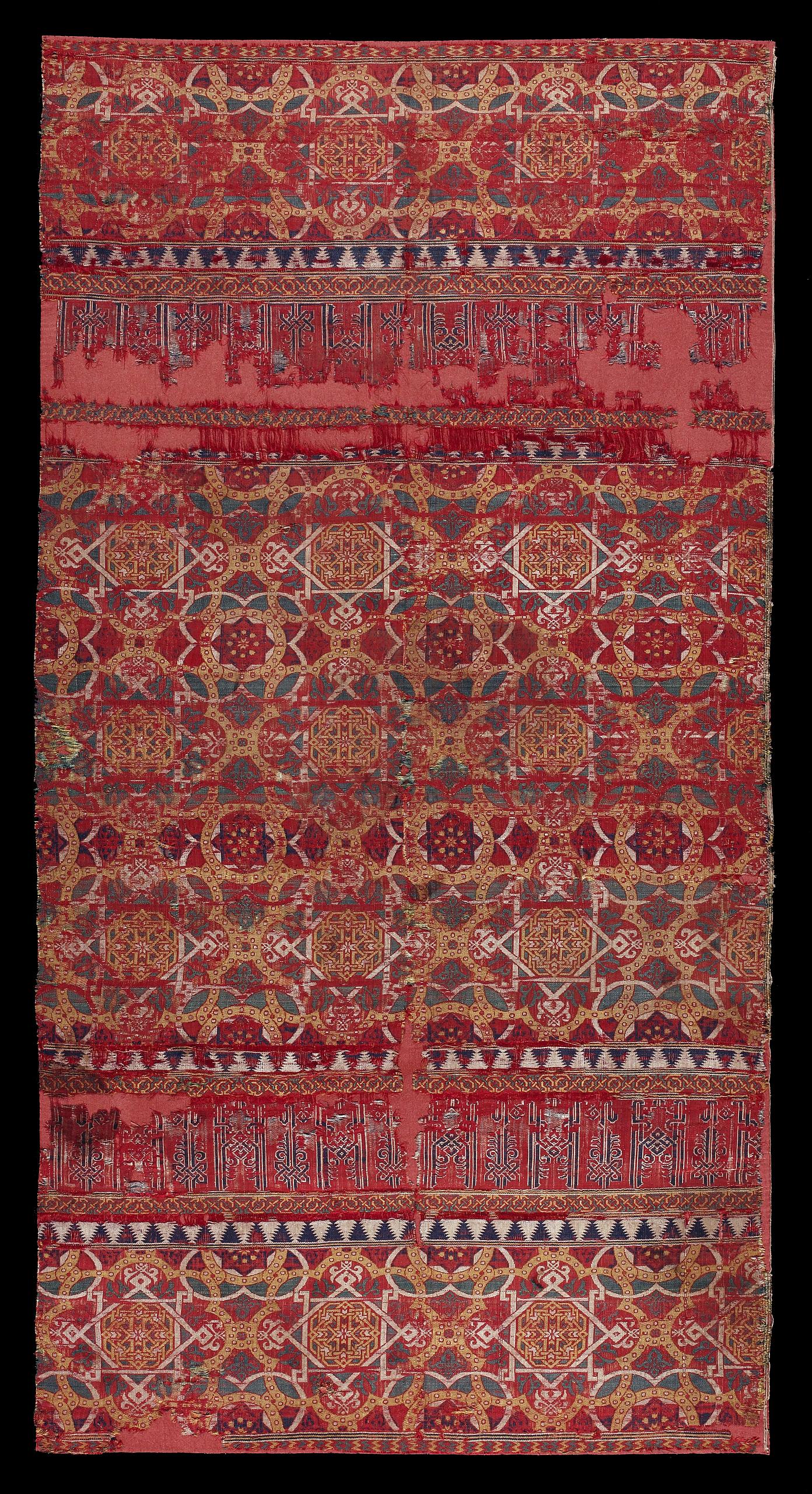
Lampas-woven textile, silk
Spain, Andalusia; late 14th-early 15th century
H: 115; W: 60 cm
Inventory number 25/2007
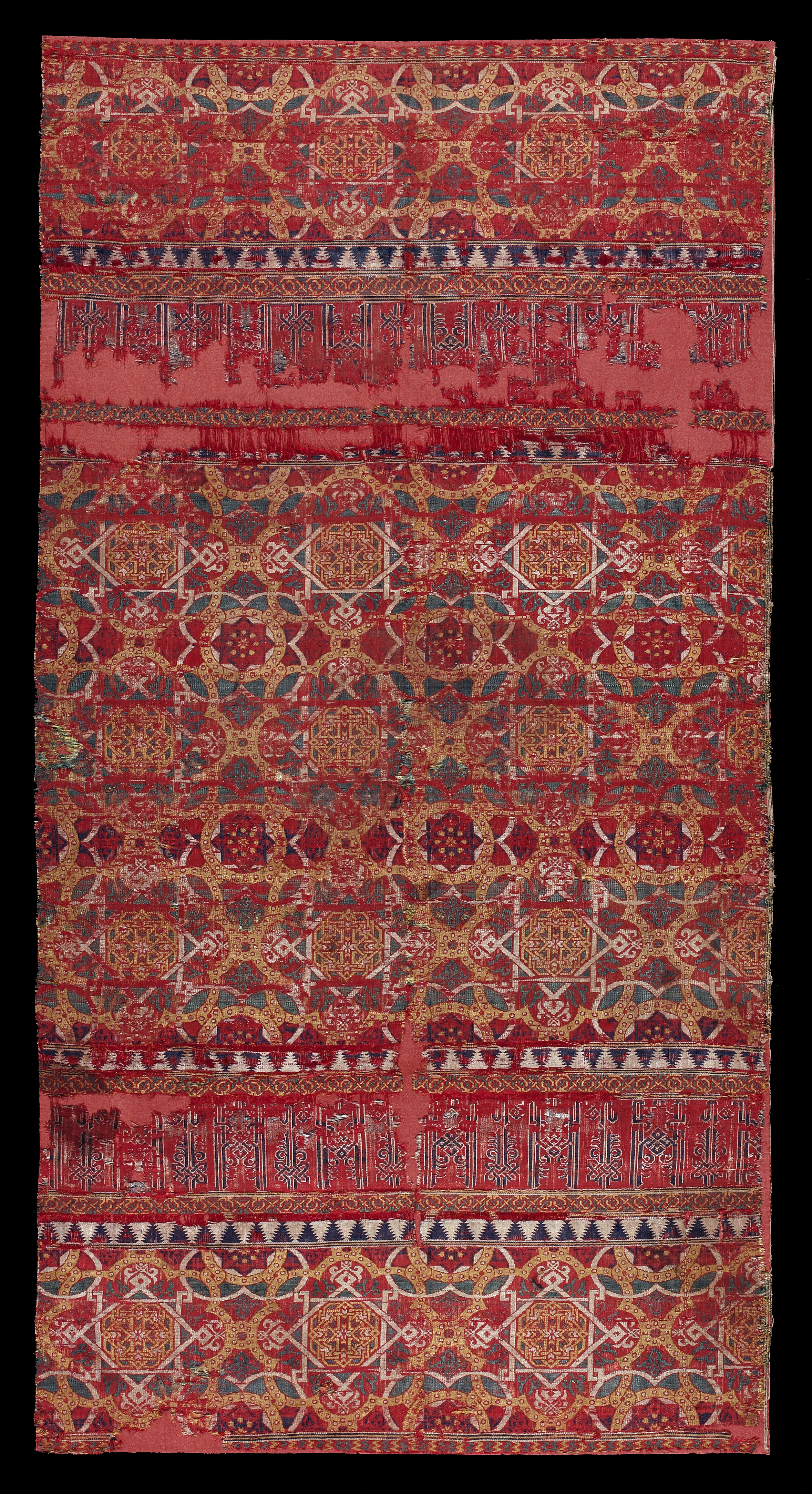
With its colorful and sumptuously complex geometric and calligraphic patterns, this Andalusian silk can basically be reduced to a striped textile. The main pattern – with its interlacing ornament, star shapes, arcs, etc. – is so complicated that it is nearly impossible to describe it.
What looks like an intricately interwoven Kufi inscription cannot be read and should be considered pure ornamentation of a calligraphic nature, or pseudo-calligraphy. This phenomenon is found on many contemporary borders on rugs, but also within other groups of materials.
Very large Spanish textiles with related ornamentation have been preserved; they were used as curtains.
What looks like an intricately interwoven Kufi inscription cannot be read and should be considered pure ornamentation of a calligraphic nature, or pseudo-calligraphy. This phenomenon is found on many contemporary borders on rugs, but also within other groups of materials.
Very large Spanish textiles with related ornamentation have been preserved; they were used as curtains.
Al-Andalus, Muslim Spain
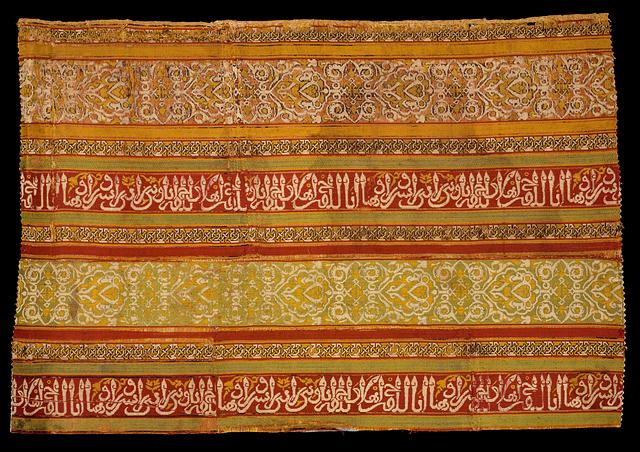
Lampas-woven textile, silk
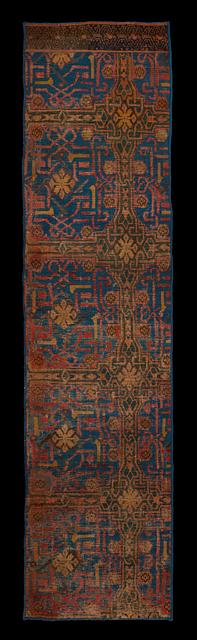
Fragment of a carpet, wool with Spanish knots in blue, green, yellow, orange, red, and brown on a white ground weave
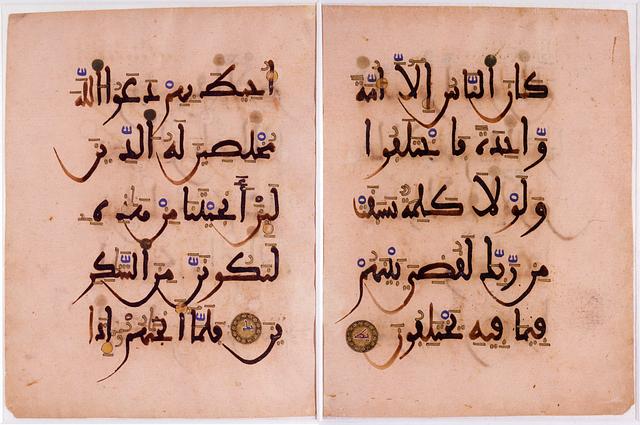
Two leaves from a Koran written in Maghribi
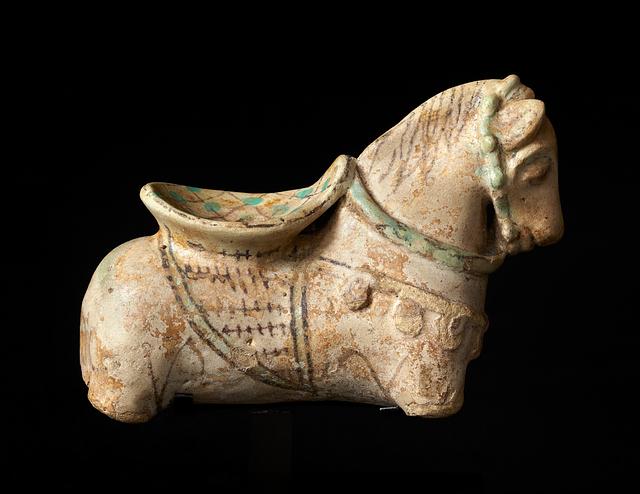
Fragmented figure of a horse, earthenware covered with a whitish slip and painted in green and manganese under a slightly toned, poorly preserved glaze