The Ayyubid Rulers of Egypt and Syria, 564-652 H/1169-1254 AD
Legend & Design
Legend & Design
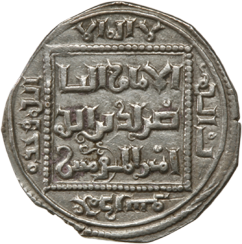
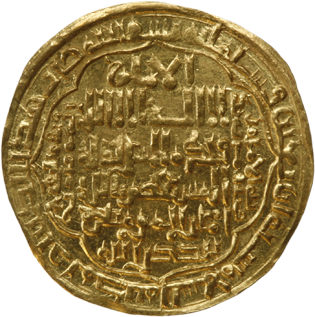
Obverse
In central square
al-imam al-na / sir li-din allah / amir al-mu’minin
“the Imam al-Nasir li-Din Allah, Commander of the Faithful
Around
at 12:00 la ilah illa, at 9:00: allah wahdahu, at 6:00: muhammad rasu, at 3:00: l allah
“no god but God, unique, Muhammad is the messenger of God”
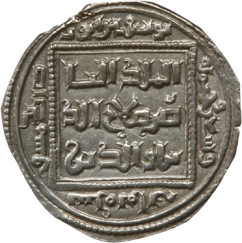
Reverse
In central square
al-malik al-na / sir salah al-d / unya wa’l-din
“the Victorious King, Righteousness of the World and the Faith”
Around
at 12:00 yusuf ibn ayyub, at 9:00 duriba bi-dimashq, at 6:00 sana thaman, at 9:00 wa sab‘in wa khamsmi’a
“Yusuf ibn Ayyub, struck in Dimashq the year eight and seventy and five hundred”
Historical Note
Historical Note
When the Zangid leader Nur al-Din Mahmud died in 569 H (1173 AD) Saladin responded to the invitation of the amir Ibn al-Mukaddam to take over Damascus, and presented himself both as the heir to Mahmud and protector of his young and inexperienced successor al-Salih Isma‘il. Saladin had by now become an outstanding military leader, with a powerful army at his command. In 570 (1175) he invaded Syria, where he seized the towns of Damascus, Hama and Hims. He also won victories over the Artuqids, and even captured Aleppo from his former Zangid masters in 577 (1181). Then, in his most famous move, Saladin declared jihad (holy war) against the Crusaders.
In 583 (1187), with the help of all the allies he could find, Saladin inflicted a disastrous defeat on the Crusaders at the Horns of Hattin on the heights to the west of Tiberias. Exhausted and demoralized the Christian forces surrendered Acre and much of the coast of Gaza.
Finally Saladin achieved the prize he had set out to win when he regained the city of al-Quds (Jerusalem) for the Muslims after a two week siege.
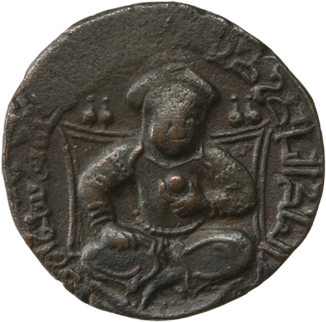
This handsome and well-struck coin was an early issue of Saladin’s coinage from Damascus which began in 575 H. The square in circle design that had originally been introduced by the Almohads of Morocco and Spain is used here purely as a matter of design, without any of the political overtones of the Almohad coins. Unlike those, they were issued bearing the name of the Abbasid Caliph, now al-Nasir li-Din Allah, and those of Saladin, as well as the mint name and date. The mint of Damascus under the Ayyubids usually retained the square in circle design for its dirhams, while the coinage of Aleppo preferred a distinctive star-shaped design.