The Ayyubid Rulers of Egypt, 564-652 H/1169-1254 AD
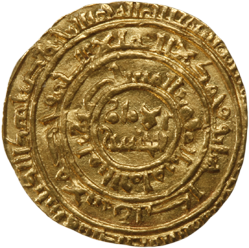
Legend & Design
Legend & Design
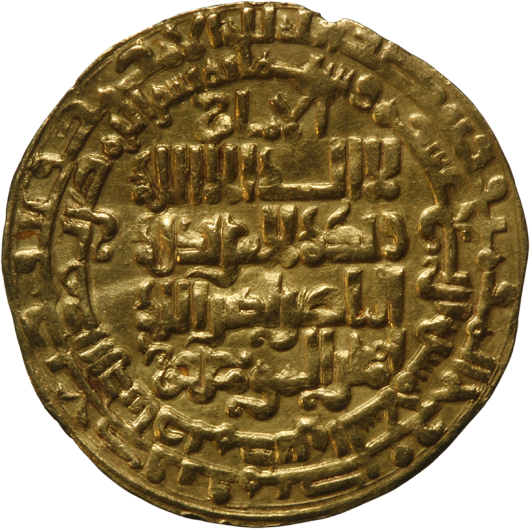
Obverse
Central circle
al-imam / al-hasan
“the Imam al-Hasan”
Inner margin
al-mustadi bi-amr allah amir al-mu’minin
“al-Mustadi bi-amr Allah, Commander of the Faithful
Middle margin
la ilah illa allah wahdahu la sharik lahu abu muhammad
“no god but God, unique, He has no associate, Abu Muhammad”
Outer margin
bism allah al-rahman al-rahim duriba hadha’l-dinar bi’l-iskandariyya sana sab‘ wa sittin wa khamsmi’a
“in the name of God, the Merciful, the Compassionate, this dinar was struck in al-Iskandariyya the year seven and sixty and five hundred”
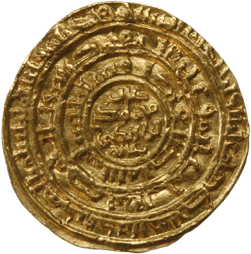
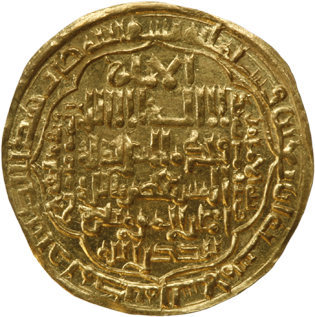
Reverse
Central circle
‘alin / mahmud / ibn zangi / ghaya
“extremely, Mahmud ibn Zangi, good
Inner margin
wa sallama tasliman al-malik al-‘adil
“and peace be upon them, the Just King”
Middle margin
muhammad rasul allah salla allah ‘alayhi wa ‘ala alihi
“Muhammad is the messenger of God, God’s blessing be upon him and his family”
Outer margin
muhammad rasul allah arsalahu bi’l-huda wa din al-haqq li-yuzhirahu ‘ala al-din kullihi wa law kariha al-mushrikun
“Muhammad is the messenger of God who sent him with guidance and the religion of truth that he might make it supreme over all other religions even though the polytheists may detest it”
Sura 9 (al-Tawba), v. 33
Historical Note
Historical Note
Al-Nasir Salah al-Din Yusuf (famously known, by a contraction of his laqab, as Saladin) was the founder of the Ayyubid dynasty, named after his father Ayyub, the family that ruled in Egypt and Syria from 564 to 652 H/1169-1254 AD.
Ayyub was of Kurdish descent, and his family originated from Dvin in Armenia. Ayyub and his brother Shirkuh had been in the service of the Saljuqs, but Saladin was born in the town of Tikrit on the Tigris north of Baghdad where Ayyub was serving as governor. When the family later transferred their services to Nur al-din Mahmud ibn Zangi, the powerful Zangid prince of Aleppo, the young Saladin was appointed prefect of Damascus, and, at first somewhat reluctantly, joined in campaigns against the Fatimids of Egypt, which ended with Shirkuh becoming vizier to the last Fatimid ruler, al-‘Adid. After his uncle’s death in 564 (1169) Saladin took over this position and adopted the title al-malik al-nasir, although as yet he was very far from being a “Victorious King”.
On the death of al-‘Adid in the month of Muharram 567 (1171), Saladin declared his allegiance to the Abbasid Caliph, al-Mustadi bi-amr Allah, who invested him as Lord of Egypt. Now, after two centuries of Shi‘ite rule by the Fatimids, Egypt officially returned to the Abbasid fold and publicly proclaimed Sunni Islam.
This dinar, however, follows the Fatimid pattern with a central circle and three concentric marginal legends. At the time when it was struck, al-Nasir Yusuf (Saladin) was still the vassal of Nur al-din Mahmud, and out of deference to his overlord Saladin refrained from placing his own name on the first gold and silver coinage he struck in Cairo and Alexandria. However, it cannot be assumed from this omission that the coins were anything other than Ayyubid issues, because it was Saladin who controlled all of Egypt and its mints in Cairo and Alexandria.