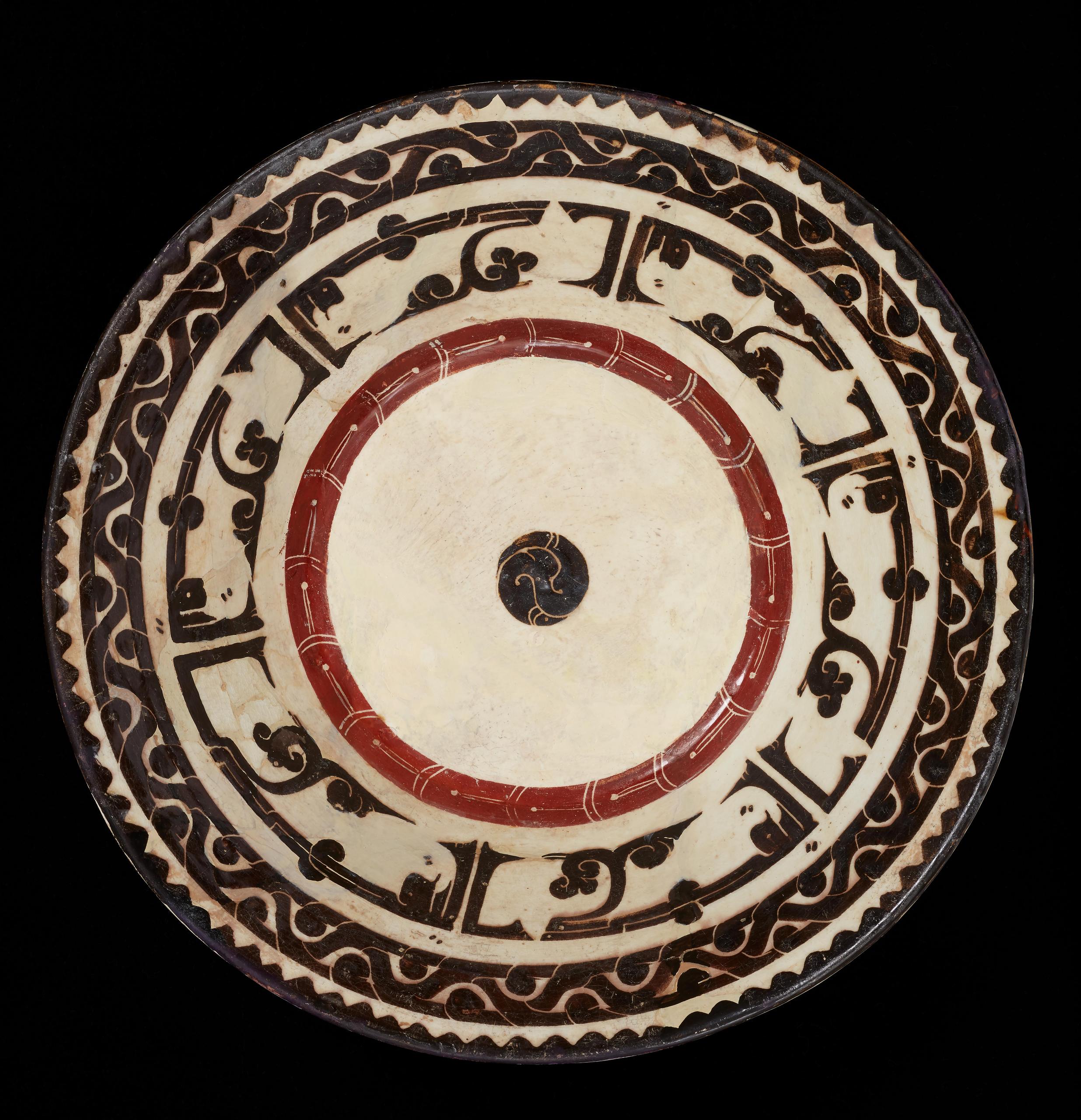
Earthenware bowl, covered with a white slip and painted with a red and black slip under a transparent glaze
Eastern Iran, Nishapur or Samarkand; 10th century
H: 7.5; Diam: 26 cm
Inventory number 55/1974
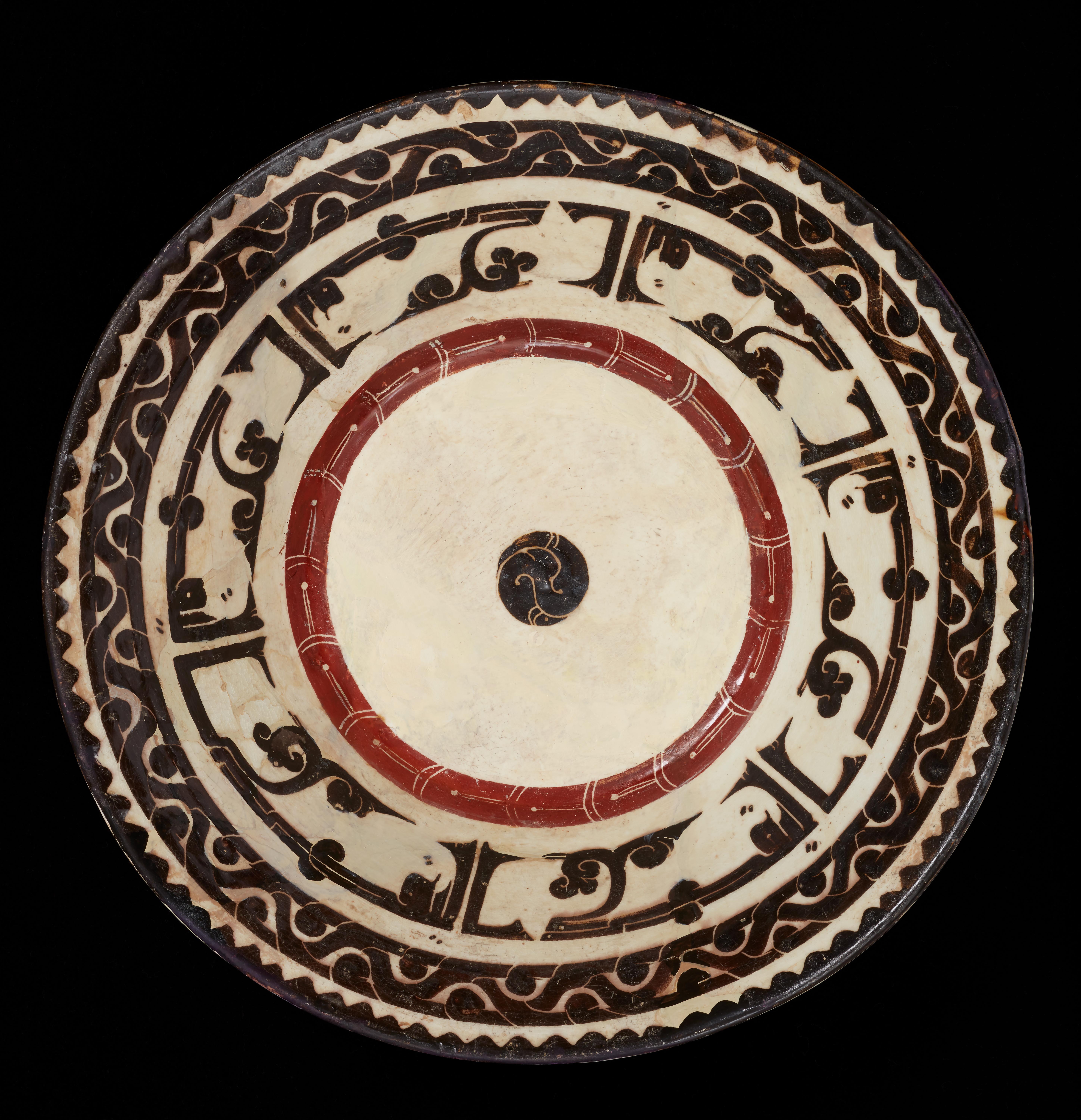
The bowl has an inscription – a repetition of the same word six times – between two concentric, decorative bands. Both the ornamental bands and the inscription have the same interwoven, knotted character. While the ornamental bands have a rhythm almost like a regular progression of letters, the inscription is highly stylized and has so many embellishments that it is difficult to decipher.
It has, however, been suggested that it reads al-yaquz, Arabic for “the wise.”
It has, however, been suggested that it reads al-yaquz, Arabic for “the wise.”
Published in
Published in
Art from the World of Islam. 8th-18th century, Louisiana, Humlebæk 1987, cat.no. 32;
Kjeld von Folsach: Art from the World of Islam in The David Collection, Copenhagen 2001, cat.no. 117;
Sabiha Al Khemir: Beauty and belief: crossing bridges with the arts of Islamic culture, Brigham Young University Museum of Art, Provo 2012, p. 245;
Karen C. Pinto: Medieval Islamic maps : an exploration, Chicago 2016, fig. 7.8, pp. 174-176;
Kjeld von Folsach: Art from the World of Islam in The David Collection, Copenhagen 2001, cat.no. 117;
Sabiha Al Khemir: Beauty and belief: crossing bridges with the arts of Islamic culture, Brigham Young University Museum of Art, Provo 2012, p. 245;
Karen C. Pinto: Medieval Islamic maps : an exploration, Chicago 2016, fig. 7.8, pp. 174-176;
Ceramics
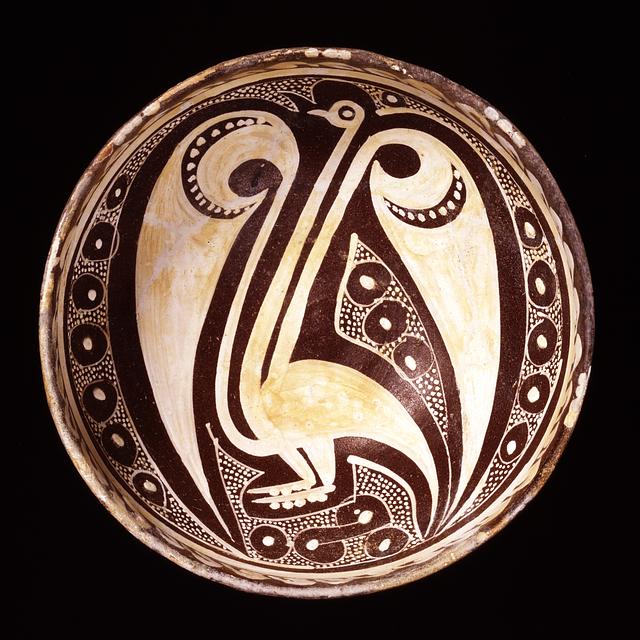
Earthenware bowl, covered with a brown slip and painted in a white slip under a transparent glaze that is now decomposed
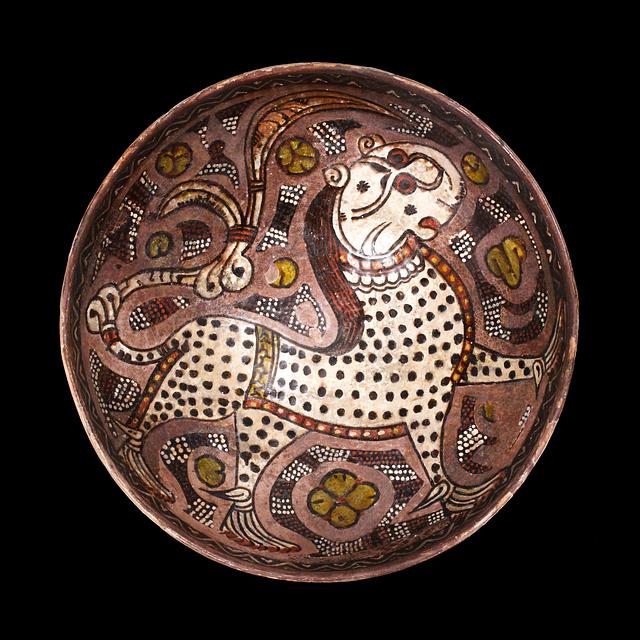
Earthenware bowl, decorated with colored slips over an aubergine-colored ground under a transparent glaze
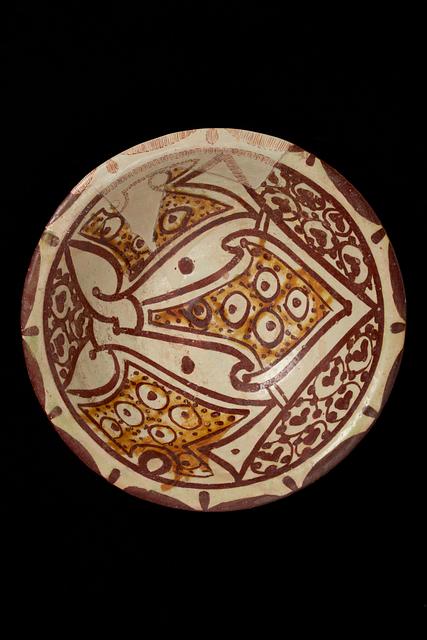.-The-David-Collection_photo-Pernille-Klemp.jpg)
Earthenware bowl, covered with a white slip and painted in a reddish-brown slip under a pale-greenish, transparent glaze, in places with yellow
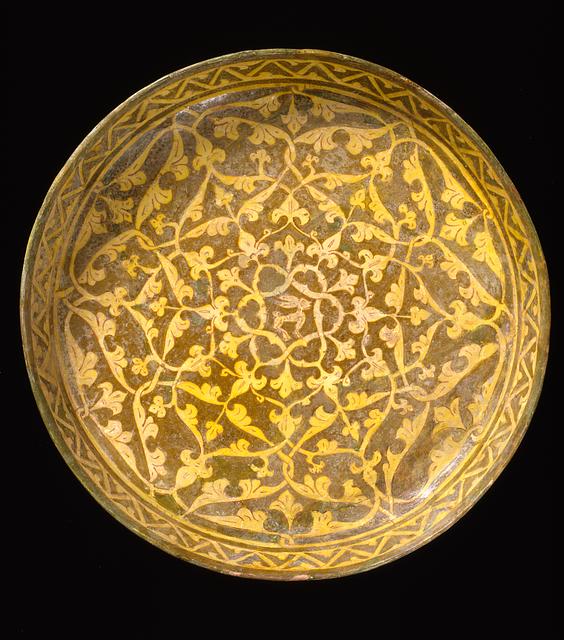
Earthenware dish, covered with a white slip and painted in red and in an olive-green slip under a yellowish glaze