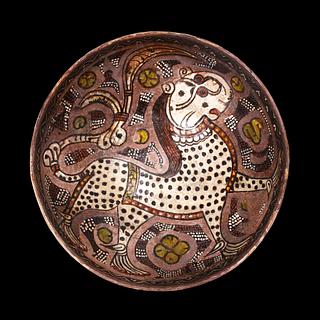
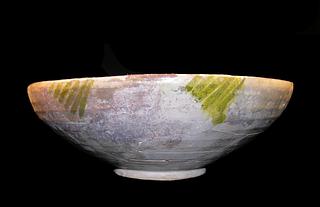
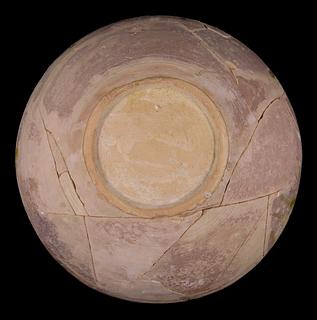
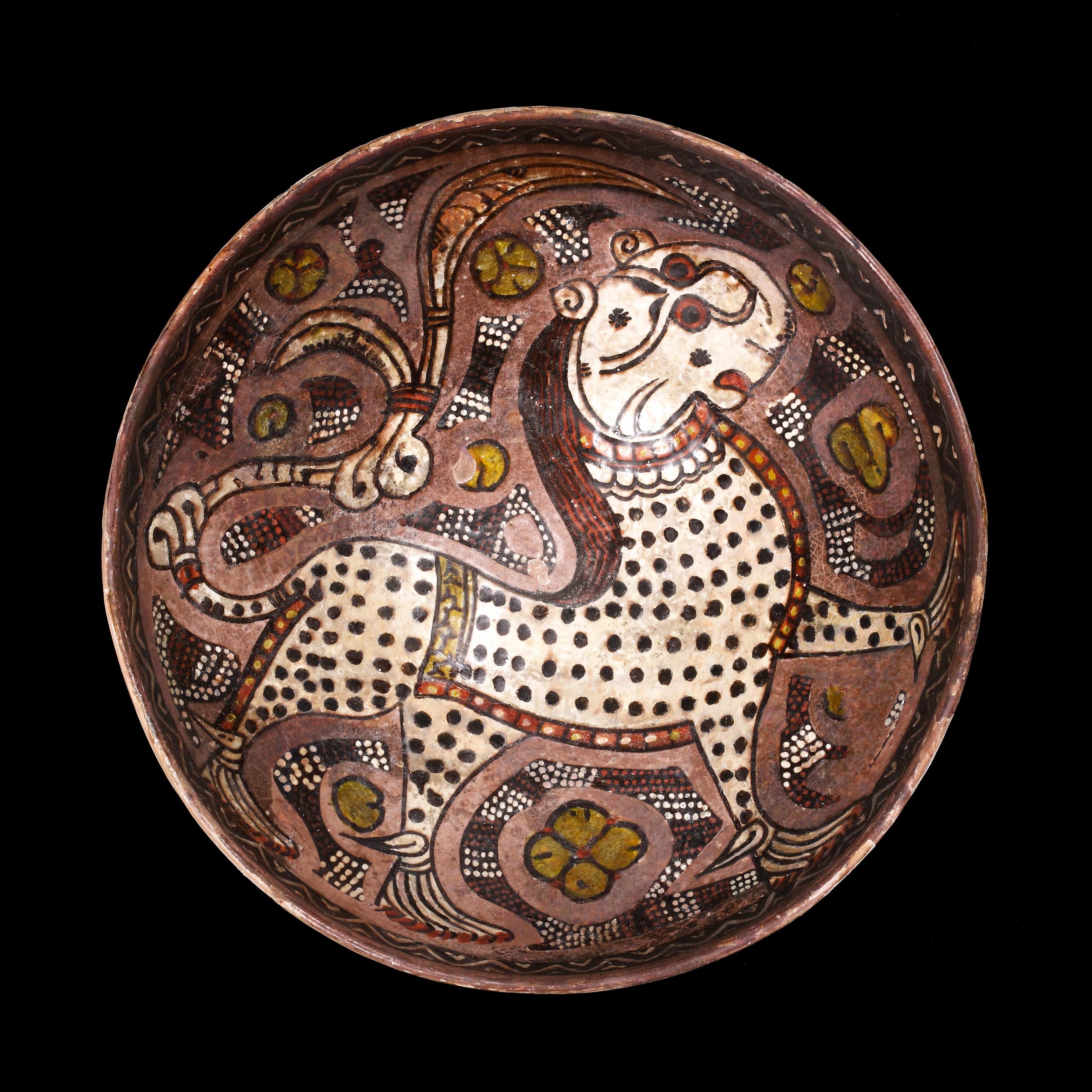
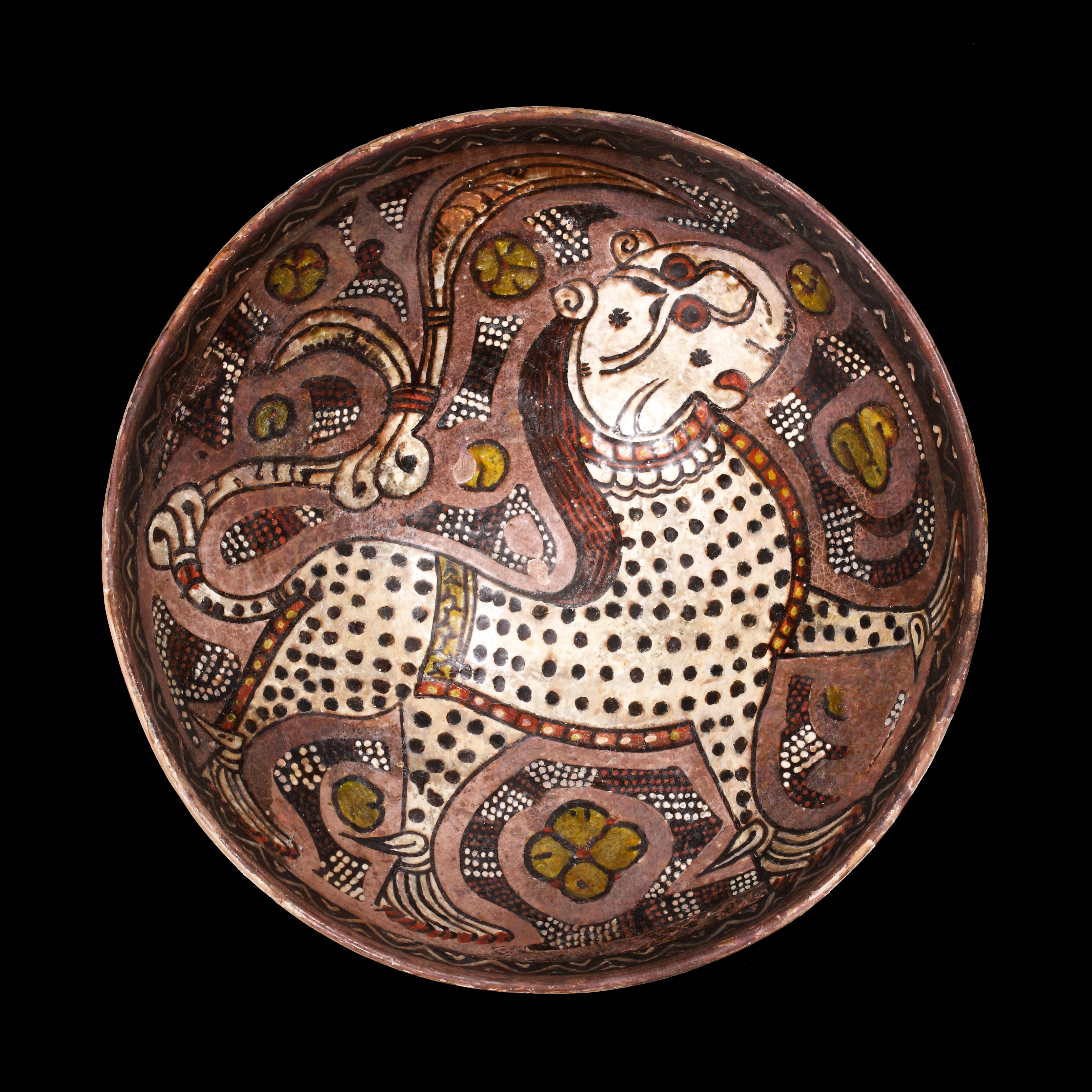
Earthenware bowl, decorated with colored slips over an aubergine-colored ground under a transparent glaze
Central Asia, Samarkand, or Afghanistan; 10th century
H: 10; Diam: 29 cm
Inventory number 87/2004
This bowl and a number of related ones differ from the usual Samanid pottery by having both an aubergine-colored ground and quite motley, detailed, and imaginative depictions of animals, birds, and human figures. They are virtually unknown from excavations in Nishapur and must have been made in a different Samanid center.
The magnificent lion looks almost like a mythical beast, with winged paws, curious ornamental bands in various places on its body, and a forked tail that ends in palmettes. Another distinctive feature is the asymmetrical, dotted areas that surround the main motif.
The magnificent lion looks almost like a mythical beast, with winged paws, curious ornamental bands in various places on its body, and a forked tail that ends in palmettes. Another distinctive feature is the asymmetrical, dotted areas that surround the main motif.
Published in
Published in
Jangar Ya. Ilyasov: “Exotic images: on a new group of glazed pottery of the 10th and 11th century” in Journal of the David Collection, 4, 2014, p. 50, fig. 1 and cat.no. 32;
Daniel C. Waugh: "The David Collection: Journal of the David Collection. 4" in The Silk Road, 2014, 12, Featured museum, I: fig. 2;
Daniel C. Waugh: "The David Collection: Journal of the David Collection. 4" in The Silk Road, 2014, 12, Featured museum, I: fig. 2;
Ceramics
.-The-David-Collection_photo-Pernille-Klemp.jpg)
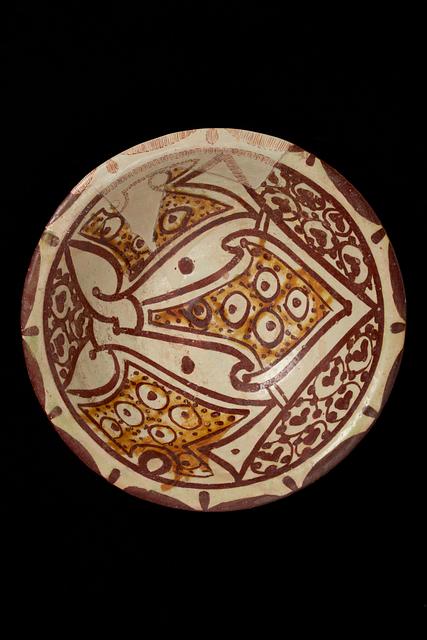
Earthenware bowl, covered with a white slip and painted in a reddish-brown slip under a pale-greenish, transparent glaze, in places with yellow
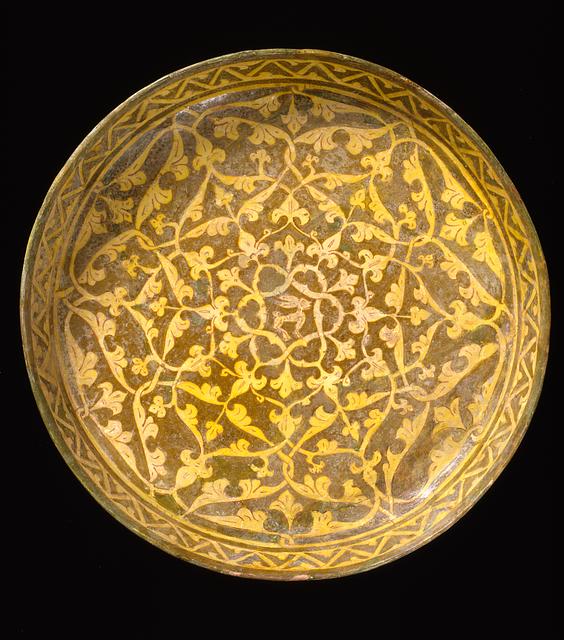
Earthenware dish, covered with a white slip and painted in red and in an olive-green slip under a yellowish glaze
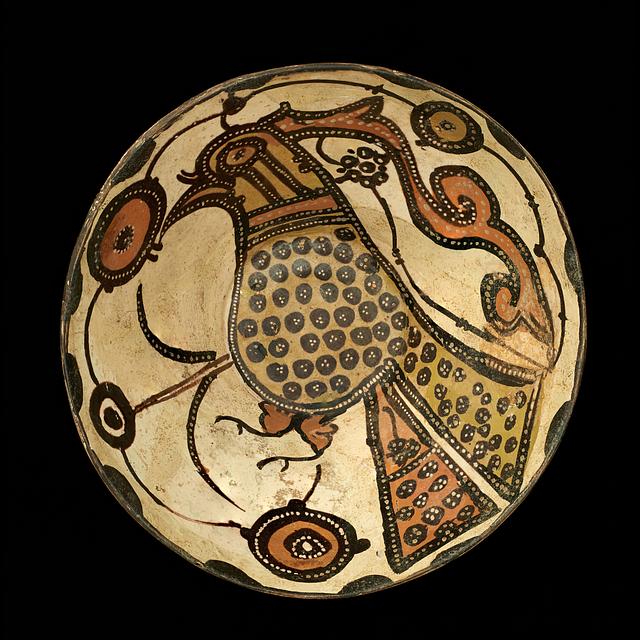
Earthenware bowls covered with a whitish slip and painted with colored slips under a transparent glaze
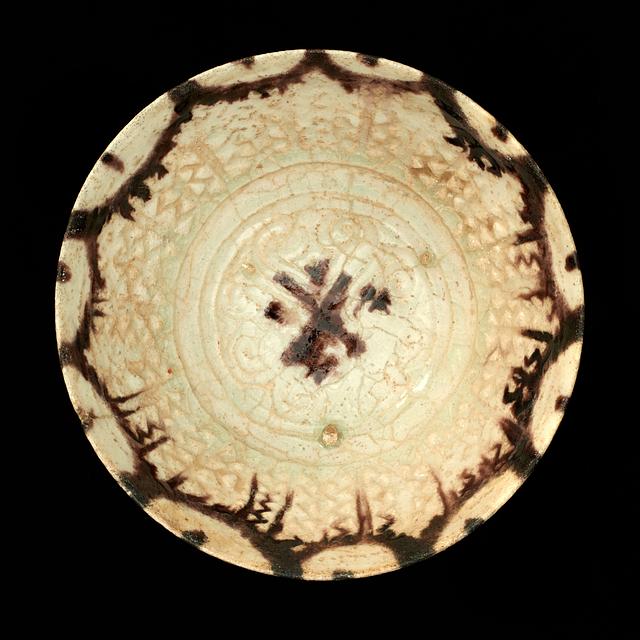
Fritware bowl, molded and painted in manganese in a transparent glaze (Bamiyan type)