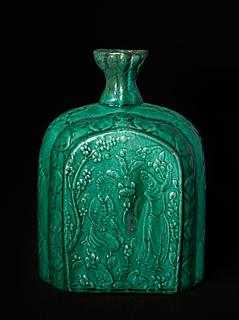
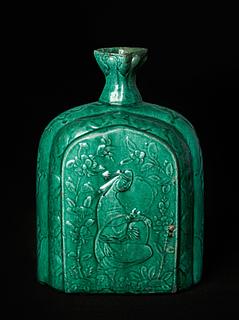
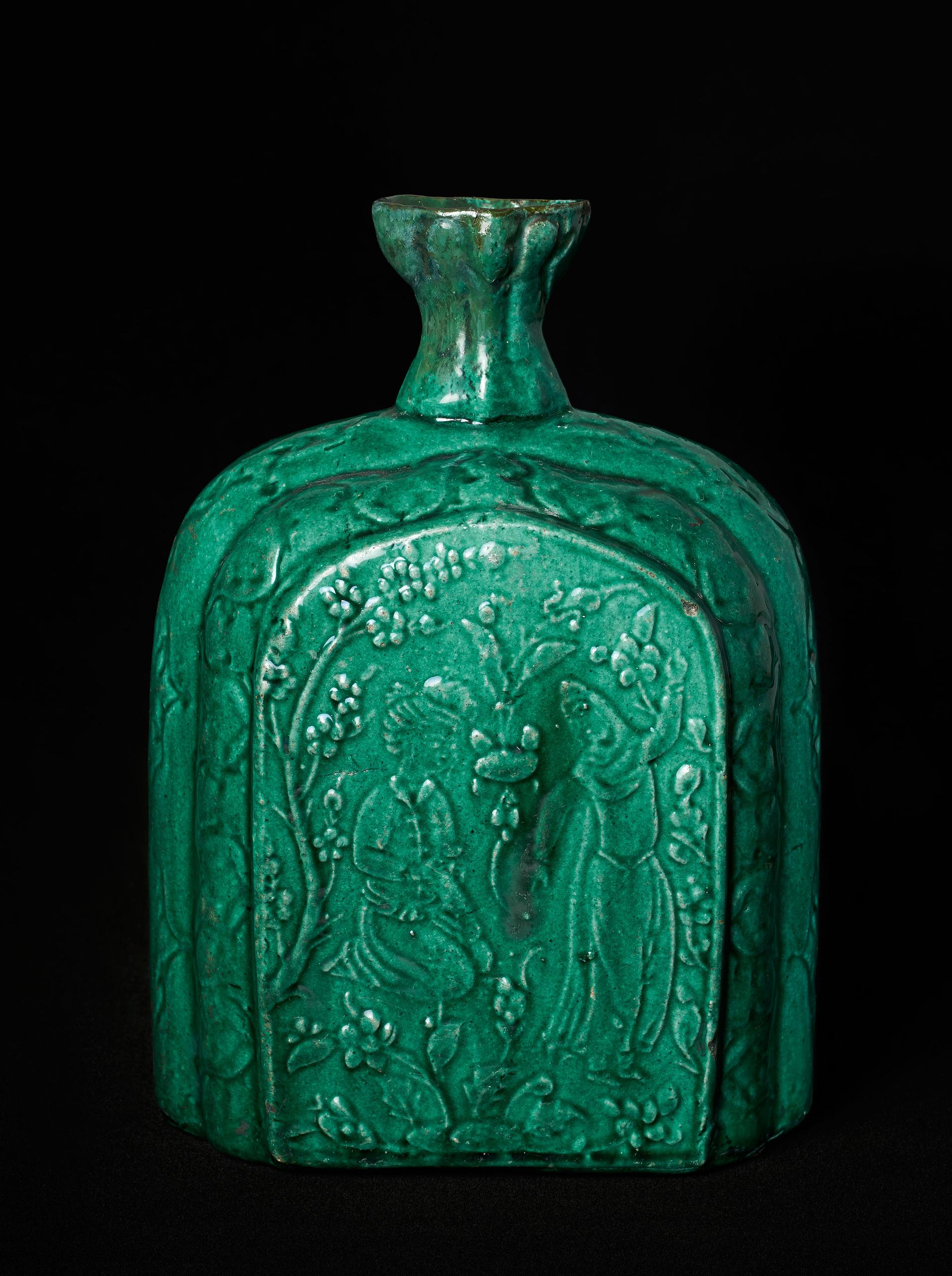
Flask, molded fritware covered with a transparent green glaze
Iran; 1st half of 17th century
H: 23.3; W: 16.2 ; D: 9.3 cm
Inventory number 40/2001
The molded flask was made up of two halves joined along the sides before firing.
The wide sides of the flask have two different figurative decorations. Its motifs are of the type frequently found in Safavid miniature painting from the 17th century: intimate leisure activities, often in gardens or in the wild, with flowers and trees. On one side is a kneeling woman playing the tambourine and on the other a woman dancing in front of a seated youth with a wine cup. The flask was in fact probably intended to hold wine.
The wide sides of the flask have two different figurative decorations. Its motifs are of the type frequently found in Safavid miniature painting from the 17th century: intimate leisure activities, often in gardens or in the wild, with flowers and trees. On one side is a kneeling woman playing the tambourine and on the other a woman dancing in front of a seated youth with a wine cup. The flask was in fact probably intended to hold wine.

Ceramics
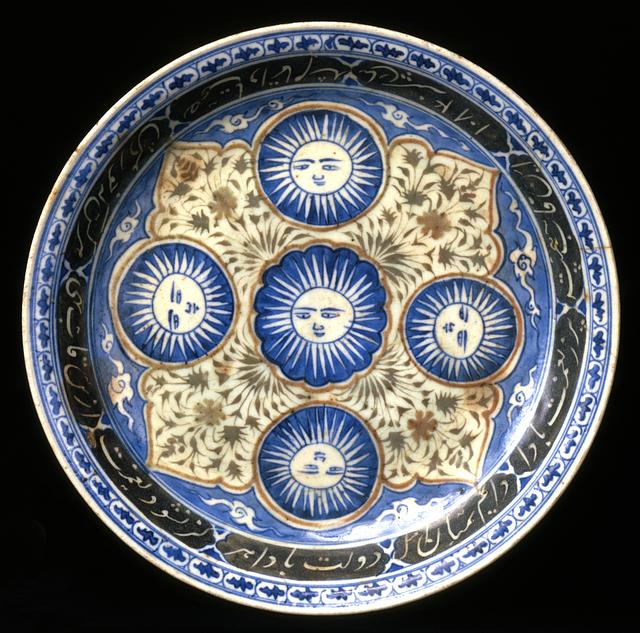
Fritware dish, painted in blue and black and with a red and a green slip under a transparent glaze
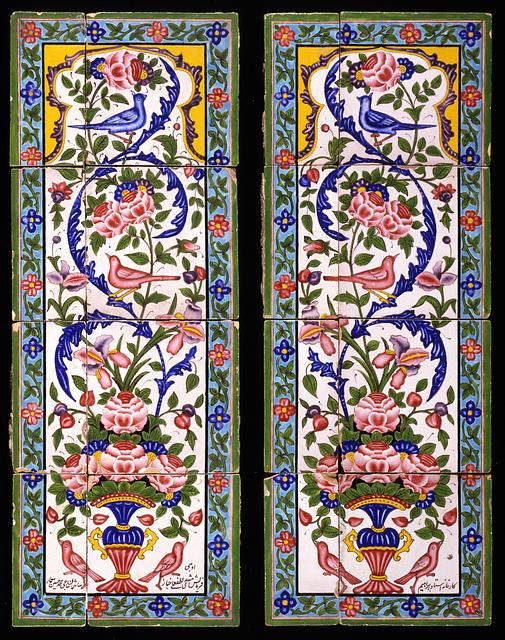
Two panels of earthenware tiles, painted in polychrome glazes over a white glaze
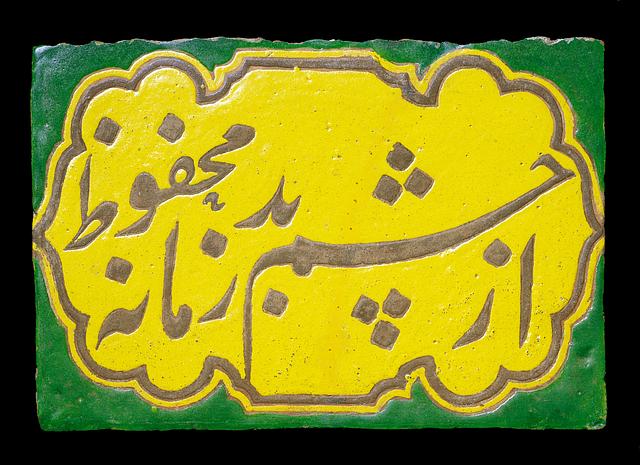
Earthenware tile, decorated in the cuerda seca technique with yellow, green, and manganese glazes
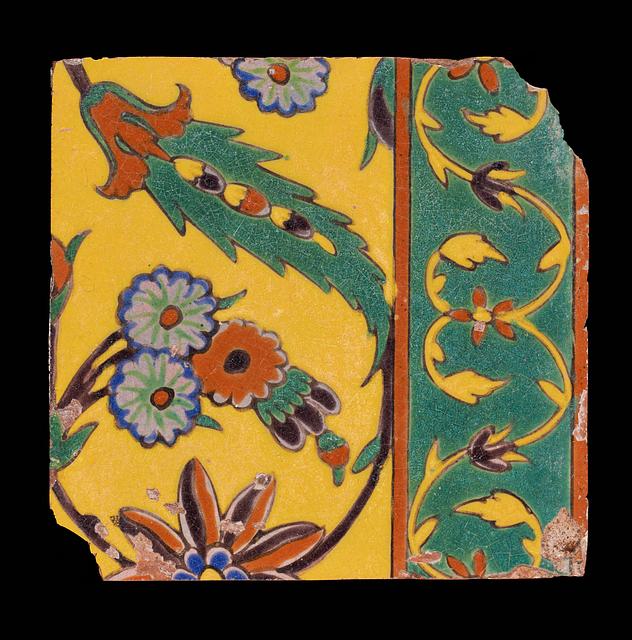
Earthenware tile, decorated in the cuerda seca technique with polychrome glazes