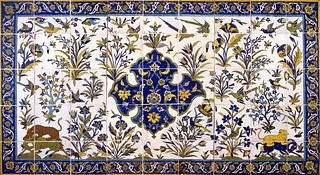
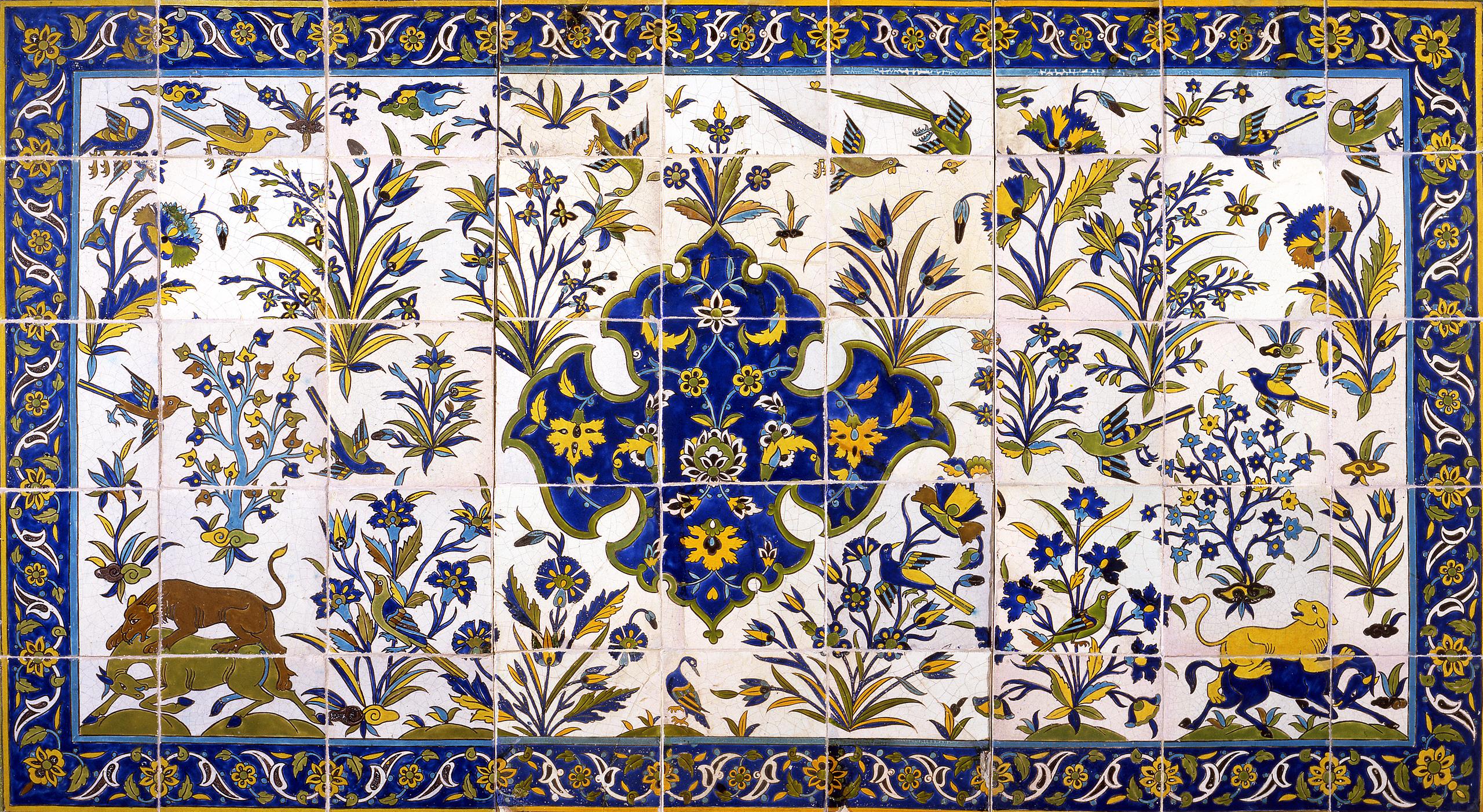
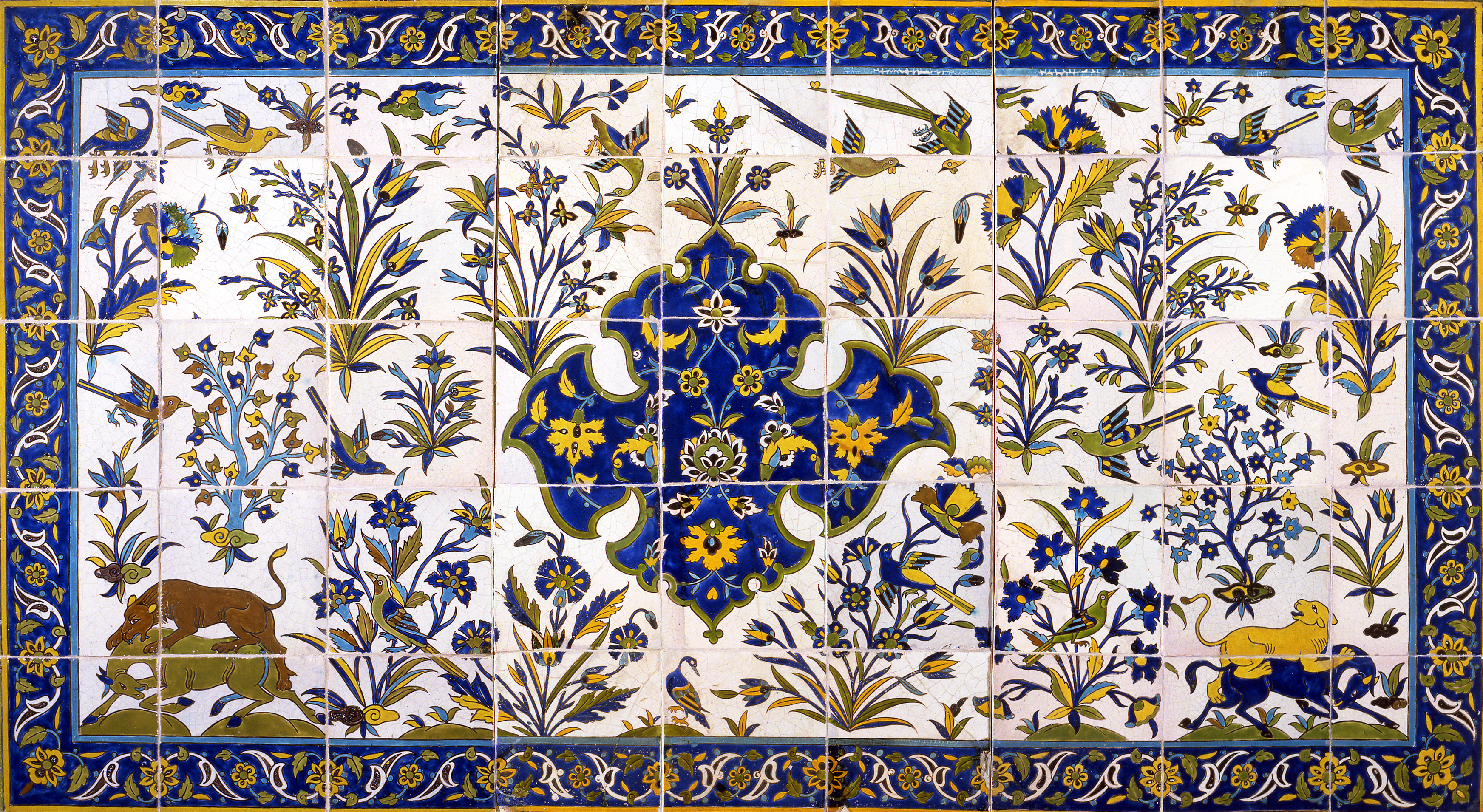
Fritware panel with 45 tiles, painted in polychrome glazes over an opaque, white glaze. Cuerda seca technique
Iran, Isfahan; 2nd half of 17th century
H: 121.5; L: 220 cm
Inventory number 24/1974
While Ottoman tile panels almost always confine themselves to the botanical world – even for large compositions – animals are often found among the vegetation on Safavid panels. There are also purely figurative Safavid panels, with courtiers, drinking parties, and hunting and battle scenes. Although the motifs’ iconographic significances are often quite vague in Islamic art, animal-combat motifs like those in the lower corners frequently refer to the royal sphere and are a legitimization of the right of the strong to rule. A panel like this one may in fact very well have graced a pavilion or courtyard in one of the gardens or palaces of the Safavid shahs.
Published in
Published in
Parke Bernet Sotheby, NY, 7/12-1973, lot 381;
Ingeborg Luschey-Schmeisser: “Ein safavidische Kachelpaneel in Kopenhagen mit Medaillon, Blumenmotiven und Tierkämpfen” in Archaeologische Mitteilungen aus Iran, 1979:12, pp. 375-394, pls. 68-75;
Kjeld von Folsach: Islamic art. The David Collection, Copenhagen 1990, cat.no. 178;
Kjeld von Folsach: Art from the World of Islam in The David Collection, Copenhagen 2001, cat.no. 253;
Ingeborg Luschey-Schmeisser: “Ein safavidische Kachelpaneel in Kopenhagen mit Medaillon, Blumenmotiven und Tierkämpfen” in Archaeologische Mitteilungen aus Iran, 1979:12, pp. 375-394, pls. 68-75;
Kjeld von Folsach: Islamic art. The David Collection, Copenhagen 1990, cat.no. 178;
Kjeld von Folsach: Art from the World of Islam in The David Collection, Copenhagen 2001, cat.no. 253;
Ceramics
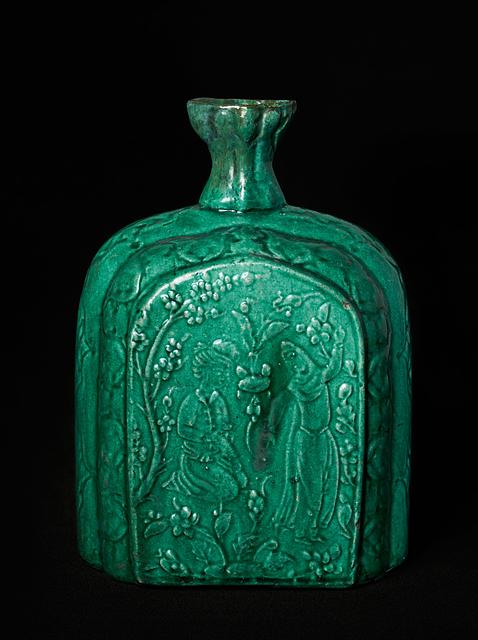
Flask, molded fritware covered with a transparent green glaze
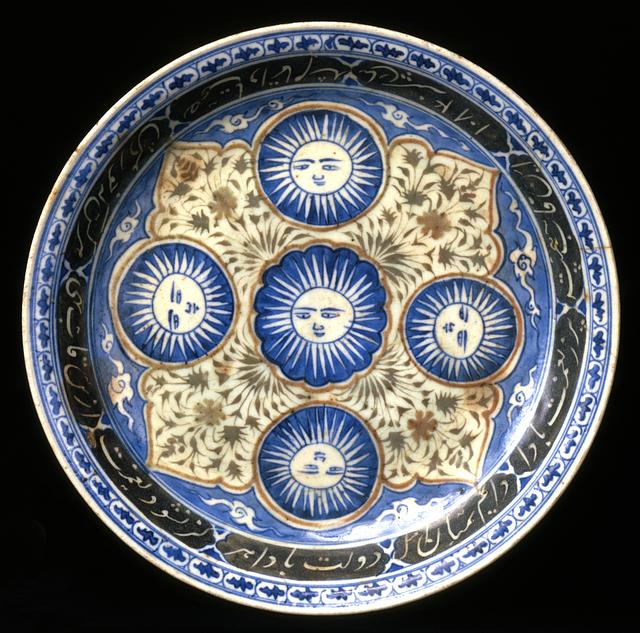
Fritware dish, painted in blue and black and with a red and a green slip under a transparent glaze
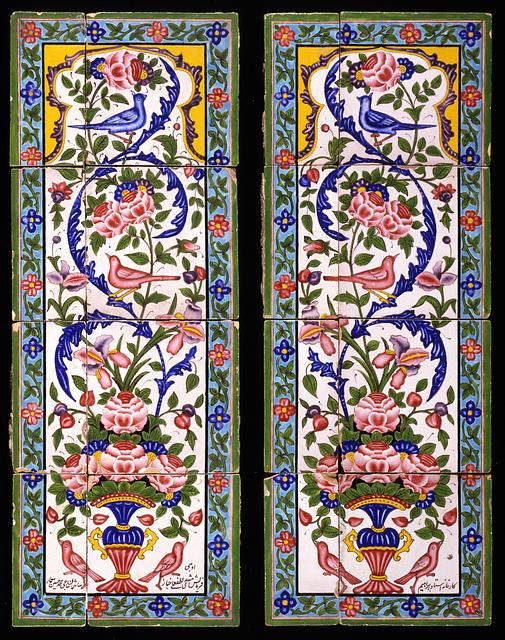
Two panels of earthenware tiles, painted in polychrome glazes over a white glaze
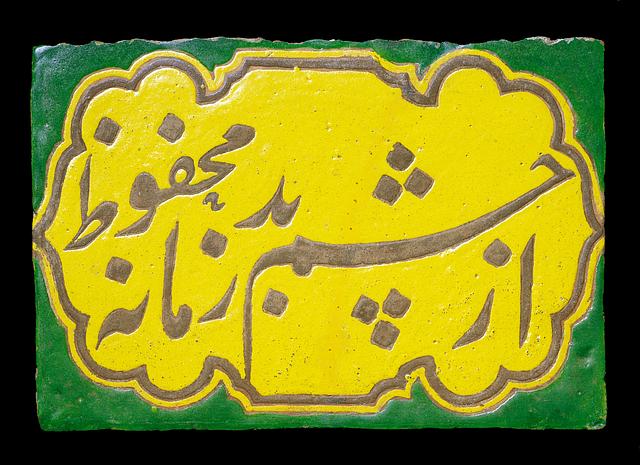
Earthenware tile, decorated in the cuerda seca technique with yellow, green, and manganese glazes