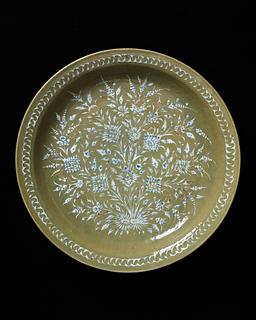
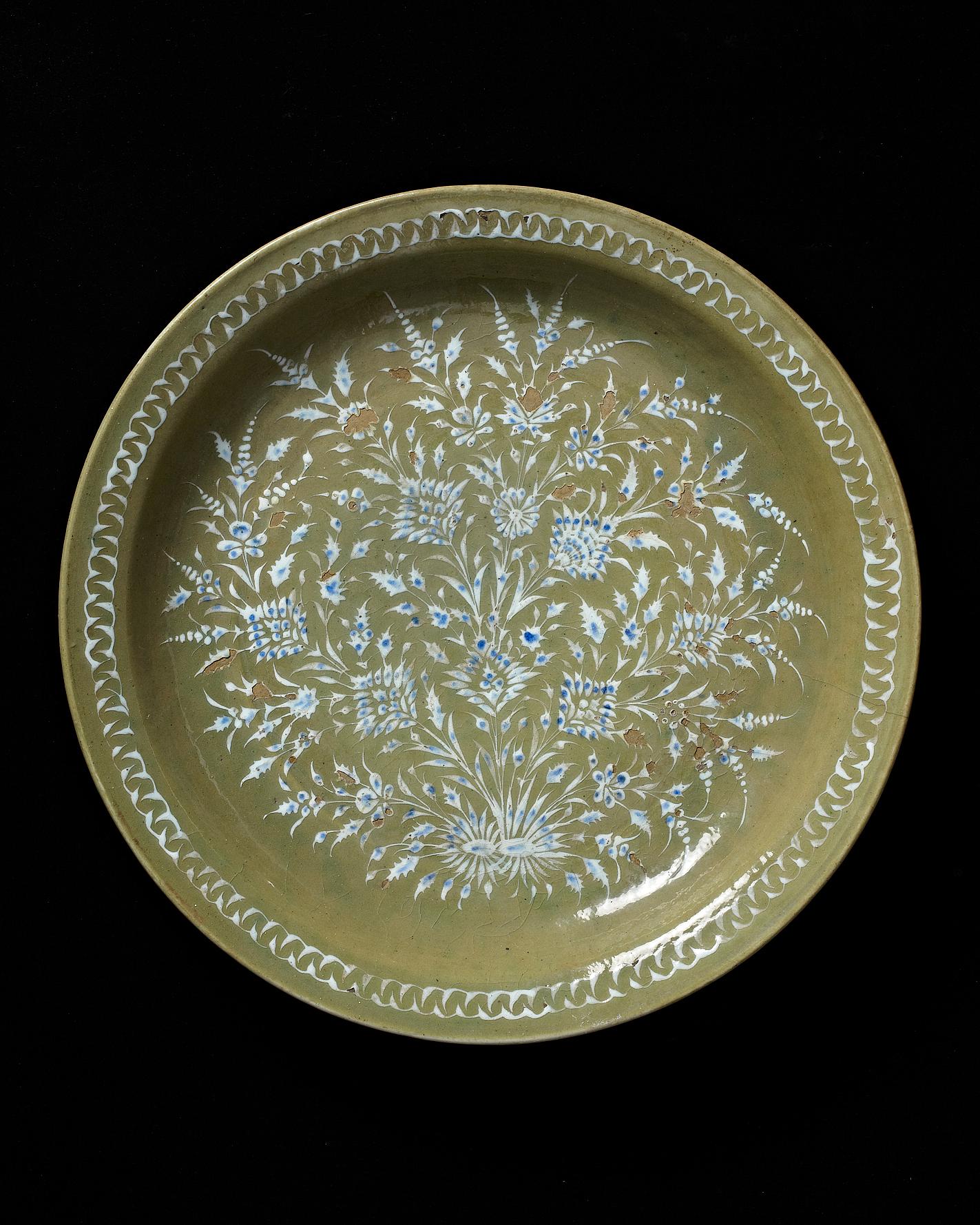
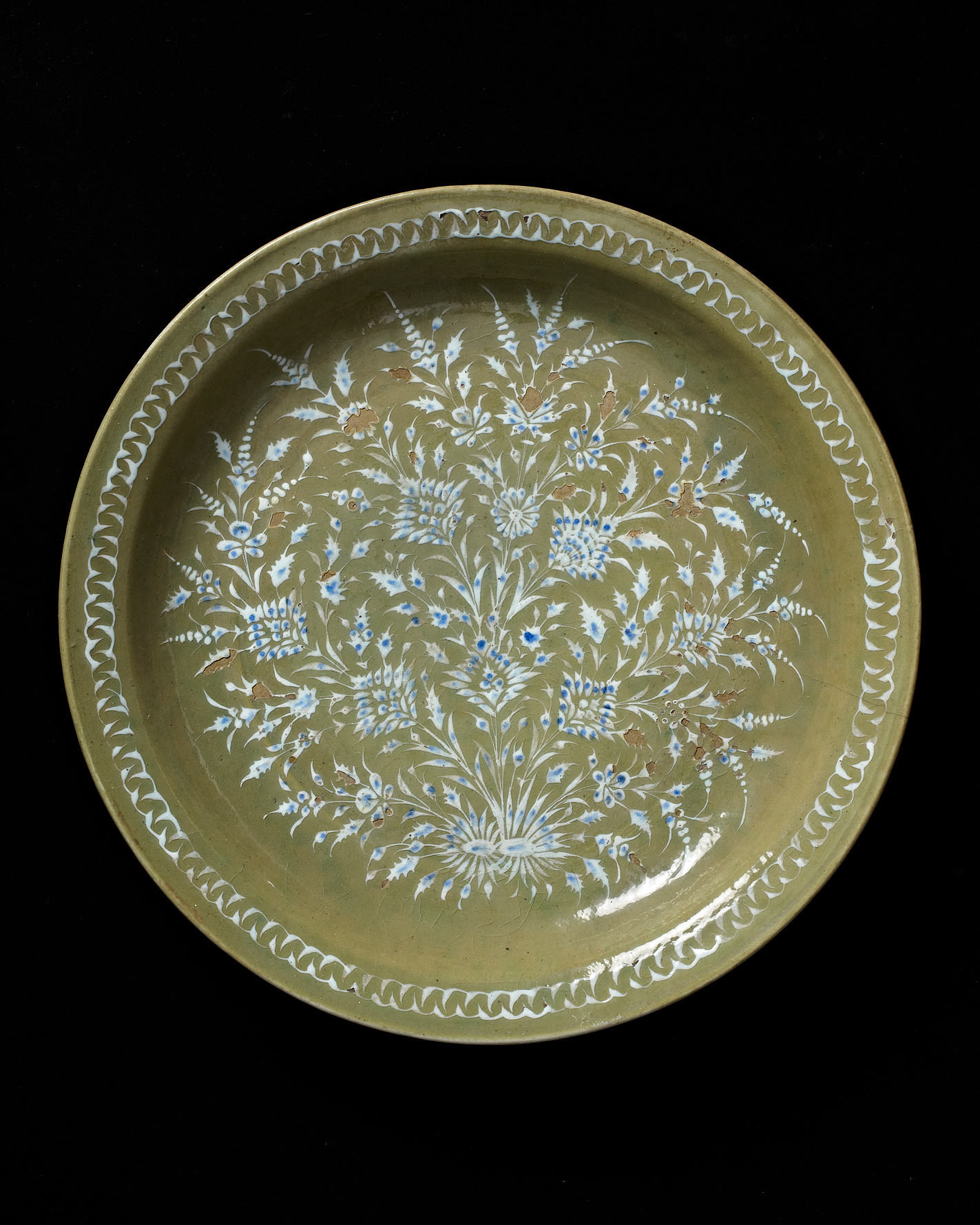
Fritware dish covered with an olive-green slip and painted in white and blue under a transparent glaze
Iran, Kerman (?); 17th century
Diam: 46 cm
Inventory number 16/2010
From the 13th century, Chinese celadon ceramics were imported to Iran, where dishes and bowls with this green glaze enjoyed great popularity in wealthy circles, among other things because it was believed that they would change color or even break if they came in contact with poison.
As early as the 14th century, potters in Iran began to imitate this costly type of imported ware. In the 17th century, when this monumental dish was made, it was no longer a question of simple copies. The green glaze was now combined with Iranian ornamentation, in this case a spider’s-web fine and exceedingly elegant plant decoration.
As early as the 14th century, potters in Iran began to imitate this costly type of imported ware. In the 17th century, when this monumental dish was made, it was no longer a question of simple copies. The green glaze was now combined with Iranian ornamentation, in this case a spider’s-web fine and exceedingly elegant plant decoration.
Ceramics
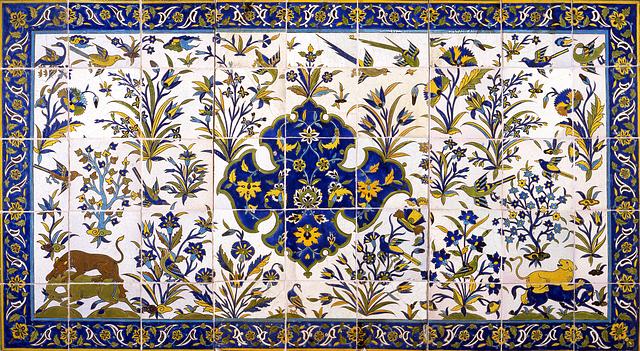
Fritware panel with 45 tiles, painted in polychrome glazes over an opaque, white glaze. Cuerda seca technique
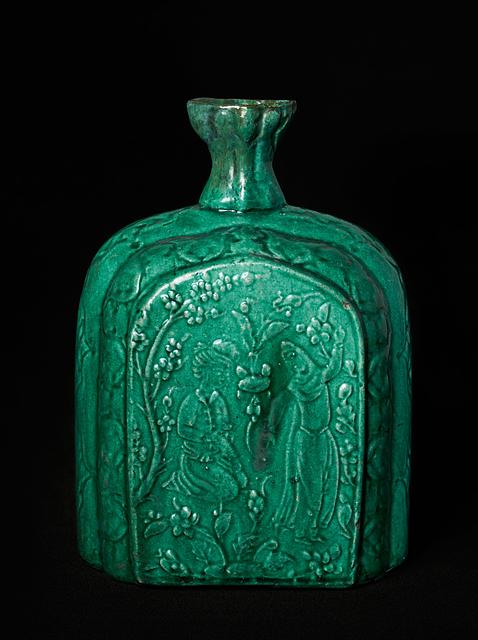
Flask, molded fritware covered with a transparent green glaze
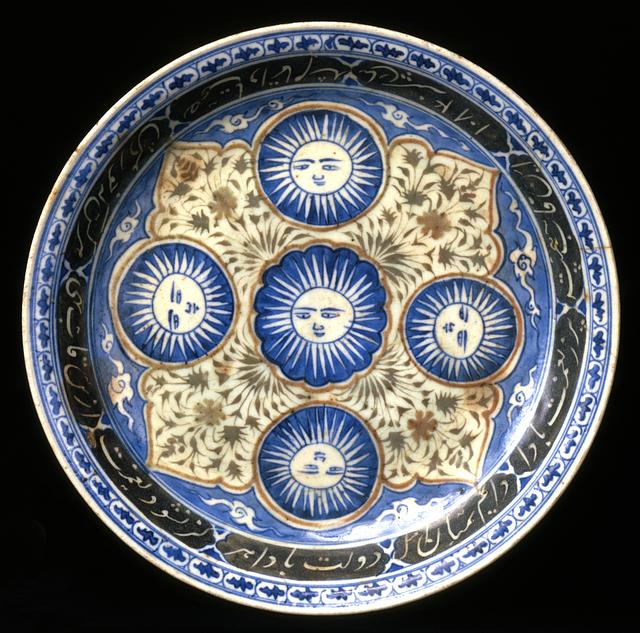
Fritware dish, painted in blue and black and with a red and a green slip under a transparent glaze
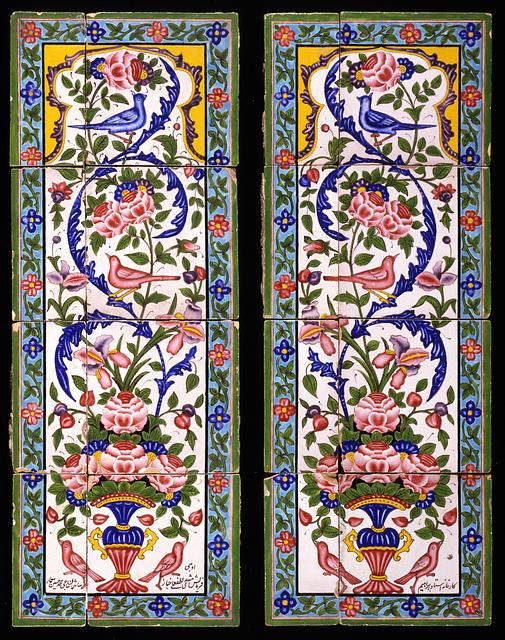
Two panels of earthenware tiles, painted in polychrome glazes over a white glaze