Mihrab tile, molded fritware
Iran, Kashan; 13th century
H: 50.5; W: 32 cm
Inventory number 3/1963
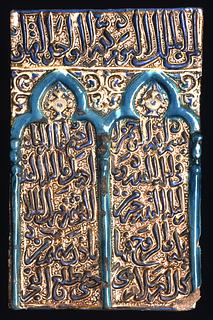
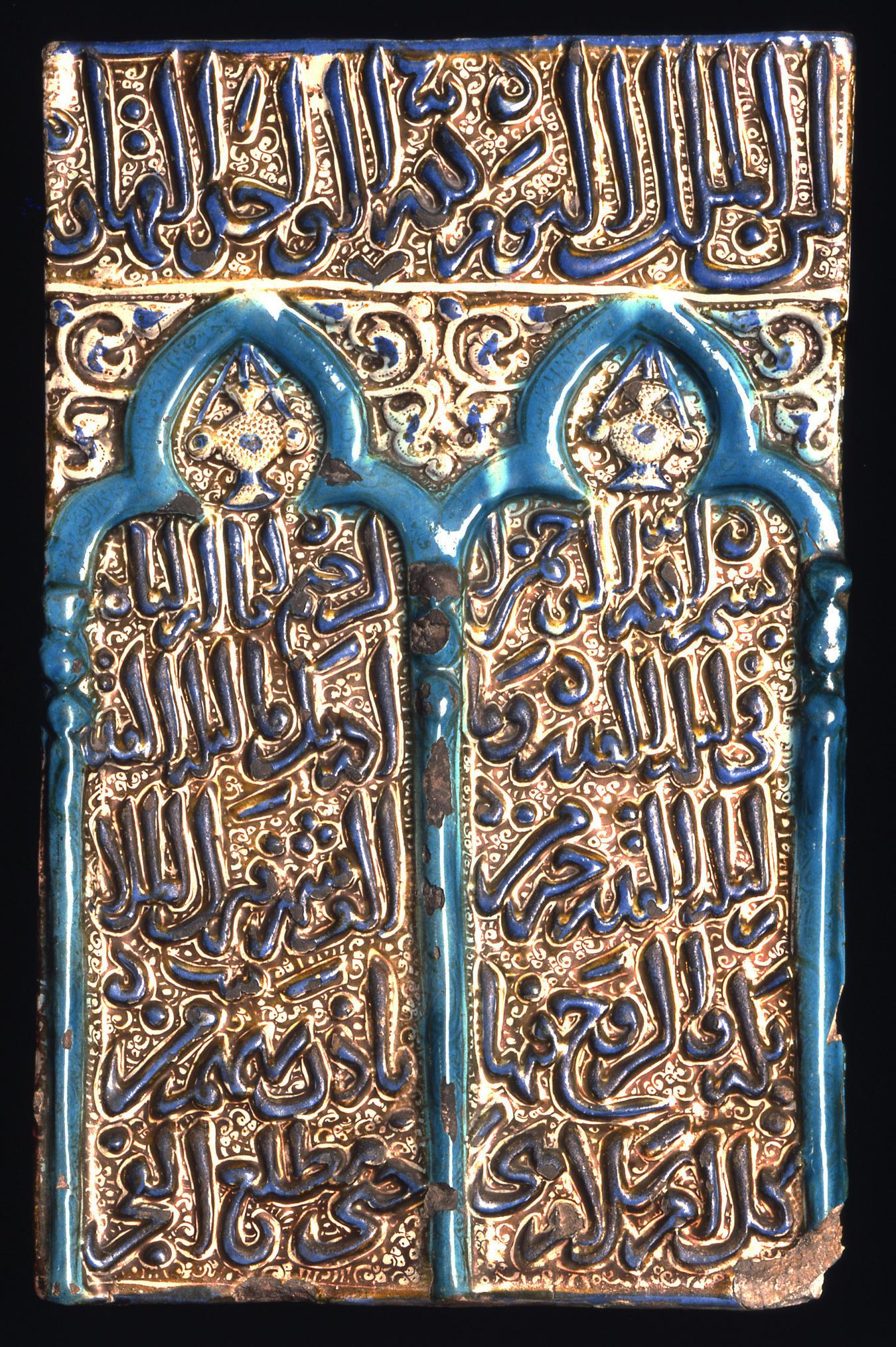
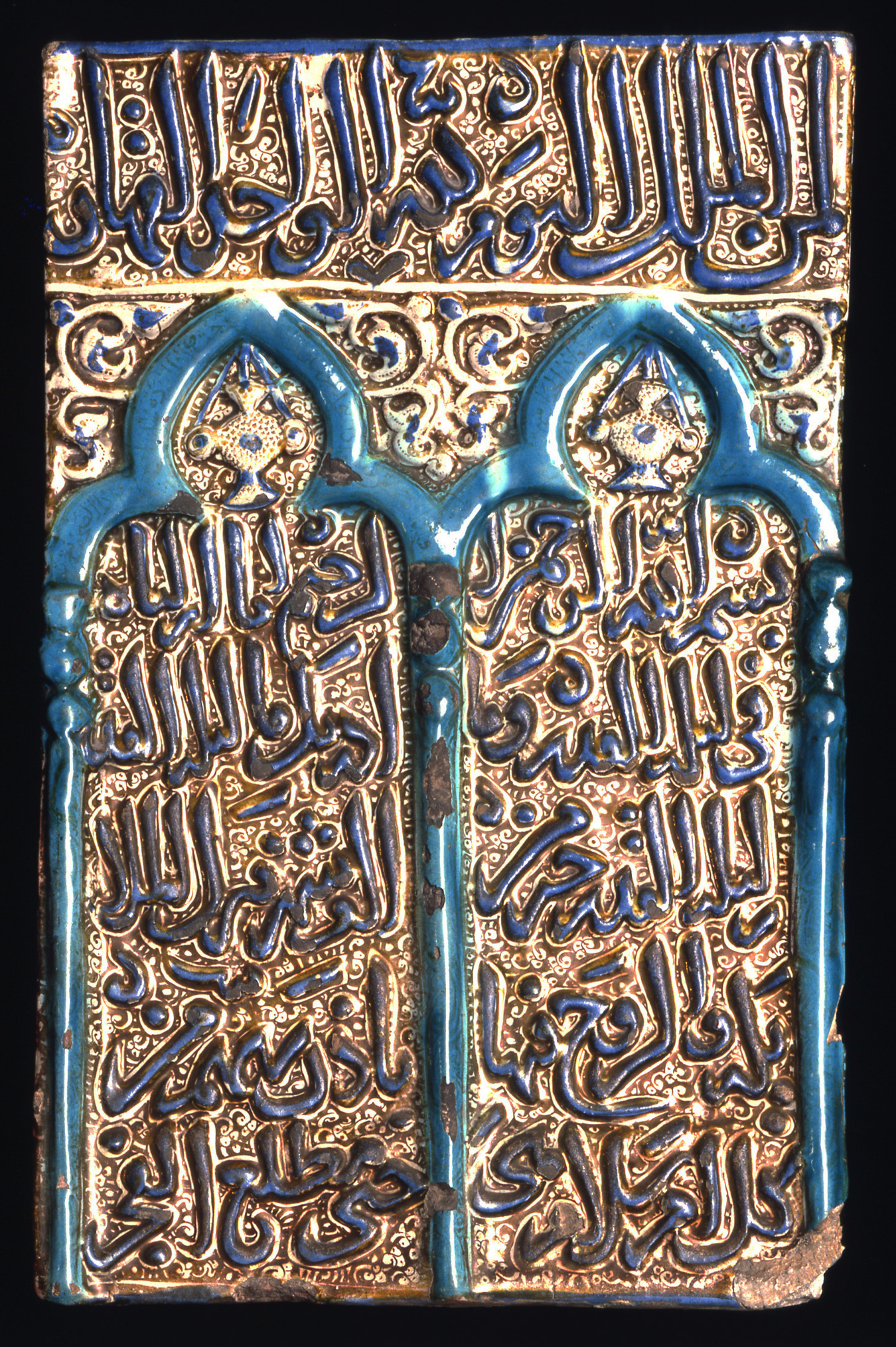
A mihrab, or prayer niche, is a special decorative element that denotes the direction of prayer in mosques the world over. The mihrab can take many forms. In small mosques, it often consists of a niche-shaped relief in one or more tiles, usually richly decorated with religious inscriptions and vegetal ornamentation. Larger mosques generally have a niche proper built into the wall.
This Il-Khanid mihrab tile features not one but two niches in relief. As is often the case, the niches contain a lamp. Lamps like these are believed to refer to the Koran’s famous “Light Verse,” Ayat al-Nur:
“God is the Light / of the heavens and the earth. / The parable of His Light / Is as if there were a Niche and within it a Lamp: / The Lamp enclosed in Glass: / The glass as it were / A brilliant star: / Lit from a blessed Tree, / An Olive, neither of the East / Nor of the West, / Whose Oil is well-nigh / Luminous, / Though fire scarce touched it: / Light upon Light! / God doth guide / Whom He will To His Light: / God doth set forth Parables / For men: and God / Doth know all things.”
(Sura 24, verse 35)
This Il-Khanid mihrab tile features not one but two niches in relief. As is often the case, the niches contain a lamp. Lamps like these are believed to refer to the Koran’s famous “Light Verse,” Ayat al-Nur:
“God is the Light / of the heavens and the earth. / The parable of His Light / Is as if there were a Niche and within it a Lamp: / The Lamp enclosed in Glass: / The glass as it were / A brilliant star: / Lit from a blessed Tree, / An Olive, neither of the East / Nor of the West, / Whose Oil is well-nigh / Luminous, / Though fire scarce touched it: / Light upon Light! / God doth guide / Whom He will To His Light: / God doth set forth Parables / For men: and God / Doth know all things.”
(Sura 24, verse 35)
Published in
Published in
Kjeld von Folsach: Islamic art. The David Collection, Copenhagen 1990, cat.no. 125;
Kjeld von Folsach: Art from the World of Islam in The David Collection, Copenhagen 2001, cat.no. 207;
Kjeld von Folsach: Art from the World of Islam in The David Collection, Copenhagen 2001, cat.no. 207;
Ceramics
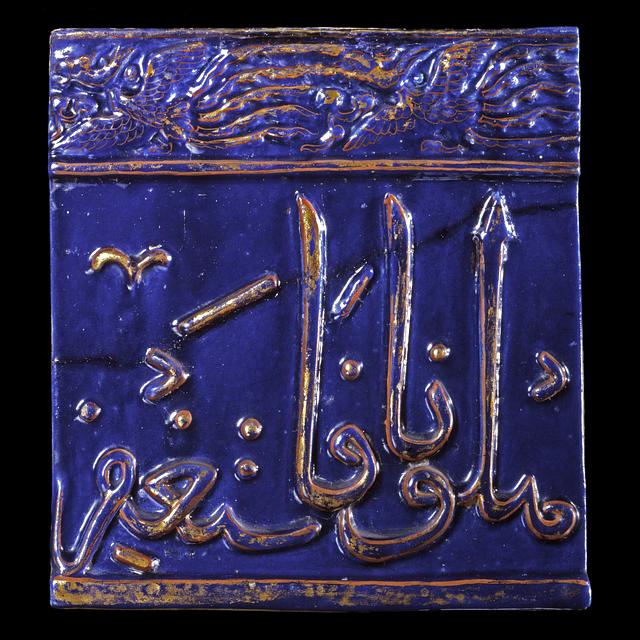
Fritware tile, molded and painted in red and with gold leaf over a blue glaze. Lajvardina type
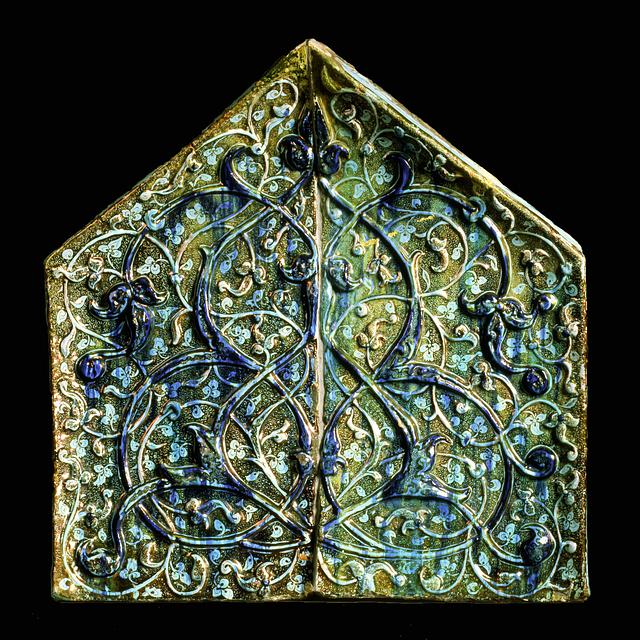
Fritware mihrab tile, cast in two parts and painted in blue and turquoise in, and in lustre over, an opaque, white glaze
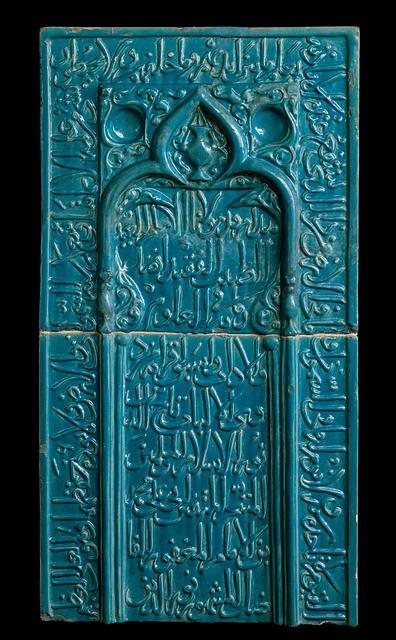
Fritware tombstone, cast in two pieces and covered with an opaque, turquoise glaze
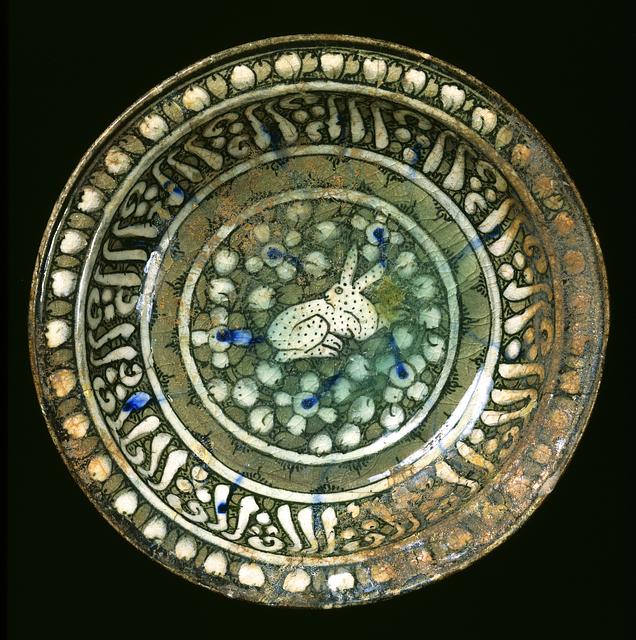
Fritware dish, painted with a white and gray slip and in blue and black under a transparent glaze. Sultanabad type