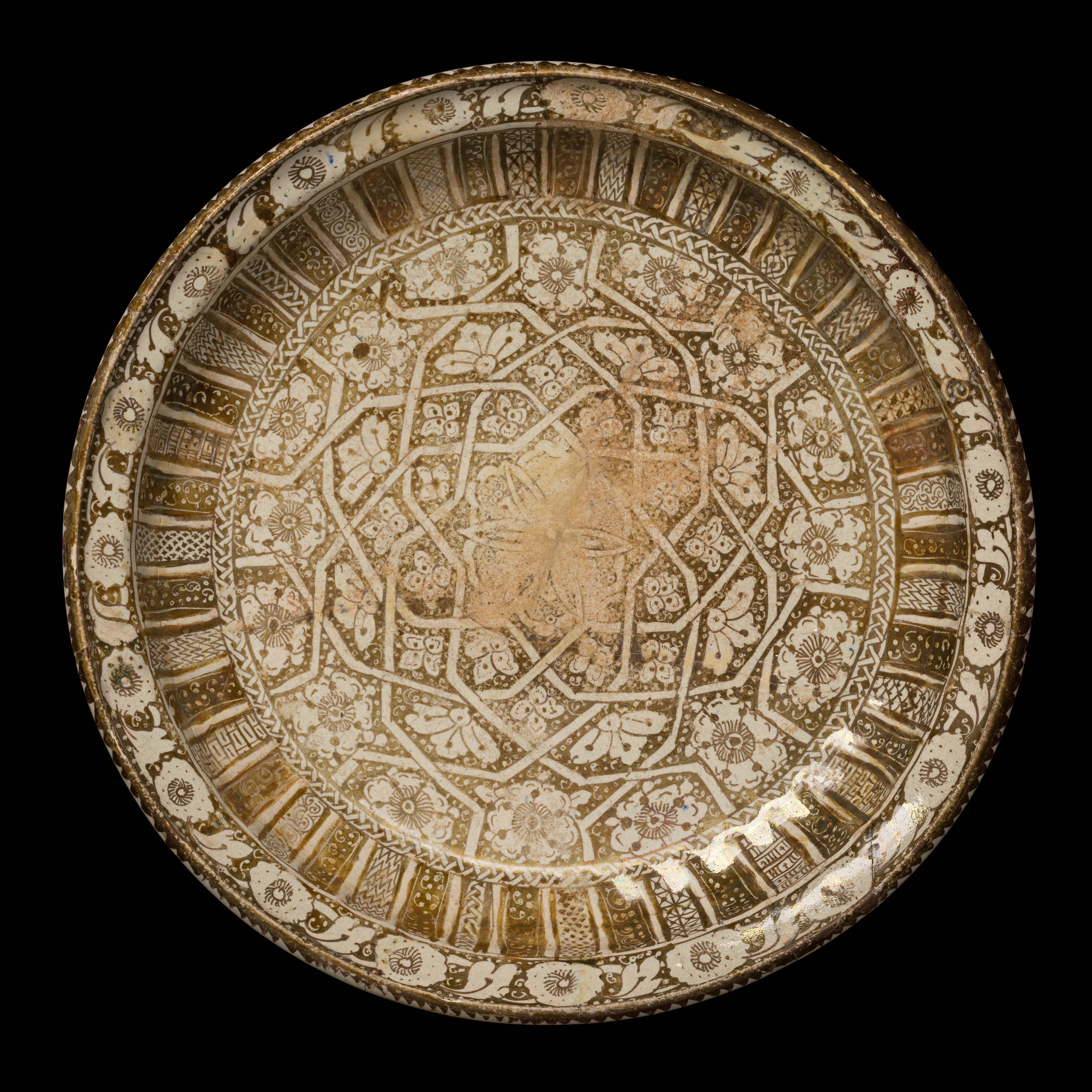
Fritware dish, painted in lustre over an opaque, white glaze
Iran, Kashan; 667 H = 1268
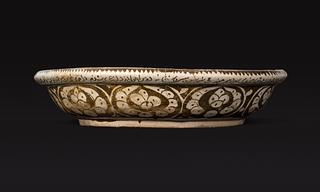
H: 6.5; Diam: 29.5 cm
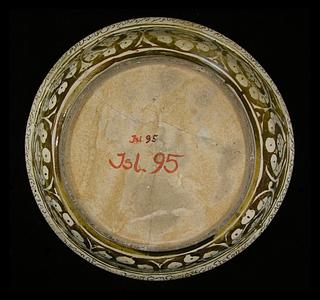
Inventory number Isl 95
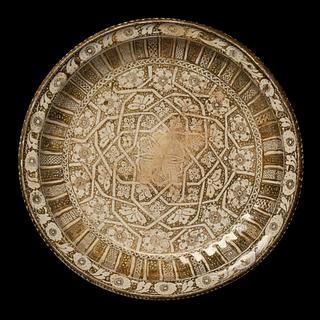
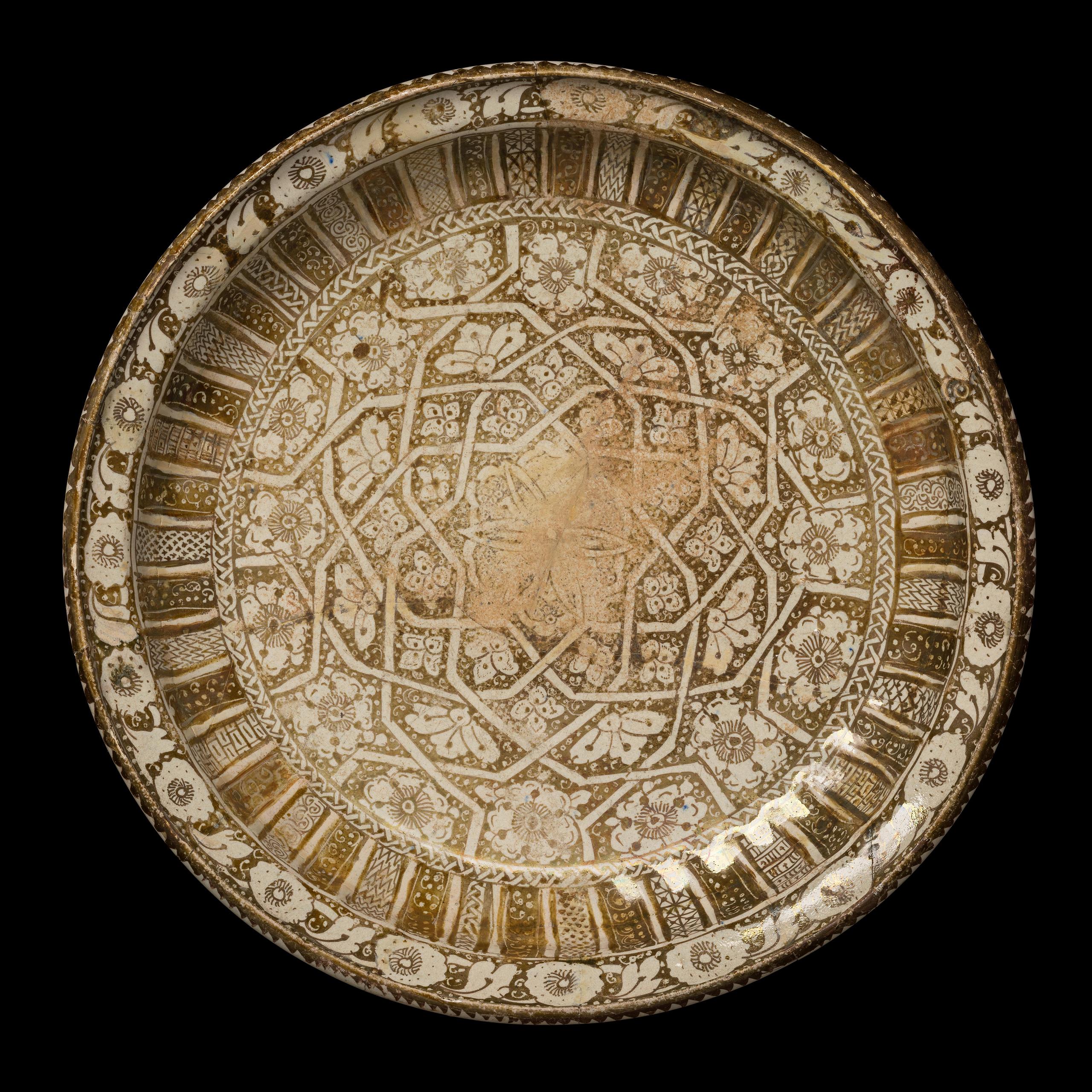
The devastation wreaked by the Mongols was not able to stifle the creation of art in the Middle East for very long, and this dish, dated 1268, shows that the highly specialized potteries in Kashan quickly resumed production.
The Far Eastern influence that the Mongols brought with them is found in the shape of the dish, which copies Chinese celadon porcelain, and in some of the flowers. The complicated geometric decoration, in contrast, is purely Islamic. Using a six-petaled flower as a starting point, the dish was filled out with an intricate interlacing based on an octagon. It consists of eight white bands that change direction eight times and alternately run over and under one another.
The Far Eastern influence that the Mongols brought with them is found in the shape of the dish, which copies Chinese celadon porcelain, and in some of the flowers. The complicated geometric decoration, in contrast, is purely Islamic. Using a six-petaled flower as a starting point, the dish was filled out with an intricate interlacing based on an octagon. It consists of eight white bands that change direction eight times and alternately run over and under one another.
Published in
Published in
Oliver Watson: Persian lustre ware, London 1985, p. 112, cat,nos. 89a-b (mistakenly given acc.no. Isl 96);
Art from the World of Islam. 8th-18th century, Louisiana, Humlebæk 1987, cat.no. 130;
Kjeld von Folsach: Islamic art. The David Collection, Copenhagen 1990, cat.no. 146;
Kjeld von Folsach, Torben Lundbæk and Peder Mortensen (eds.): Sultan, Shah and Great Mughal: the history and culture of the Islamic world, The National Museum, Copenhagen 1996, cat.no. 251;
Kjeld von Folsach: Art from the World of Islam in The David Collection, Copenhagen 2001, cat.no. 212;
Linda Komaroff and Stefano Carboni, (eds.): The legacy of Genghis Khan: courtly art and culture in Western Asia, 1256-1353, Metropolitan Museum of Art, New York 2002, fig. 3, cat.no. 128;
Sheila S. Blair and Jonathan M. Bloom (eds.): Cosmophilia. Islamic Art from the David Collection, Copenhagen, McMullen Museum of Art, Boston College, Boston 2006, cat.no. 48;
John A. Burrison: Global clay: themes in world ceramic traditions, Bloomington 2017, fig. 3.7, pp. 71 and 76;
Salima Hellal, Sandra Aube and Eloïse Brac de la Perrière (eds.): Les arts de l'islam au Musée de Beaux-Arts de Lyon, Gent 2023. p. 192, fig. 73 (incorrectly numbered Isl 96);
Art from the World of Islam. 8th-18th century, Louisiana, Humlebæk 1987, cat.no. 130;
Kjeld von Folsach: Islamic art. The David Collection, Copenhagen 1990, cat.no. 146;
Kjeld von Folsach, Torben Lundbæk and Peder Mortensen (eds.): Sultan, Shah and Great Mughal: the history and culture of the Islamic world, The National Museum, Copenhagen 1996, cat.no. 251;
Kjeld von Folsach: Art from the World of Islam in The David Collection, Copenhagen 2001, cat.no. 212;
Linda Komaroff and Stefano Carboni, (eds.): The legacy of Genghis Khan: courtly art and culture in Western Asia, 1256-1353, Metropolitan Museum of Art, New York 2002, fig. 3, cat.no. 128;
Sheila S. Blair and Jonathan M. Bloom (eds.): Cosmophilia. Islamic Art from the David Collection, Copenhagen, McMullen Museum of Art, Boston College, Boston 2006, cat.no. 48;
John A. Burrison: Global clay: themes in world ceramic traditions, Bloomington 2017, fig. 3.7, pp. 71 and 76;
Salima Hellal, Sandra Aube and Eloïse Brac de la Perrière (eds.): Les arts de l'islam au Musée de Beaux-Arts de Lyon, Gent 2023. p. 192, fig. 73 (incorrectly numbered Isl 96);
Ceramics
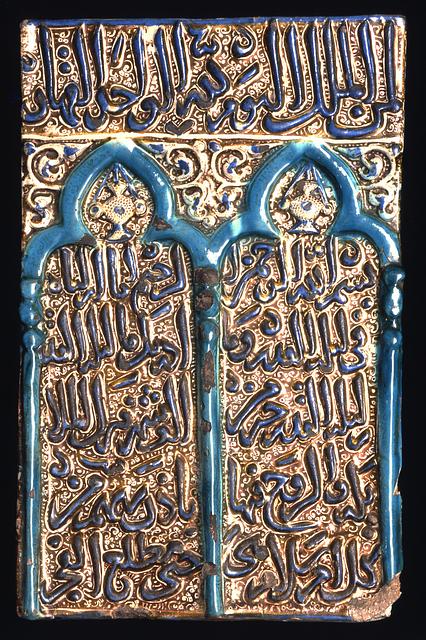
Mihrab tile, molded fritware
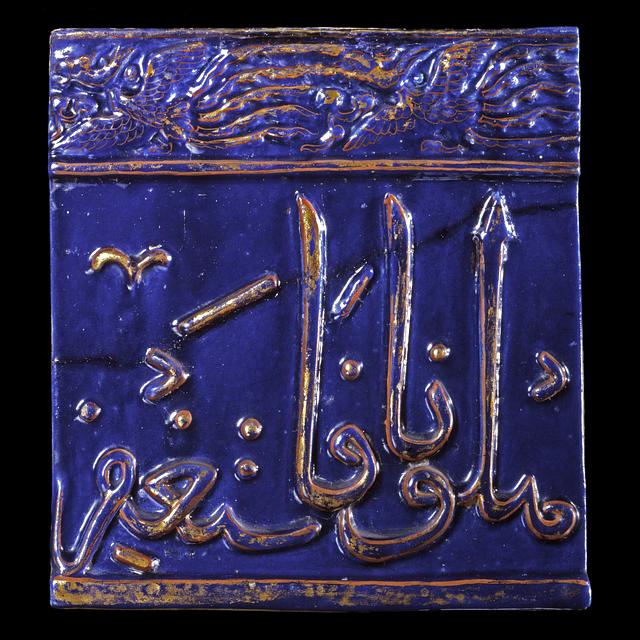
Fritware tile, molded and painted in red and with gold leaf over a blue glaze. Lajvardina type
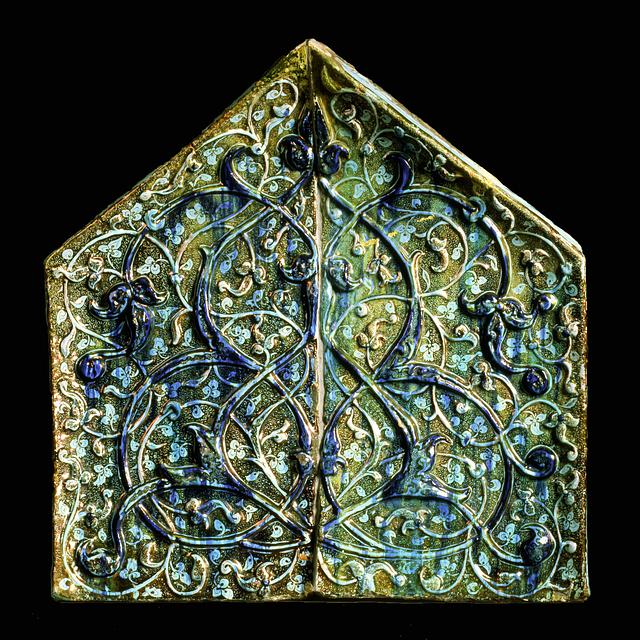
Fritware mihrab tile, cast in two parts and painted in blue and turquoise in, and in lustre over, an opaque, white glaze
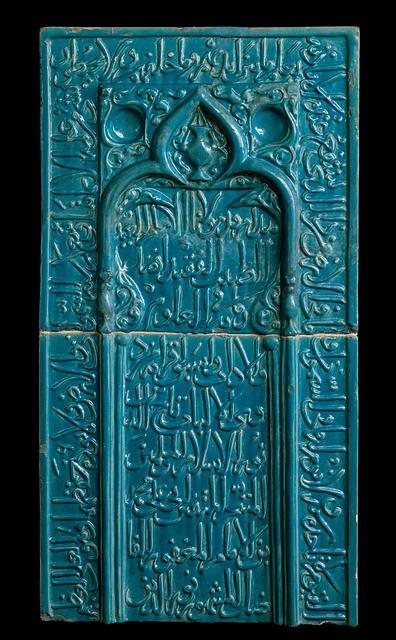
Fritware tombstone, cast in two pieces and covered with an opaque, turquoise glaze