Water pipe (huqqa), gilded silver inlaid with enamel
India, Lucknow; end of 18th century
H: 20.5; Diam: 22 cm
Inventory number 20/2018
At the same time as the Mughal empire was weakened in the course of the 18th century, important new centers emerged both in the south in Hyderabad and especially towards the east under the nawabs of Awadh, with cities such as Faizabad and Lucknow. The two cities was especially developed under Shuja al-Dawla (r. 1754-1775), who like his father, Safdar Jang, was grand vizier for the Mughal emperors, and his son Asaf al-Dawla (r. 1775-1797). The latter moved the government in 1775 from Faizabad to Lucknow, which in the following years developed into a brilliant capital whose magnificence could match that of the Great Mughal’s residences. Painting also developed concurrently (see e.g. 46/1980 and 50/1981), and in the realm of decorative art, silver objects inlaid with colorful enamel are especially renowned.
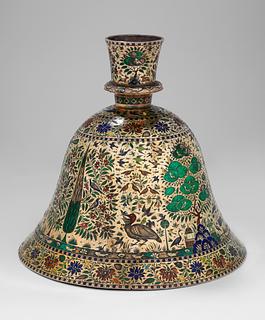
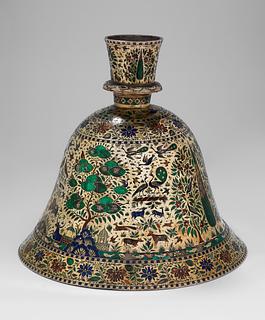
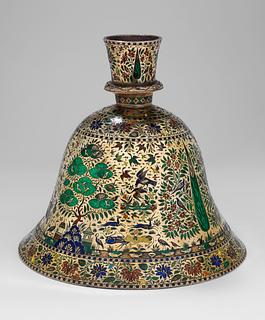
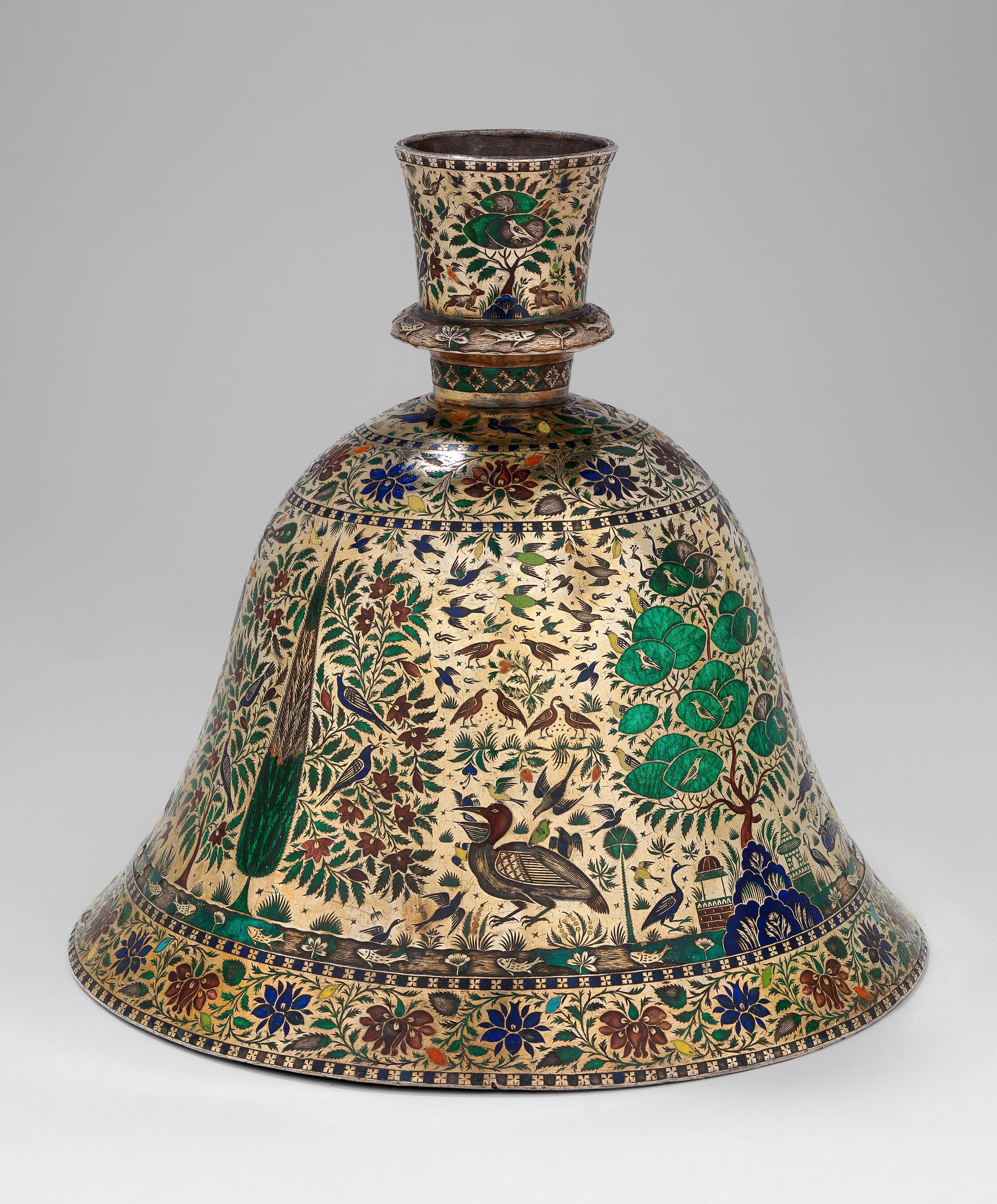
This bell-shaped huqqa base is an especially rich example that with its swarm of polychrome, figurative motifs differs from the simpler style that characterized earlier enamel work made under the Mughals (1/1982). The palette, which often included transparent blue and green and more rarely manganese, was expanded here with transparent turquoise and honey yellow as well as opaque yellow, orange, light green, turquoise, and black. While the transparent enamels let the underlying engravings shine through, the opaque colors have a heavier look.
The huqqa is divided into different horizontal bands, six of which are purely ornamental, two have elegant lotus garlands, and three have both animals and plants. The largest band, around the body, is especially prominent. Between four large trees or groups of trees are some small pavilions and an abundance of animals: undefined little birds, magpies, peacocks, birds of prey, ducks, geese, storks or herons, and somewhat surprisingly, a large pelican. Mammals are represented by buffaloes, antelopes, nilgais, and hares. In addition, there are foxes or jackals, a leopard, and a tiger. There are also turquoise rivers with fish as well as little hills, various types of vegetation, and little cloud ornaments.
The design’s diversity is sumptuous and refreshing. A simpler and more stringent decoration scheme can be seen on a contemporary hand basin at the museum (73/1980).
This bell-shaped huqqa base is an especially rich example that with its swarm of polychrome, figurative motifs differs from the simpler style that characterized earlier enamel work made under the Mughals (1/1982). The palette, which often included transparent blue and green and more rarely manganese, was expanded here with transparent turquoise and honey yellow as well as opaque yellow, orange, light green, turquoise, and black. While the transparent enamels let the underlying engravings shine through, the opaque colors have a heavier look.
The huqqa is divided into different horizontal bands, six of which are purely ornamental, two have elegant lotus garlands, and three have both animals and plants. The largest band, around the body, is especially prominent. Between four large trees or groups of trees are some small pavilions and an abundance of animals: undefined little birds, magpies, peacocks, birds of prey, ducks, geese, storks or herons, and somewhat surprisingly, a large pelican. Mammals are represented by buffaloes, antelopes, nilgais, and hares. In addition, there are foxes or jackals, a leopard, and a tiger. There are also turquoise rivers with fish as well as little hills, various types of vegetation, and little cloud ornaments.
The design’s diversity is sumptuous and refreshing. A simpler and more stringent decoration scheme can be seen on a contemporary hand basin at the museum (73/1980).
Published in
Published in
Mark Zebrowski: Gold, silver and bronze from Mughal India, London 1997, p. 85, pl. 71;
Prahlad Bubbar (ed.): Flowers and geometry: Indian, Islamic and Himalayan art 1550-1850, Prahlad Bubbar, London 2018, cat.nor. 20, pp. 68-69;
Prahlad Bubbar (ed.): Flowers and geometry: Indian, Islamic and Himalayan art 1550-1850, Prahlad Bubbar, London 2018, cat.nor. 20, pp. 68-69;
_The-David-Collection_Copenhagen_photo-Nicholas-Moss.jpg)
_The-David-Collection_Copenhagen_photo-Nicholas-Moss.jpg)
_The-David-Collection_Copenhagen_photo-Nicholas%20Moss.jpg)
_The-David-Collection_Copenhagen_photo-Nicholas-Moss.jpg)
_The-David-Collection_Copenhagen_photo-Nicholas-Moss.jpg?disposition=attachment)
Metalwork, Weapons and Jewelry
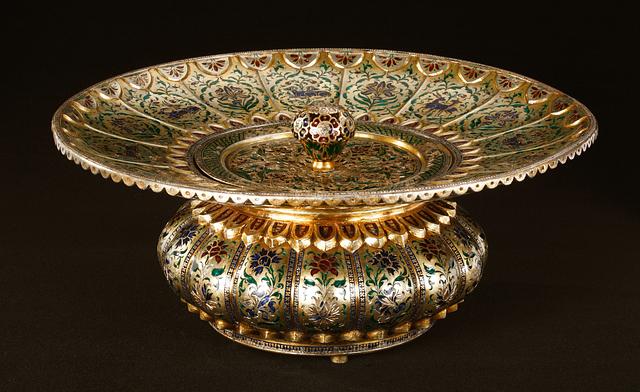
Hand basin, parcel-gilt, embossed silver inlaid with blue, green, and crimson enamel
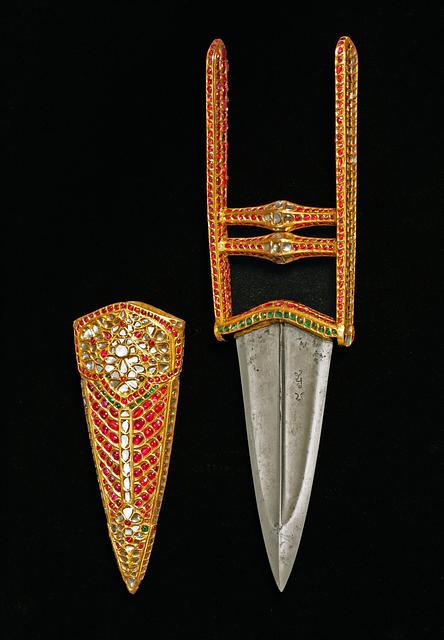
Dagger (katar) with gold hilt and scabbard, set with rubies, emeralds, and diamonds
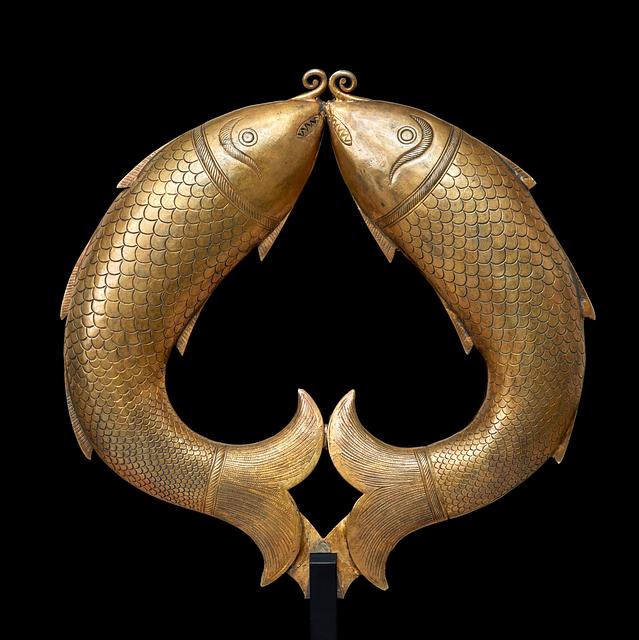
Standard (mahi-maratib) of gilt and engraved silver
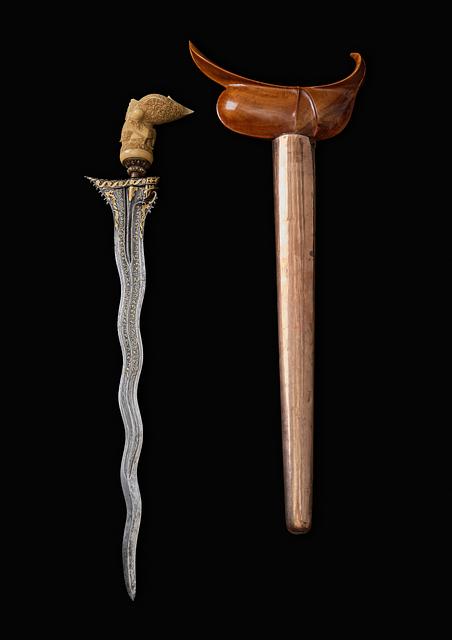
Dagger (kris) of steel inlaid with gold, hilt of hippopotamus tooth and gold inlaid with diamonds, sheath of wood and suasa metal