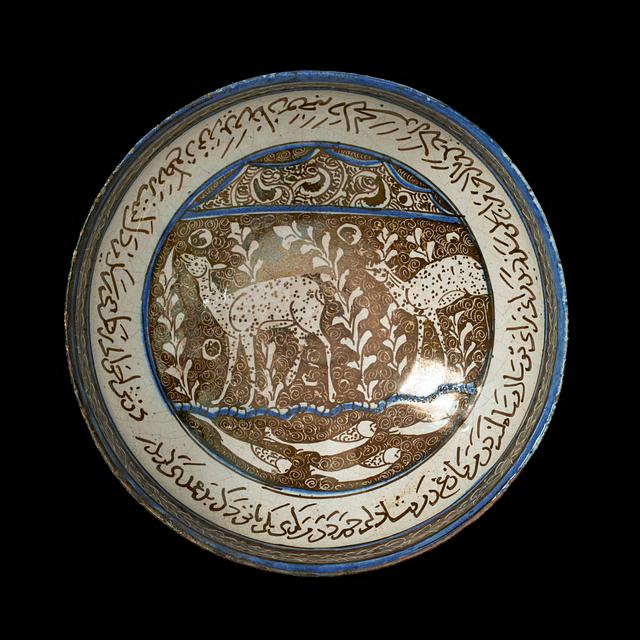
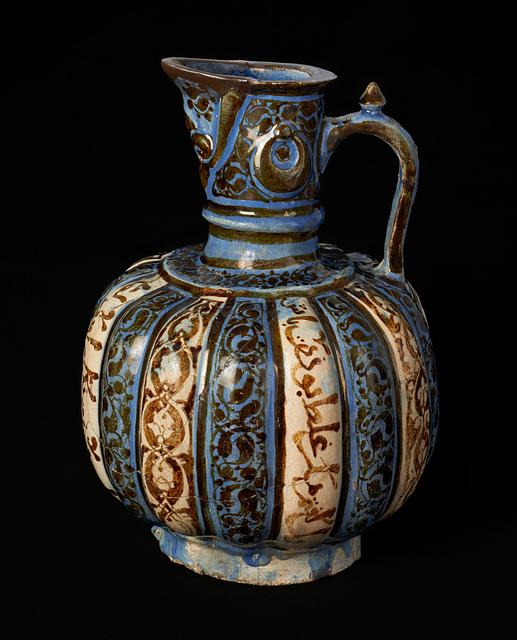
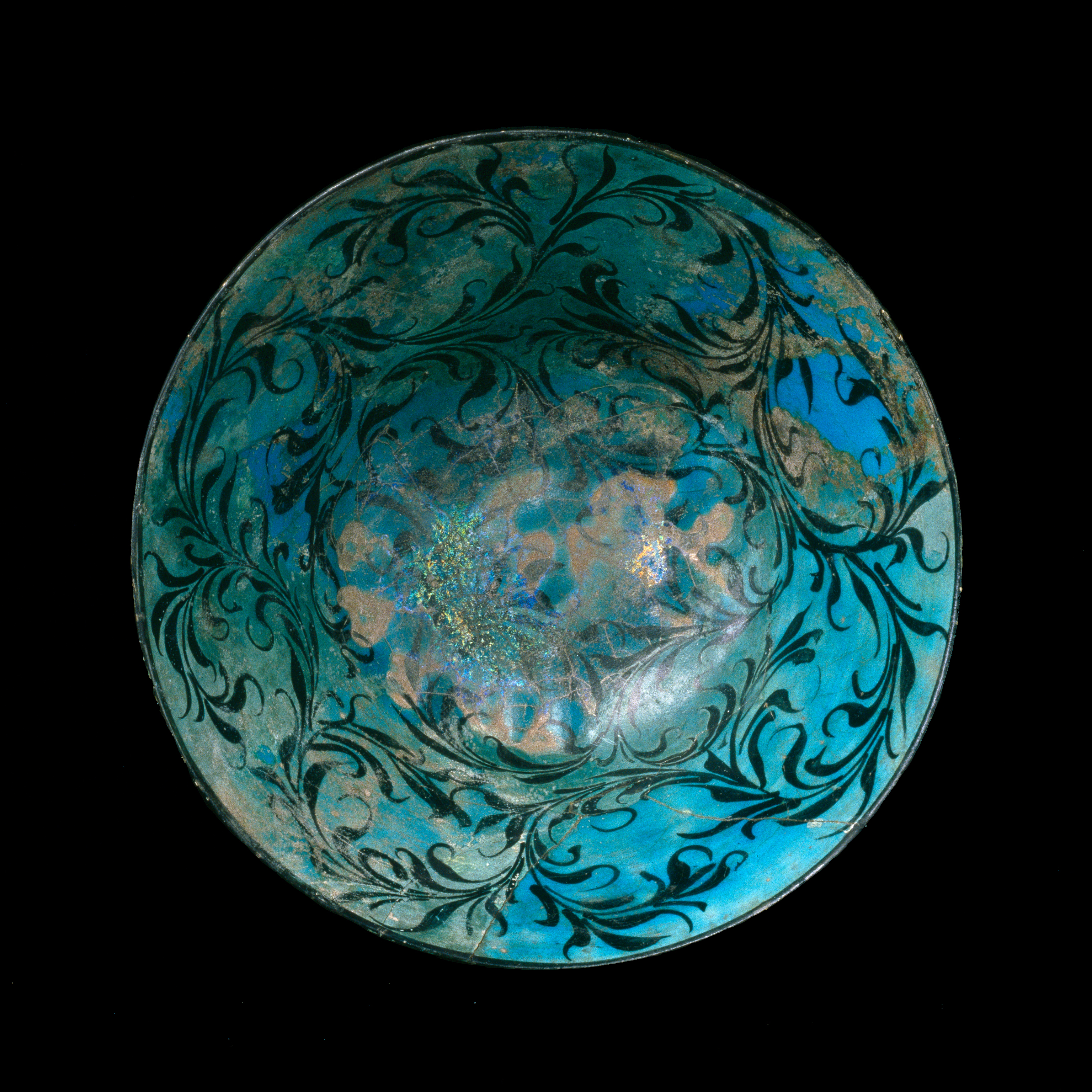
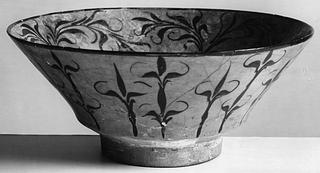
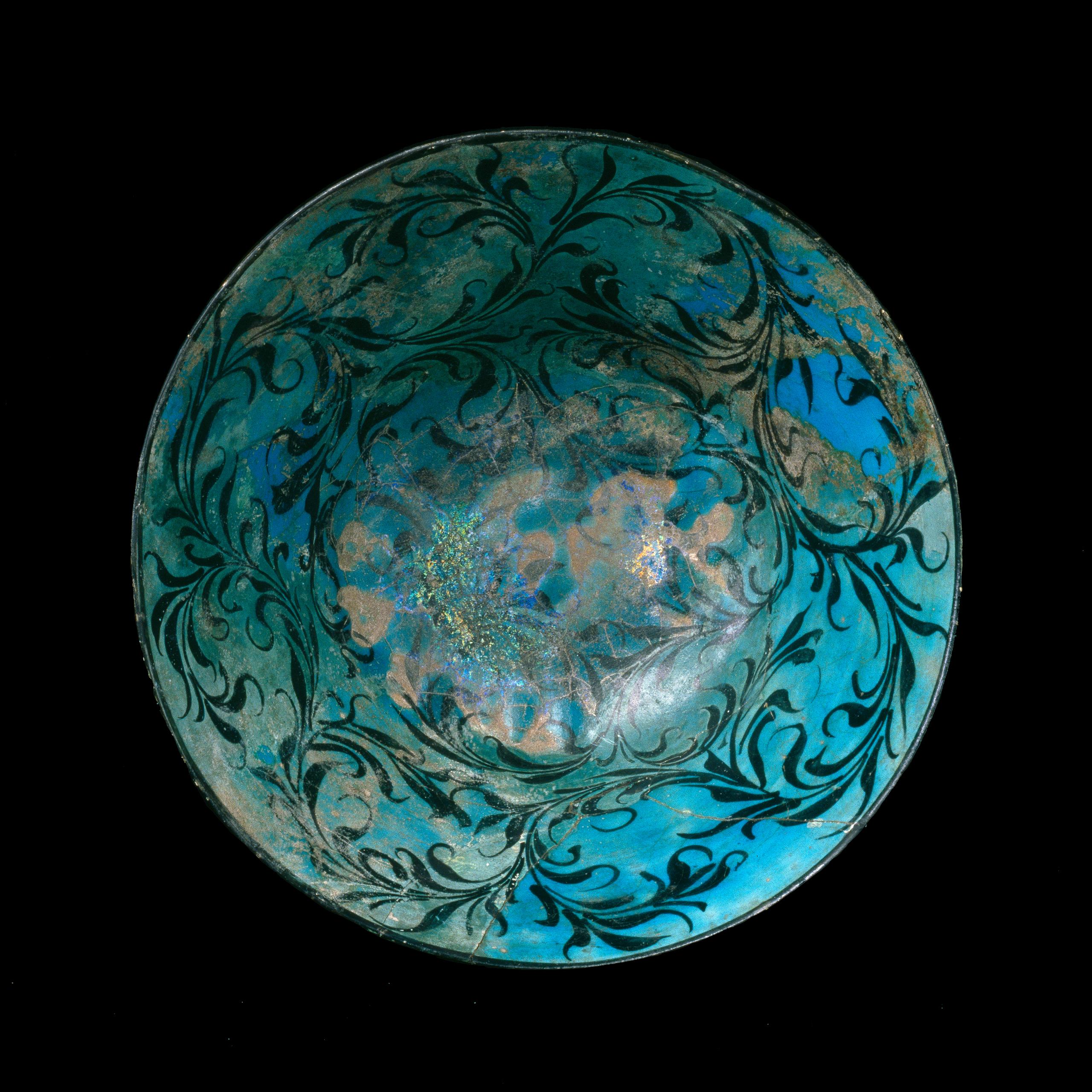
Fritware bowl, painted in black under a transparent, turquoise glaze
Iran, Kashan; beginning of 13th century
H: 27; Diam: 22 cm
Inventory number Isl 27
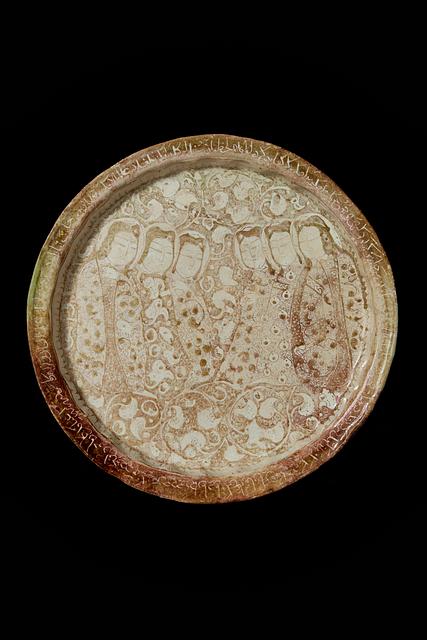
Underglaze painting proper emerged at more or less the same time in Syria and Iran in around 1200. The reason for this technical breakthrough was that pottery was now made of white frit mass, instead of red clay, so that the body could be used as the white ground color. The frit mass, air dried or fired once, was decorated direct on the body in black, blue, or a few other colors, after which it was covered by a transparent glaze, sometimes colored, and then fired again.
The lively floral decoration, which might resemble seaweed, is not very typical of Persian ceramics, and is reminiscent of more freely interpreted Syrian motifs.
The lively floral decoration, which might resemble seaweed, is not very typical of Persian ceramics, and is reminiscent of more freely interpreted Syrian motifs.
Published in
Published in
C.L. Davids Samling : Nogle Studier, København 1948, pp. 74-75;
André Leth: Davids Samling. Islamisk kunst = The David Collection. Islamic Art, København 1975, p. 46;
Kjeld von Folsach: Islamic art. The David Collection, Copenhagen 1990, cat.no. 106;
Kjeld von Folsach: Art from the World of Islam in The David Collection, Copenhagen 2001, cat.no. 160;
André Leth: Davids Samling. Islamisk kunst = The David Collection. Islamic Art, København 1975, p. 46;
Kjeld von Folsach: Islamic art. The David Collection, Copenhagen 1990, cat.no. 106;
Kjeld von Folsach: Art from the World of Islam in The David Collection, Copenhagen 2001, cat.no. 160;
The Seljuks and their Successors