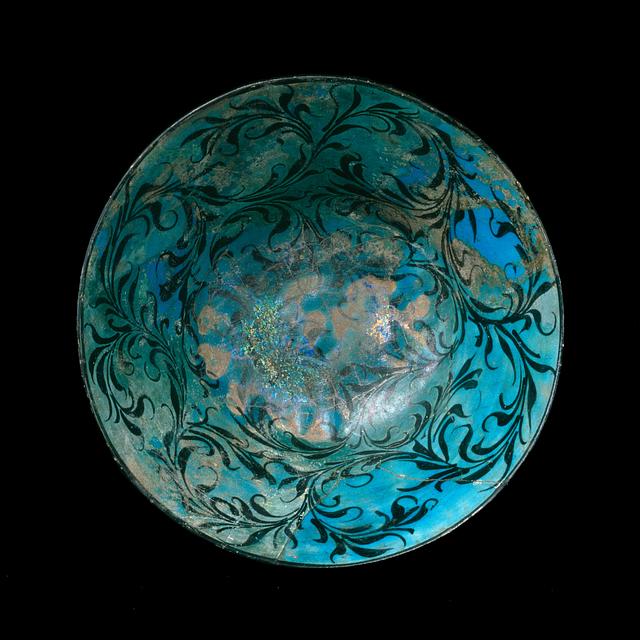
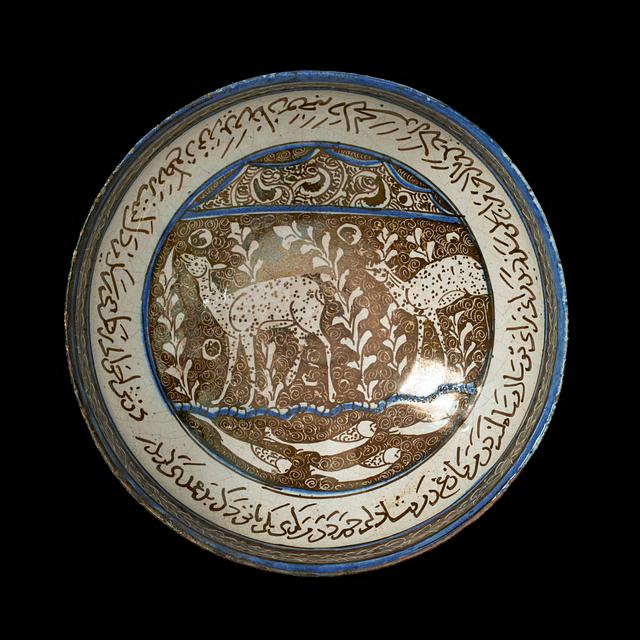
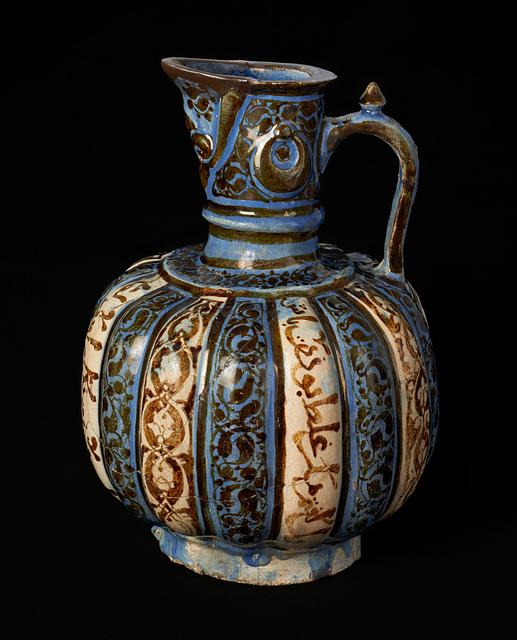
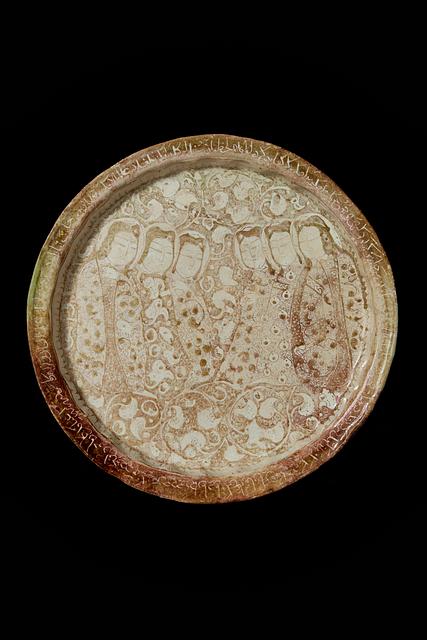
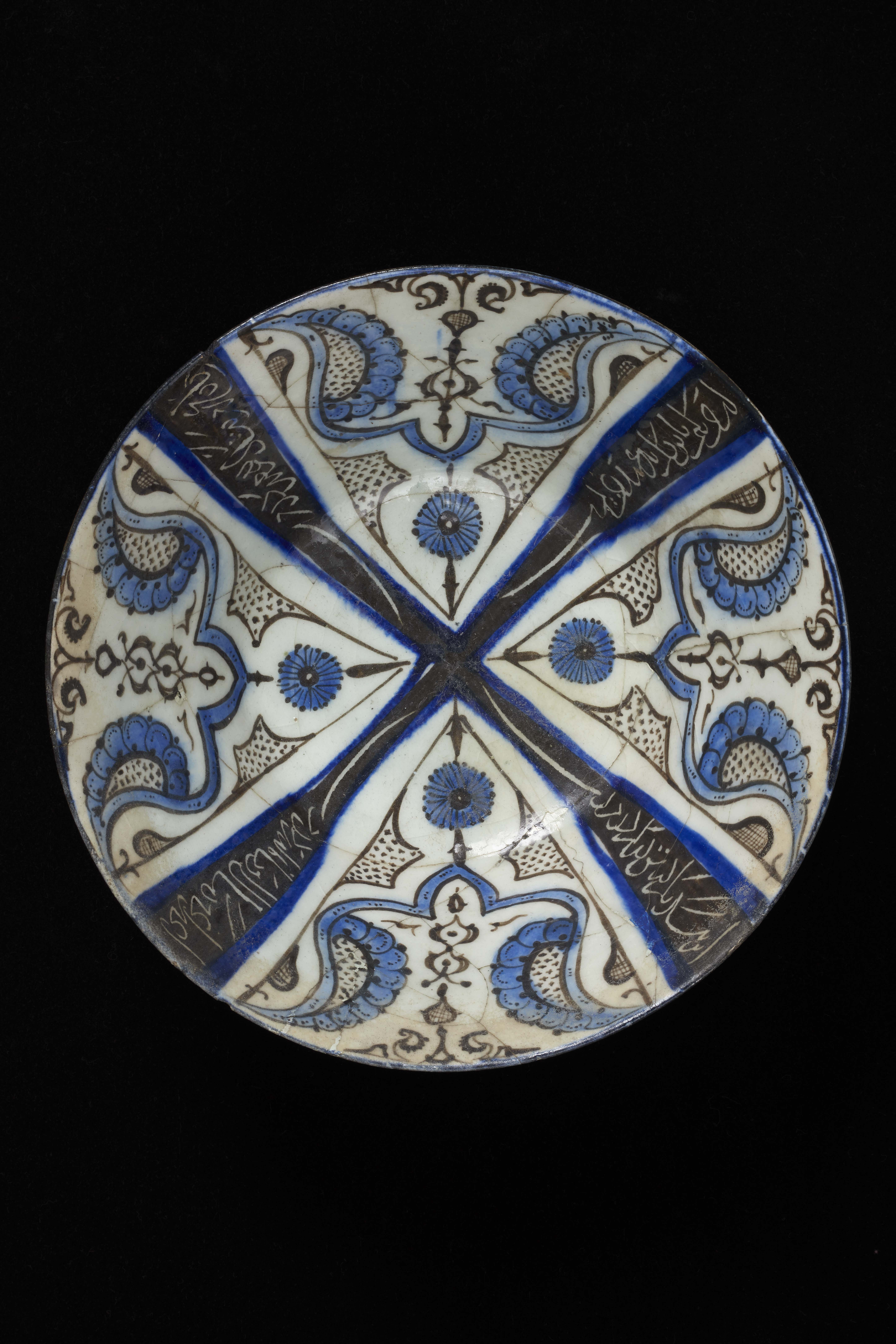
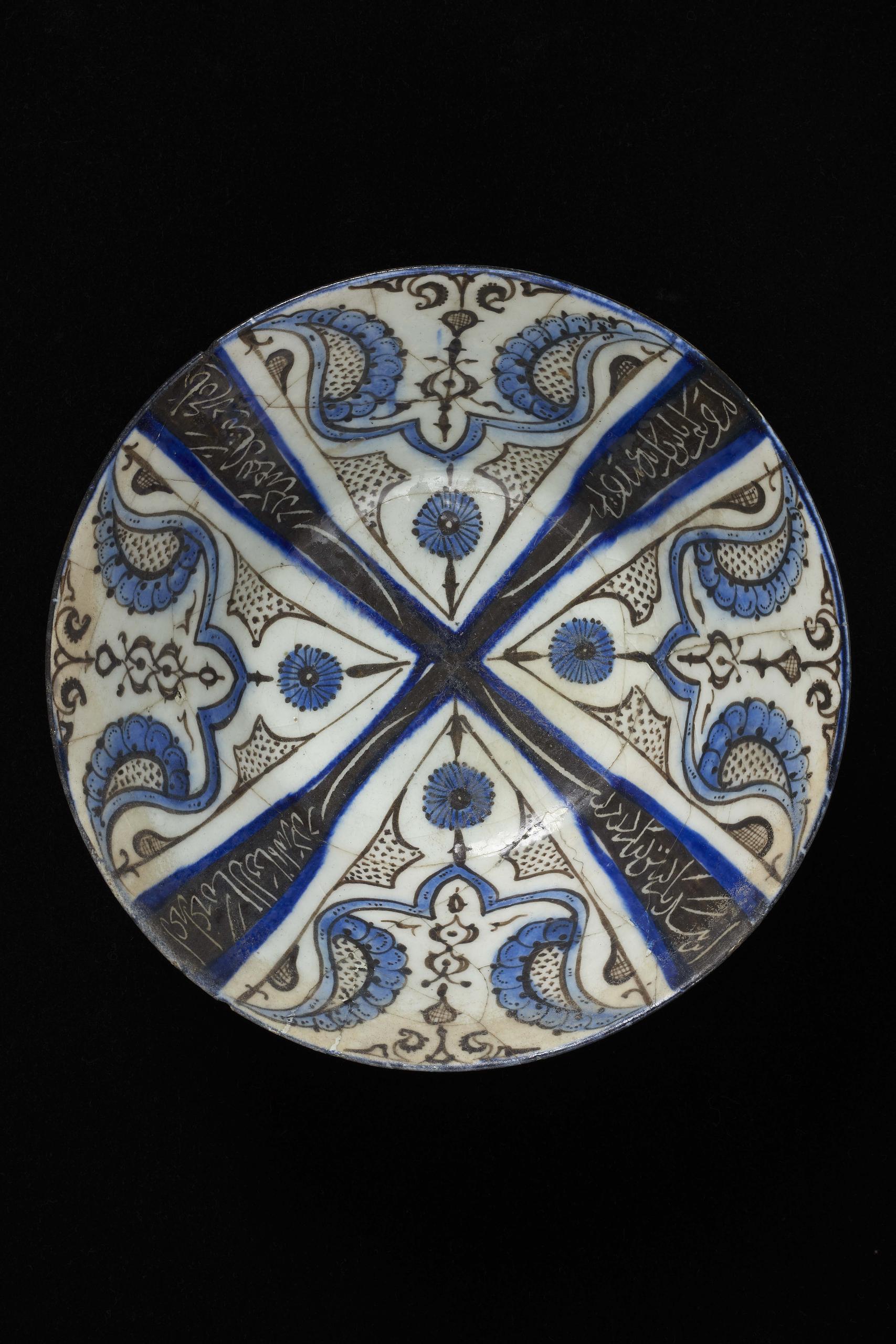
Fritware bowl, painted in black and blue under a transparent glaze
Iran, Kashan; beginning of 13th century
H: 10; Diam: 21 cm
Inventory number Isl 26
At the same time as white fritware was being developed in the Middle East in the course of the 12th century, true underglaze painting was also discovered. A piece that was dried in the open air or fired once was painted directly in blue or a few other colors. Cobalt blue could have a tendency to run into the glaze during firing and was consequently contoured at times with black, which was more stable.
Porcelain with decorations painted under the glaze was the most important Chinese export to the Middle East and then to Europe for several centuries from around 1325. But the technique had been discovered in Iran, which also had the monopoly on cobalt mining for quite some time.
Porcelain with decorations painted under the glaze was the most important Chinese export to the Middle East and then to Europe for several centuries from around 1325. But the technique had been discovered in Iran, which also had the monopoly on cobalt mining for quite some time.
Published in
Published in
C.L. Davids Samling : Nogle Studier, København 1948, pp. 70-71;
Art from the World of Islam. 8th-18th century, Louisiana, Humlebæk 1987, cat.no. 108;
Kjeld von Folsach: Islamic art. The David Collection, Copenhagen 1990, cat.no. 105;
Kjeld von Folsach, Torben Lundbæk and Peder Mortensen (eds.): Sultan, Shah and Great Mughal: the history and culture of the Islamic world, The National Museum, Copenhagen 1996, cat.no. 295;
Kjeld von Folsach: Art from the World of Islam in The David Collection, Copenhagen 2001, cat.no. 159;
Anne-Marie Keblow Bernsted: Early Islamic pottery: materials and techniques, London 2003, figs. 51 a and b, p. 33 and figs. 52-53, pp. 34-35;
Oliver Watson: “Ceramics and circulation” in Finbarr Barry Flood, Gülru Necipoglu (eds.): A companion to Islamic art and architecture, B. 1, From the Prophet to the Mongols, Hoboken 2017, p. 496, fig. 19.5;
Art from the World of Islam. 8th-18th century, Louisiana, Humlebæk 1987, cat.no. 108;
Kjeld von Folsach: Islamic art. The David Collection, Copenhagen 1990, cat.no. 105;
Kjeld von Folsach, Torben Lundbæk and Peder Mortensen (eds.): Sultan, Shah and Great Mughal: the history and culture of the Islamic world, The National Museum, Copenhagen 1996, cat.no. 295;
Kjeld von Folsach: Art from the World of Islam in The David Collection, Copenhagen 2001, cat.no. 159;
Anne-Marie Keblow Bernsted: Early Islamic pottery: materials and techniques, London 2003, figs. 51 a and b, p. 33 and figs. 52-53, pp. 34-35;
Oliver Watson: “Ceramics and circulation” in Finbarr Barry Flood, Gülru Necipoglu (eds.): A companion to Islamic art and architecture, B. 1, From the Prophet to the Mongols, Hoboken 2017, p. 496, fig. 19.5;
The Seljuks and their Successors