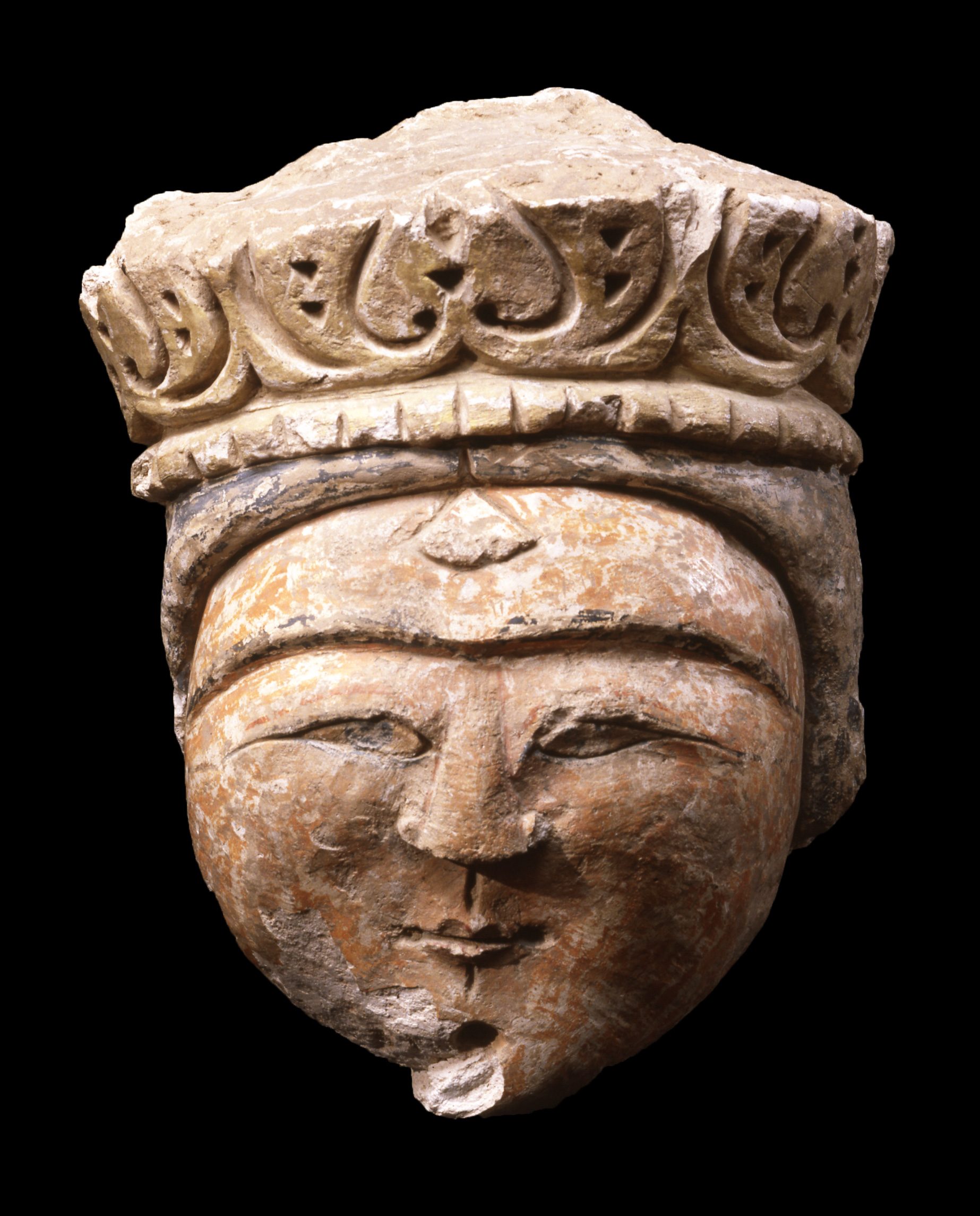
Head, carved stucco with traces of the original paint
Iran; 12th-13th century
H: 22 cm
Inventory number 5/1976
The head belongs to a group of sculpturally conceived pieces in stucco that come from the Persian region and are dated to the 12th-13th century. They comprise reliefs, individual figures, and detached heads.
Unfortunately, the precise conditions under which the stucco pieces were excavated are undocumented, but it has been guessed that they decorated important rooms in palaces that belonged to the highest level of society during the Seljuk period or under the Seljuks’ immediate successors.
The face on this stucco head is directly comparable to the type found so frequently on the ceramics of the period.
Unfortunately, the precise conditions under which the stucco pieces were excavated are undocumented, but it has been guessed that they decorated important rooms in palaces that belonged to the highest level of society during the Seljuk period or under the Seljuks’ immediate successors.
The face on this stucco head is directly comparable to the type found so frequently on the ceramics of the period.
Published in
Published in
Kjeld von Folsach: Islamic art. The David Collection, Copenhagen 1990, cat.no. 276;
Kjeld von Folsach, Torben Lundbæk and Peder Mortensen (eds.): Sultan, Shah and Great Mughal: the history and culture of the Islamic world, The National Museum, Copenhagen 1996, cat.no. 42;
Kjeld von Folsach: Art from the World of Islam in The David Collection, Copenhagen 2001, cat.no. 398;
Eva Baer: Human figure in Islamic art: inheritances and Islamic transformations, Costa Meza 2004, fig. 30 and p. 21;
David Abulafia [et al.]: Mediterraneum. Splendour of the Medieval Mediterranean 13th-15th centuries, History Museum of Catalunya, Barcelona 2004, p. 137;
Kjeld von Folsach, Joachim Meyer: The Human Figure in Islamic Art – Holy Men, Princes, and Commoners, The David Collection, Copenhagen 2017, fig. 23, p. 82;
Kjeld von Folsach, Torben Lundbæk and Peder Mortensen (eds.): Sultan, Shah and Great Mughal: the history and culture of the Islamic world, The National Museum, Copenhagen 1996, cat.no. 42;
Kjeld von Folsach: Art from the World of Islam in The David Collection, Copenhagen 2001, cat.no. 398;
Eva Baer: Human figure in Islamic art: inheritances and Islamic transformations, Costa Meza 2004, fig. 30 and p. 21;
David Abulafia [et al.]: Mediterraneum. Splendour of the Medieval Mediterranean 13th-15th centuries, History Museum of Catalunya, Barcelona 2004, p. 137;
Kjeld von Folsach, Joachim Meyer: The Human Figure in Islamic Art – Holy Men, Princes, and Commoners, The David Collection, Copenhagen 2017, fig. 23, p. 82;
The Seljuks and their Successors