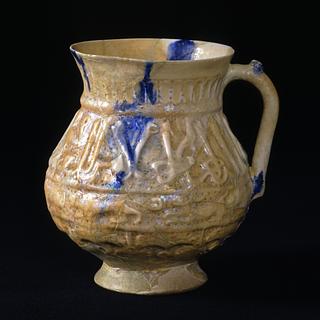
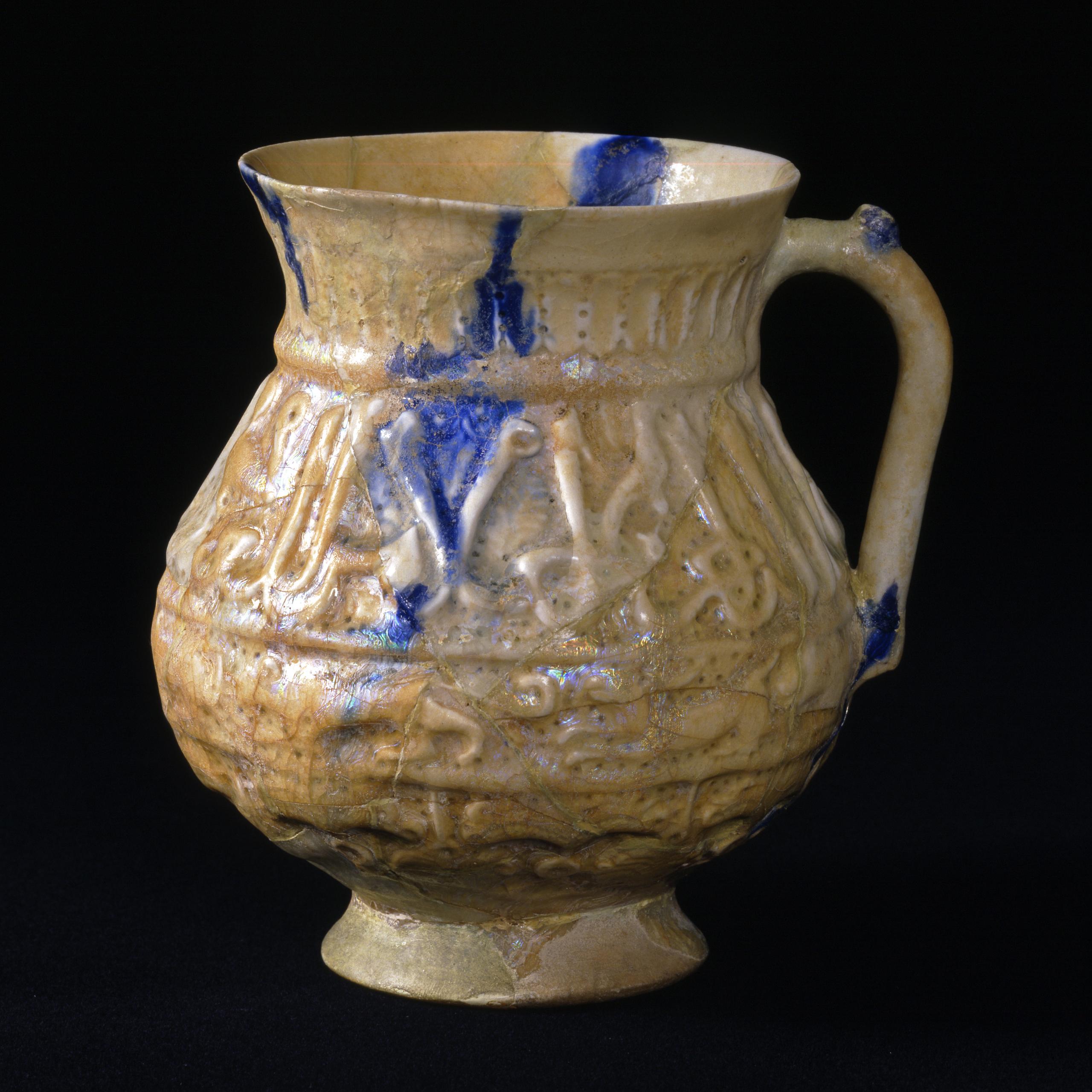
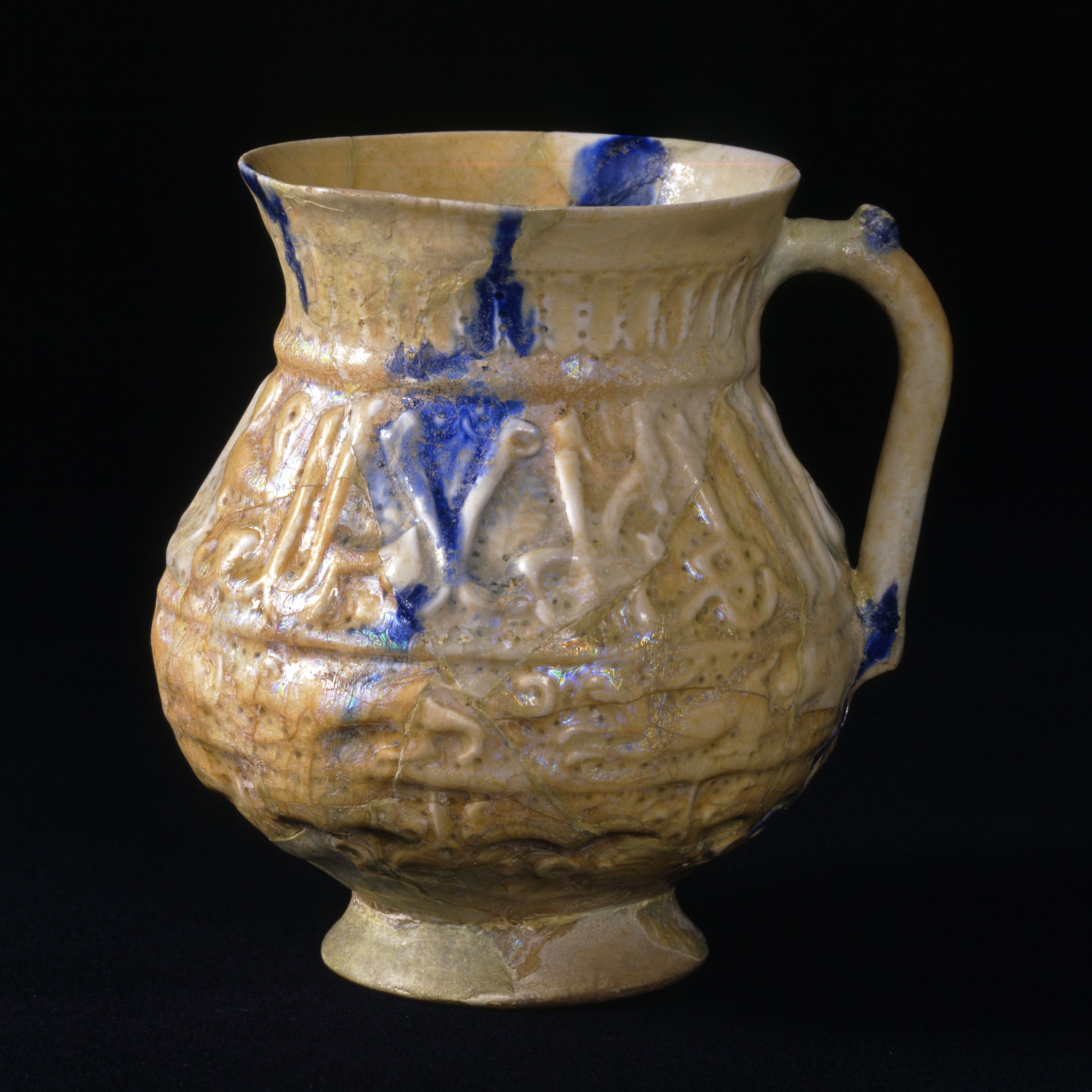
Fritware jug, with molded and openwork decoration and with splashes of blue under a transparent glaze
Iran, Kashan; end of 12th century
H: 15 cm
Inventory number 40/1966
Hard-fired, thin fritware with openwork decoration covered by a transparent glaze was the closest Muslim ceramists came to delicate white Chinese porcelain.
Fritware is a manmade material consisting of crushed quartz, crushed glaze, and white clay. It gained ground in the course of the 12th century and made it possible to create more refined types of pottery than the ones that could be made with clay. There is still discussion about whether the discovery was made in Egypt or Iran.
The Arabic saying on the jug translates as, “The taste of mildness [or wisdom] is first bitter, then sweeter than honey.”
Fritware is a manmade material consisting of crushed quartz, crushed glaze, and white clay. It gained ground in the course of the 12th century and made it possible to create more refined types of pottery than the ones that could be made with clay. There is still discussion about whether the discovery was made in Egypt or Iran.
The Arabic saying on the jug translates as, “The taste of mildness [or wisdom] is first bitter, then sweeter than honey.”
Published in
Published in
Art from the World of Islam. 8th-18th century, Louisiana, Humlebæk 1987, cat. 73;
Kjeld von Folsach: Islamic art. The David Collection, Copenhagen 1990, cat. 93;
Kjeld von Folsach: Art from the World of Islam in The David Collection, Copenhagen 2001, cat. 147;
Anne-Marie Keblow Bernsted: Early Islamic pottery: materials and techniques, London 2003, figs. 71-74, p. 20;
Sheila S. Blair and Jonathan M. Bloom (eds.): Cosmophilia. Islamic Art from the David Collection, Copenhagen, McMullen Museum of Art, Boston College, Boston 2006, cat. 39;
Sabiha Al Khemir: Beauty and belief: crossing bridges with the arts of Islamic culture, Brigham Young University Museum of Art, Provo 2012, p. 208;
John A. Burrison: Global clay: themes in world ceramic traditions, Bloomington 2017, fig. 1.9, pp. 15 and 21;
Joachim Meyer, Rasmus Bech Olsen and Peter Wandel: Beyond words: calligraphy from the World of Islam, The David Collection, Copenhagen 2024, cat. 54, p. 194;
Kjeld von Folsach: Islamic art. The David Collection, Copenhagen 1990, cat. 93;
Kjeld von Folsach: Art from the World of Islam in The David Collection, Copenhagen 2001, cat. 147;
Anne-Marie Keblow Bernsted: Early Islamic pottery: materials and techniques, London 2003, figs. 71-74, p. 20;
Sheila S. Blair and Jonathan M. Bloom (eds.): Cosmophilia. Islamic Art from the David Collection, Copenhagen, McMullen Museum of Art, Boston College, Boston 2006, cat. 39;
Sabiha Al Khemir: Beauty and belief: crossing bridges with the arts of Islamic culture, Brigham Young University Museum of Art, Provo 2012, p. 208;
John A. Burrison: Global clay: themes in world ceramic traditions, Bloomington 2017, fig. 1.9, pp. 15 and 21;
Joachim Meyer, Rasmus Bech Olsen and Peter Wandel: Beyond words: calligraphy from the World of Islam, The David Collection, Copenhagen 2024, cat. 54, p. 194;
The Seljuks and their Successors
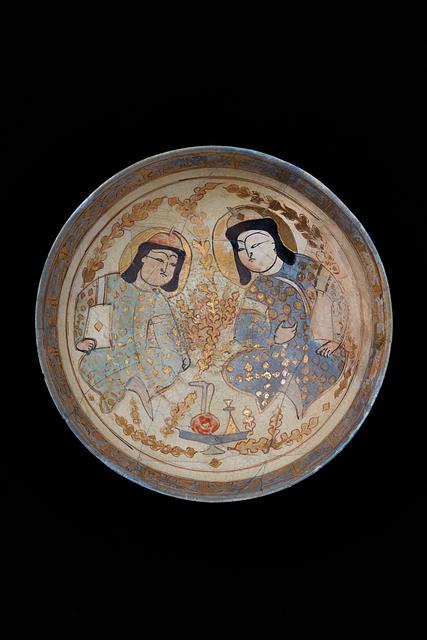
Fritware bowl, with polychrome decoration and gold leaf in and over an opaque, white glaze. Minai type
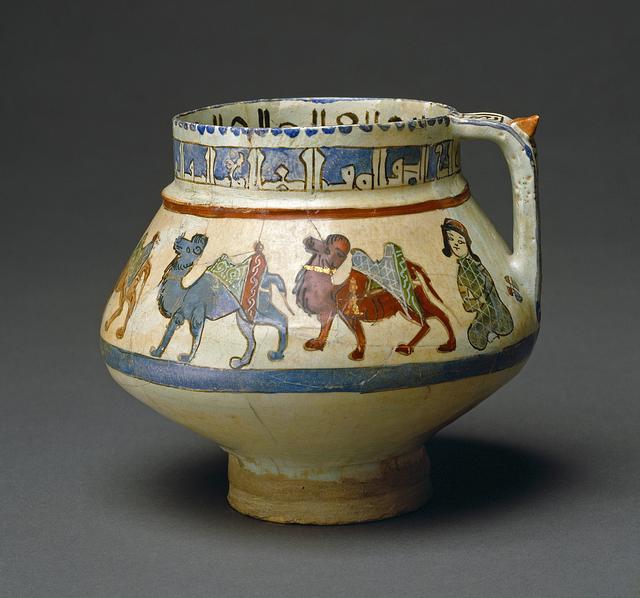
Fritware jug, with polychrome decoration and gold leaf in and over an opaque, white glaze. Minai type
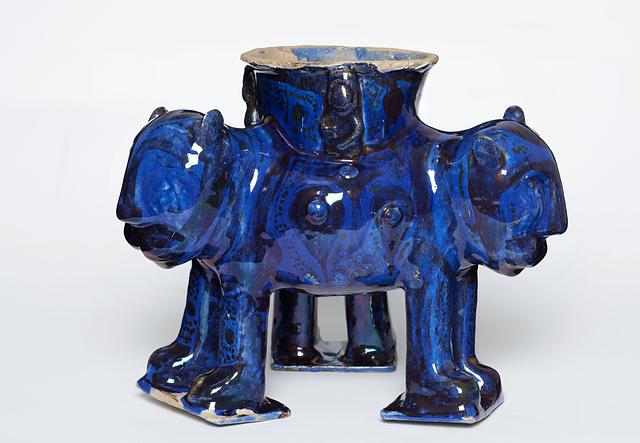
Fritware stand, molded in the form of three lions, covered with a blue glaze and painted in lustre
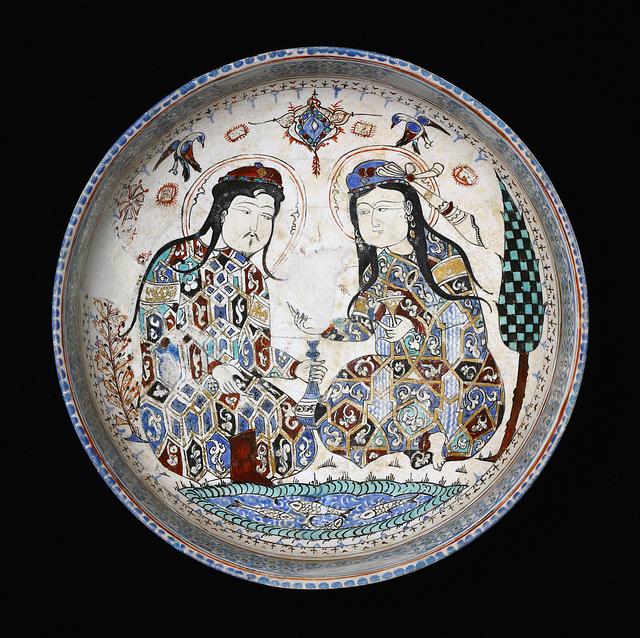
Fritware bowl, with polychrome decoration and gold leaf in and over an opaque, white glaze. Minai type