Fritware bowl, moulded and covered with a blue glaze
Iran, Kashan (?); Second half of the 12th century
H: 12; Diam: 14.5 cm
Inventory number 26/2022
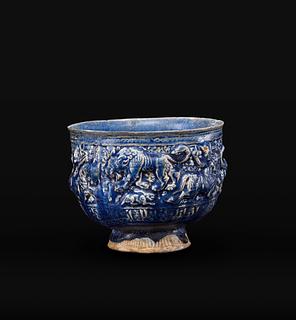
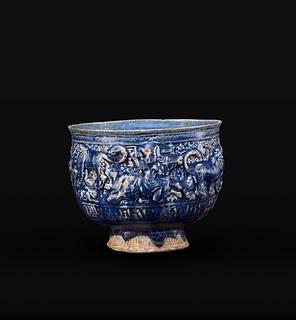
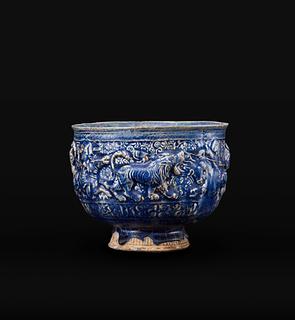
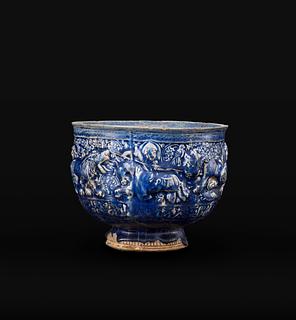
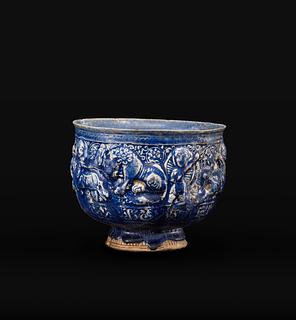
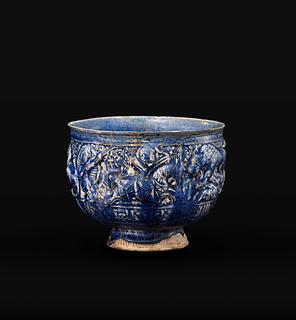
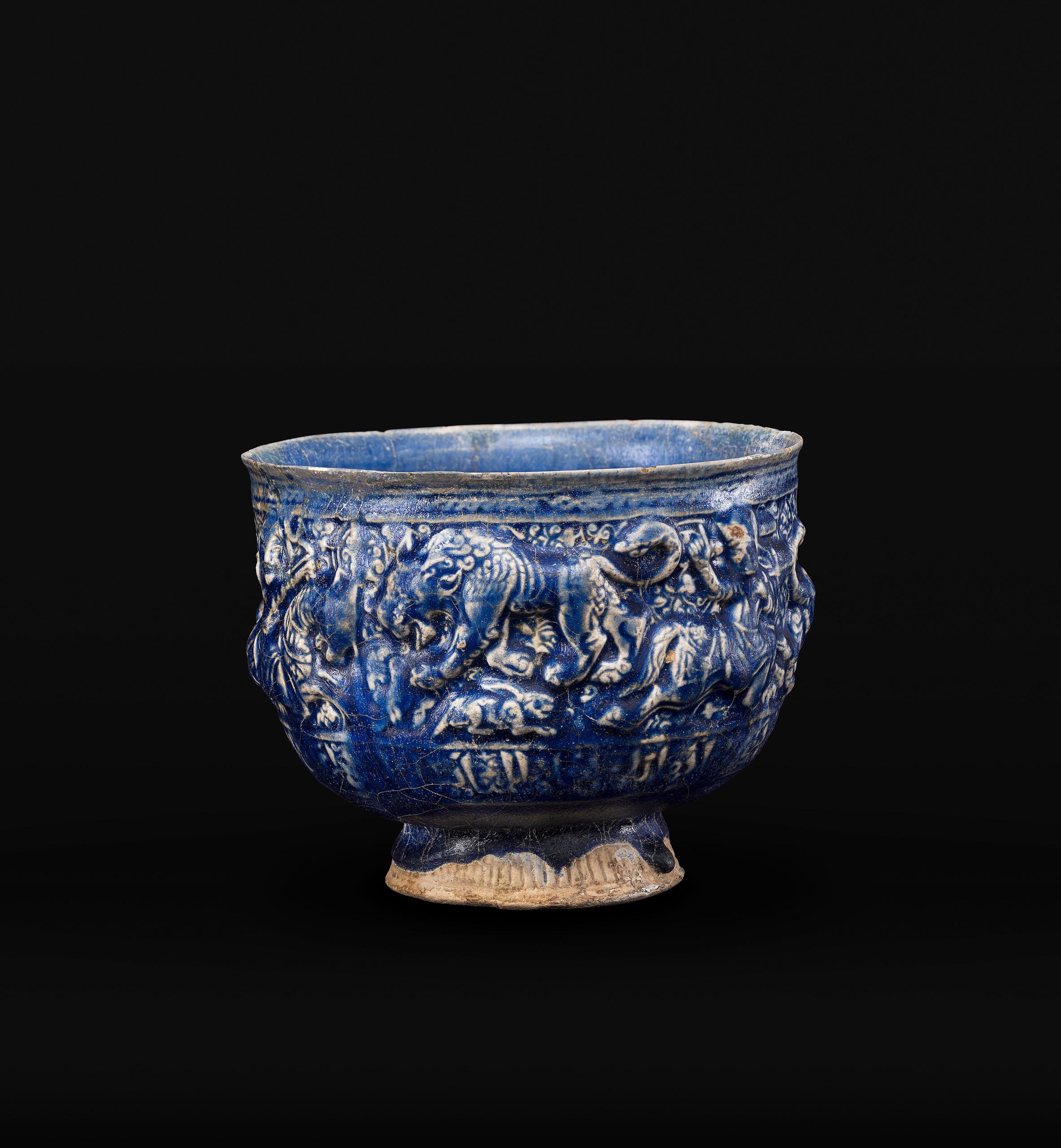
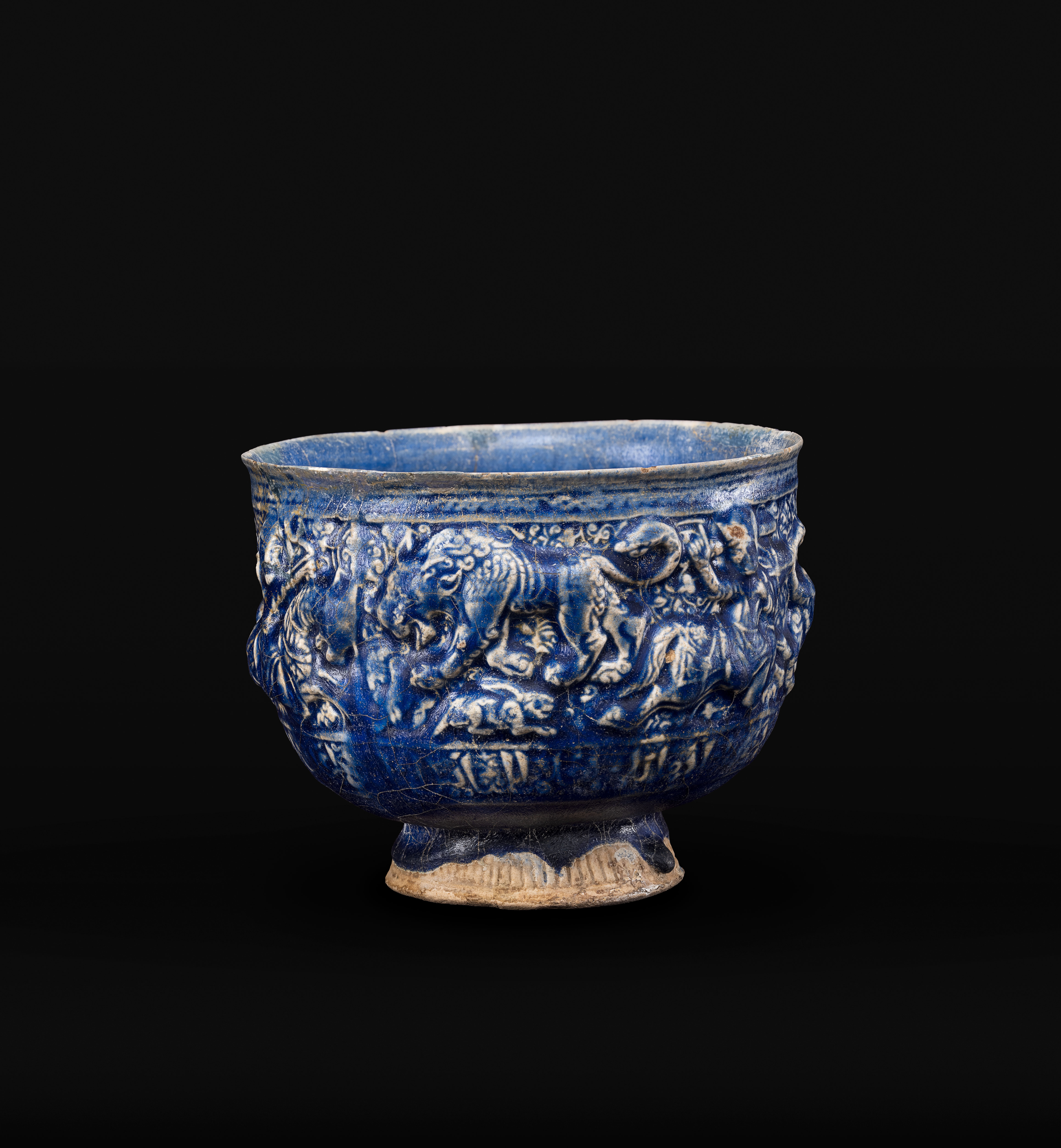
A lively hunting scene done in high relief adorns this elegant, thin-walled bowl. Armed with bows and arrows, swords or lances and shields, three horsemen at full gallop and a single man on foot all combat three fearsome lions. A hare and several birds hide in fright among the vines in the background. Above the wide pictorial frieze is a border with interwoven rope ornamentation, while below it, a frieze with an undecipherable Arabic inscription in naskh script appears. The hemispherical bowl rests on an outward-sloping, unglazed foot with vertical grooves. Both the interior and exterior of the bowl are covered in a blue glaze, and where the relief is most pronounced, the white colour of the fritware is visible, highlighting the motifs.
The design of the bowl was devised by a moulder who first crafted an original clay model identical in shape to the finished bowl but solid all the way through. From this original, multiple negative clay moulds could then be produced in two halves. The potter could use these moulds to cast the two halves of the bowl, which were later joined together to form the final unglazed piece.1 For this reason, multiple bowls with the same design exist, some with different glazes and even with delicate openwork perforations that lend a degree of transparency to the object.2
The design of the bowl was devised by a moulder who first crafted an original clay model identical in shape to the finished bowl but solid all the way through. From this original, multiple negative clay moulds could then be produced in two halves. The potter could use these moulds to cast the two halves of the bowl, which were later joined together to form the final unglazed piece.1 For this reason, multiple bowls with the same design exist, some with different glazes and even with delicate openwork perforations that lend a degree of transparency to the object.2
Published in
Published in
Sotheby’s, London 8/10 2014, lot 95;
Artcurial, Paris 16/5 2022, lot 281;
Artcurial, Paris 16/5 2022, lot 281;
Footnotes
Footnotes
1.
For more on the mould-maker, his work and an identical bowl, see Oliver Watson: Ceramics of Iran: Islamic Pottery from The Sarikhani Collection, London 2020, pp. 180–183.
2.
In addition to the bowl mentioned in note 1 from the Sarikhani Collection (I.CE. 2164), an identical example can be found in the Louvre (Mao 2073), both featuring openwork and a colourless, transparent glaze with blue splashes; both are fragmentary. Oliver Watson: Ceramics of Iran: Islamic pottery from The Sarikhani Collection, London 2020, note 66 suggests that two more bowls from the same mould may exist, one in Tehran and one in Rome.
The Seljuks and their Successors
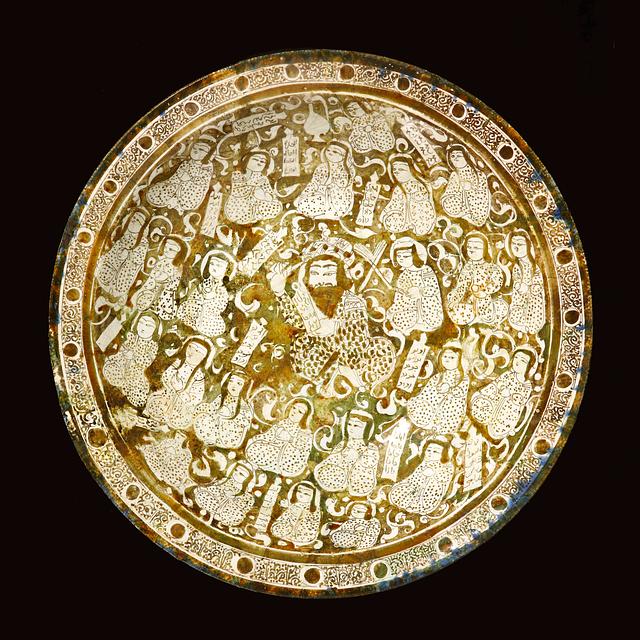
Fritware dish, painted in lustre over an opaque, white glaze
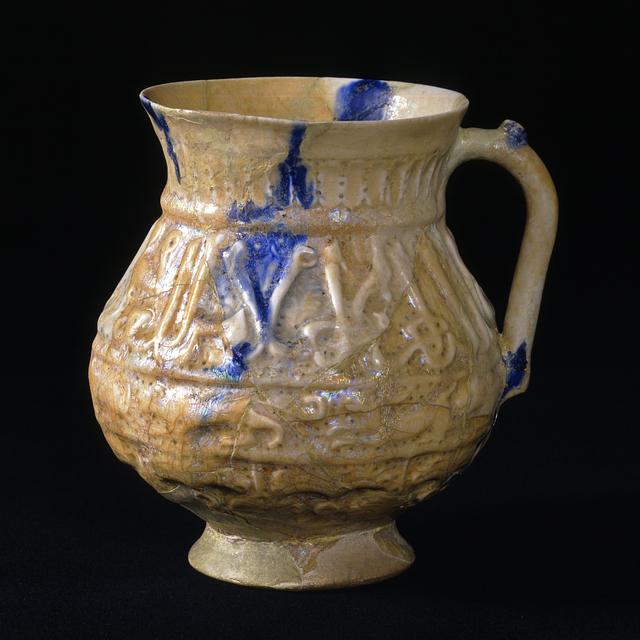
Fritware jug, with molded and openwork decoration and with splashes of blue under a transparent glaze
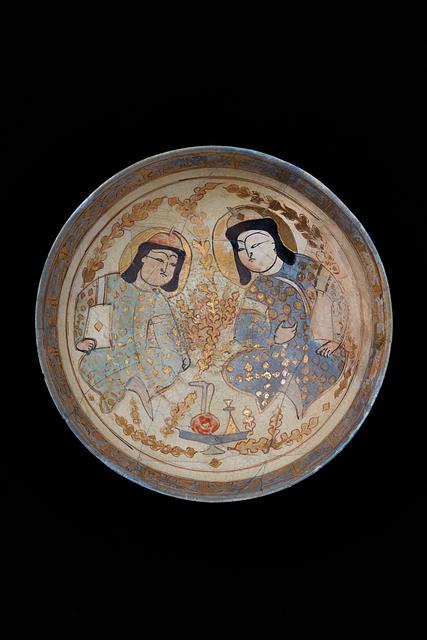
Fritware bowl, with polychrome decoration and gold leaf in and over an opaque, white glaze. Minai type
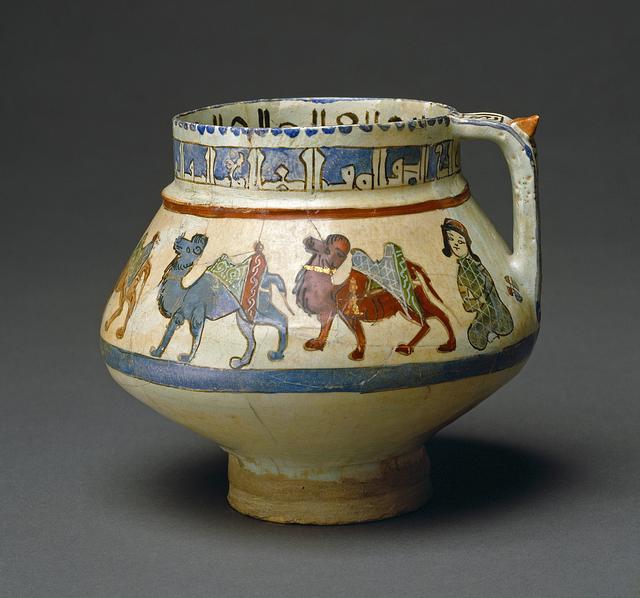
Fritware jug, with polychrome decoration and gold leaf in and over an opaque, white glaze. Minai type