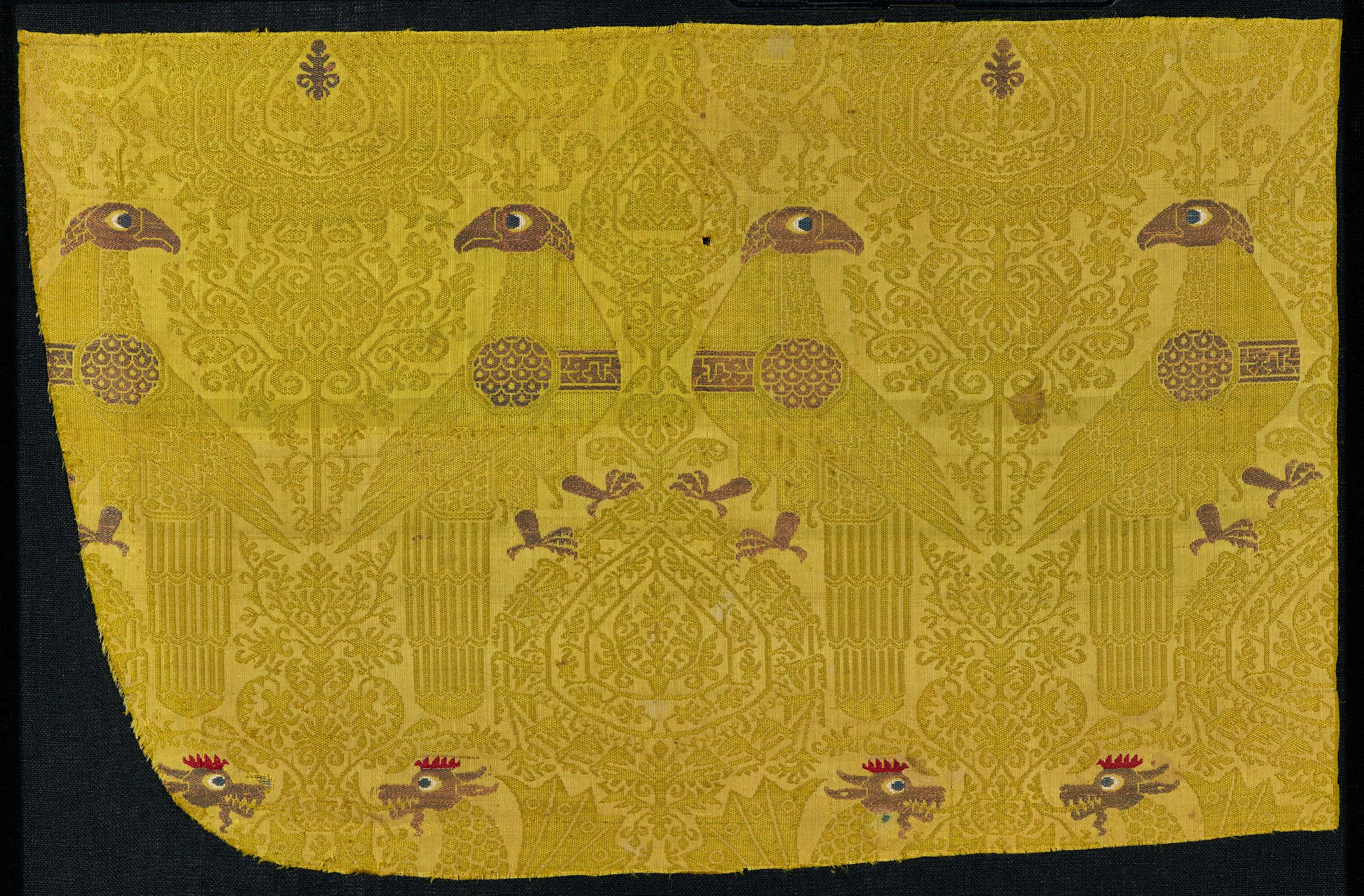
Fragment of a lampas-woven textile, silk and gilded lamella of animal substrate spun around silk
Italy, Sicily; 13th century
H: 27; W: 42 cm
Inventory number 8/2016
The production of silk was introduced to Sicily by the Muslims, who also began the manufacture of refined, woven silk textiles. After the Normans assumed power at the end of the 11th century, production continued on the island.
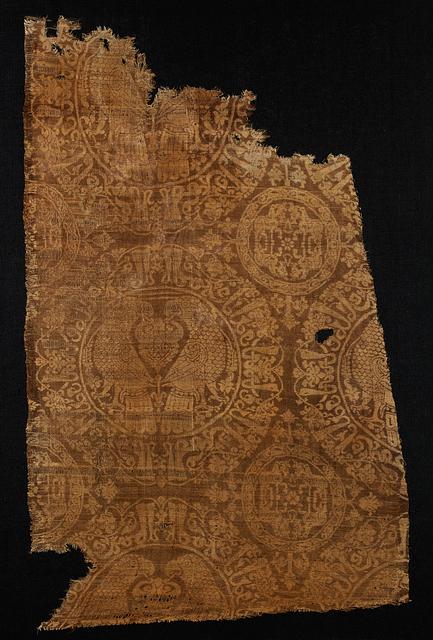
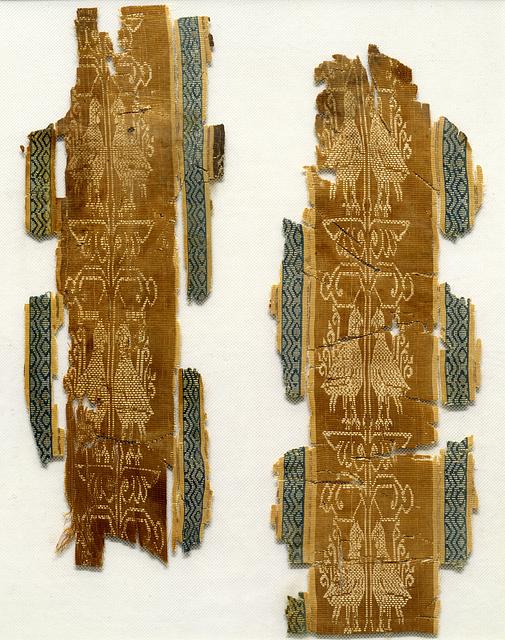
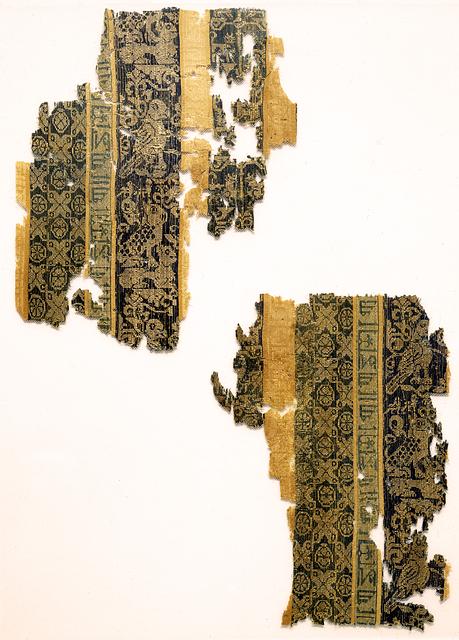
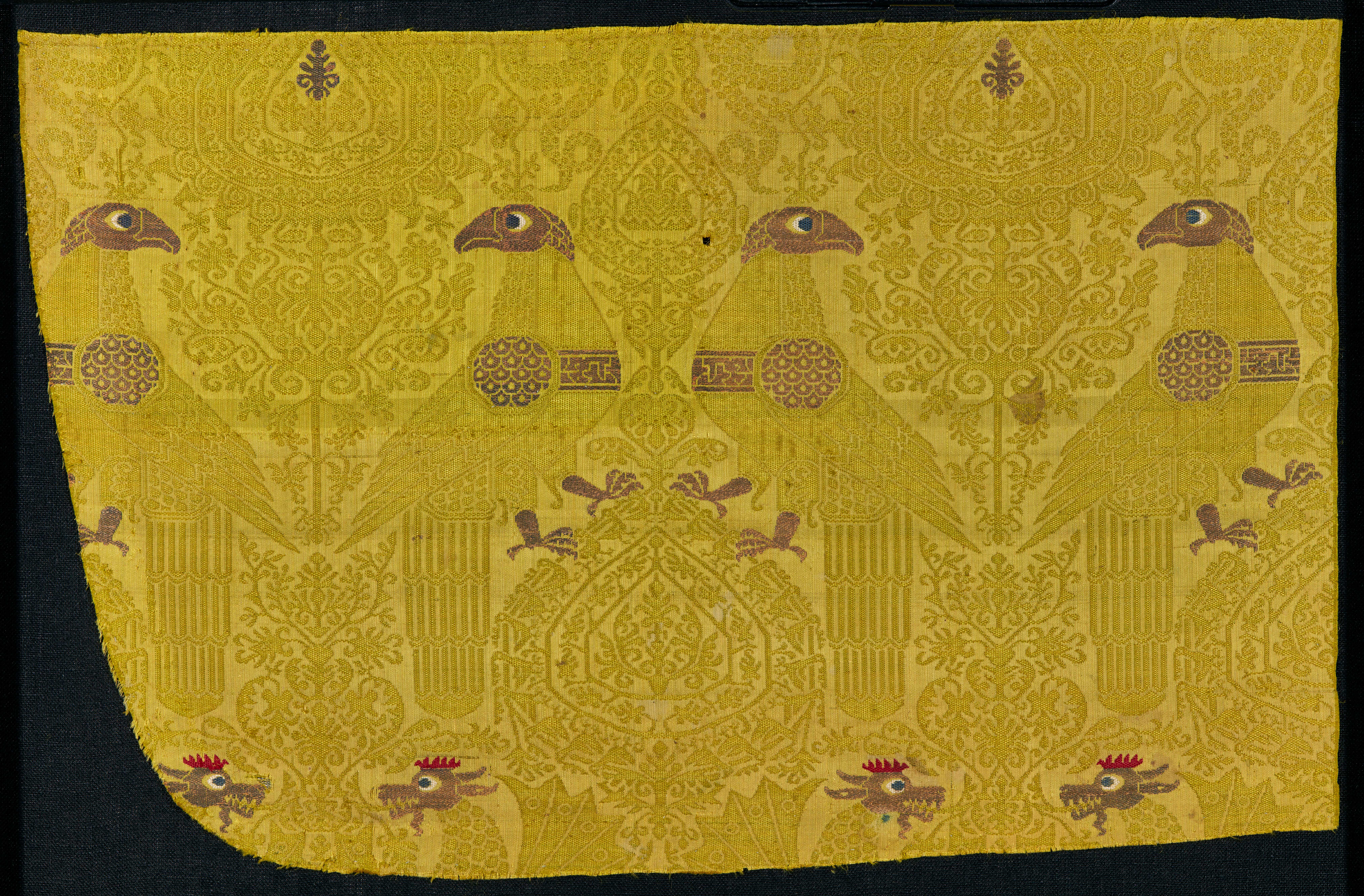
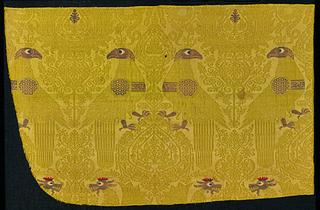
This textile, with animals arranged in pairs around medallion-shaped structures, was clearly influenced by Islamic textiles, and the breasts of the birds feature bands that mimic Arabic inscriptions written in Kufi.
The dragons with large, serrated wings and red “combs,” in contrast, belong to a type that points toward Christian Europe. Patterns of this kind were also woven in Lucca in central Italy, and it can often be difficult to determine exactly where textiles of this type were made.
This textile, with animals arranged in pairs around medallion-shaped structures, was clearly influenced by Islamic textiles, and the breasts of the birds feature bands that mimic Arabic inscriptions written in Kufi.
The dragons with large, serrated wings and red “combs,” in contrast, belong to a type that points toward Christian Europe. Patterns of this kind were also woven in Lucca in central Italy, and it can often be difficult to determine exactly where textiles of this type were made.
Published in
Published in
Nobuko Kajitani and Masako Saito: “A thirteenth-century Sicilian silk textile in a case examination” in Interdisciplinary approach about studies and conservation of medieval textiles, Palermo 1998, p. 21, fig. 1;
.jpg)