Tabby-woven textile, wool with tapestry-woven decorations
Egypt, Fayyum; 9th–10th century
H (w. fringe): 38.5; W: 49.5 cm
Inventory number 5/2018
When the Tulunids of Egypt broke away from the Abbasid Caliphate in the late 9th century, they upheld the Abbasid tradition of bestowing textiles with woven inscriptions (tiraz) as gifts of honour. The Abbasid tiraz were decorated with the caliph’s name and often entirely devoid of any other forms of decoration. The Tulunid dynasty, wishing to accentuate their ties to Egypt and independence from the caliphate, instead opted for a tiraz aesthetic that combined Arabic script with Egypt’s Coptic Christian weaving tradition.1
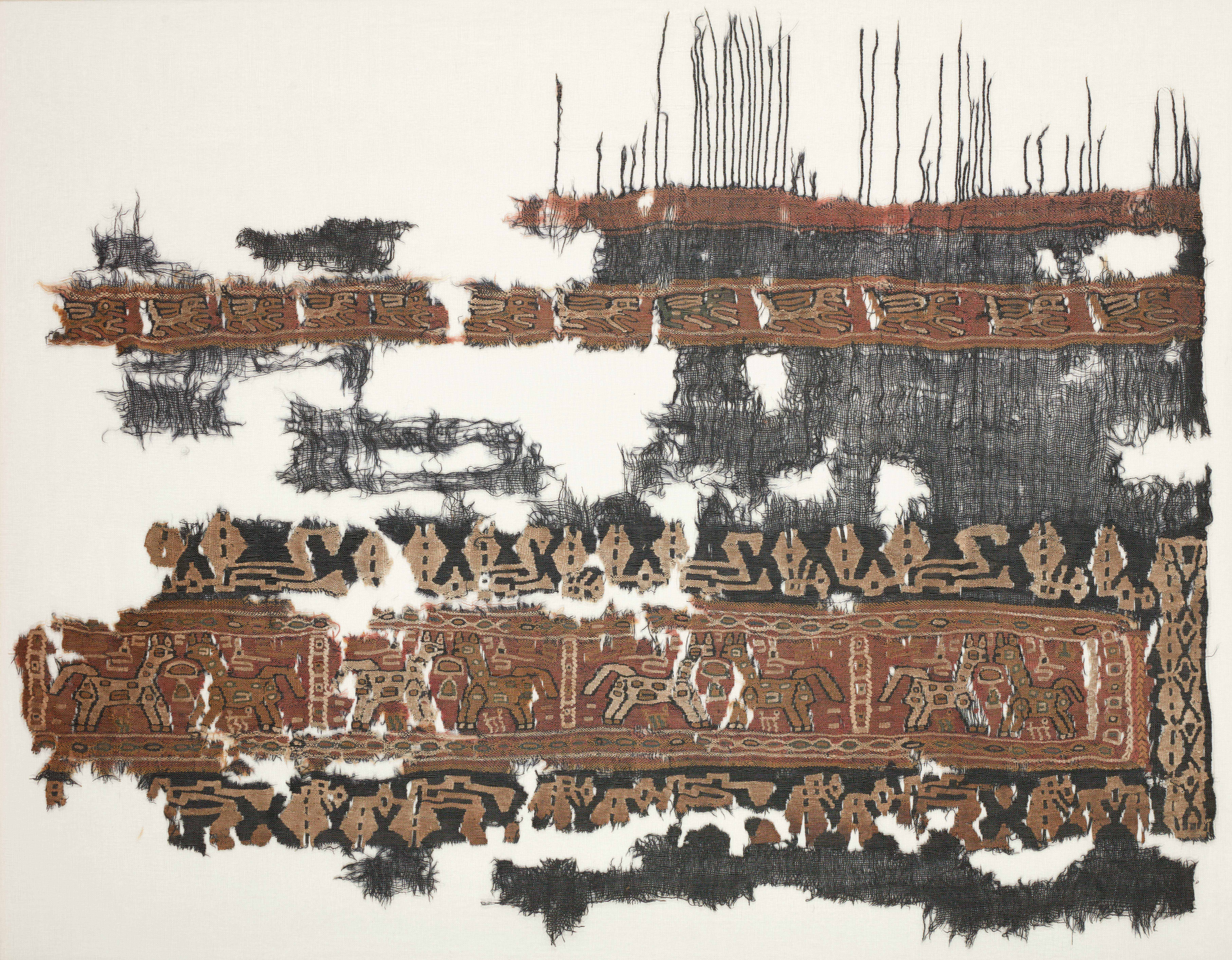
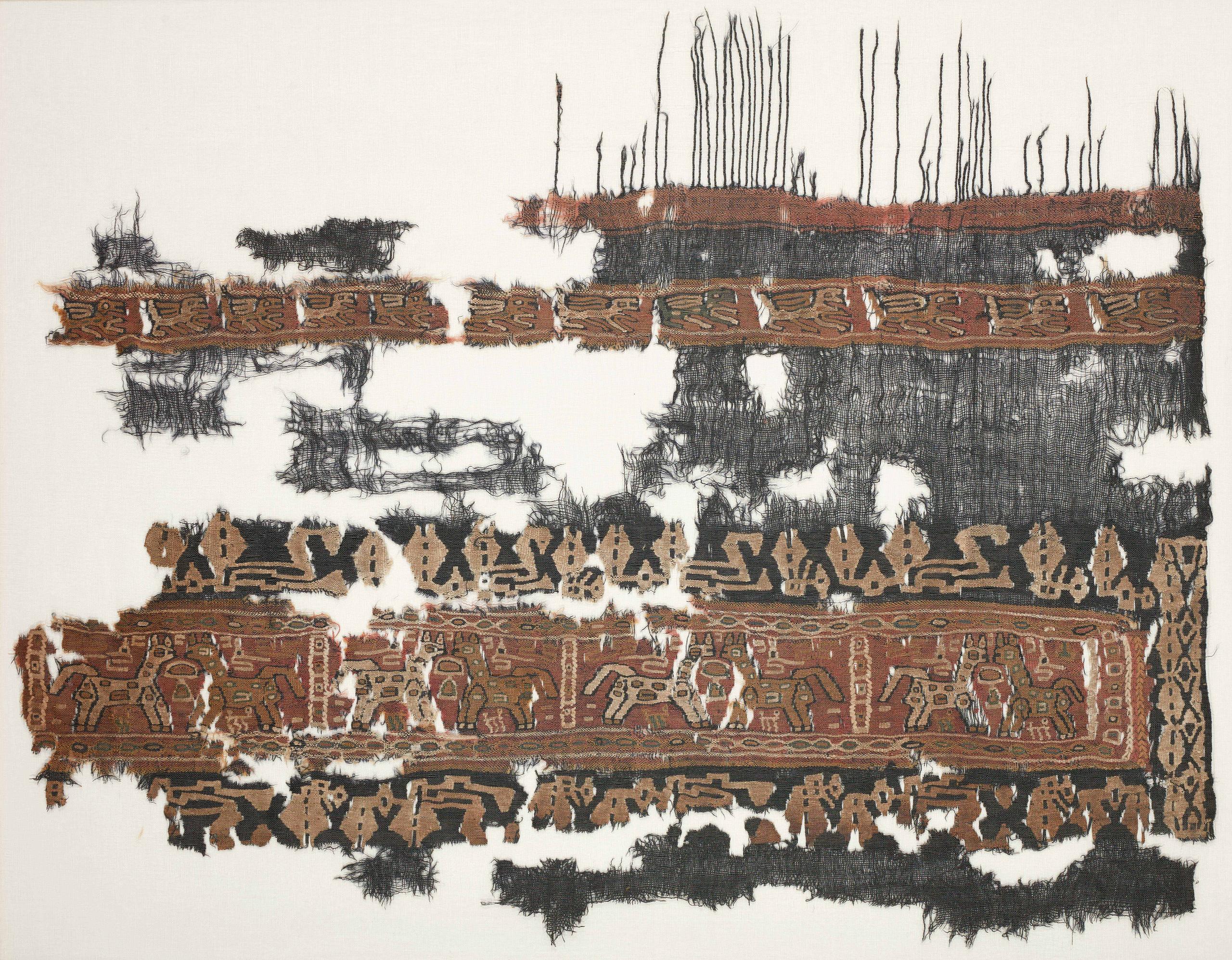
This textile fragment was presumably made by Coptic weavers in the wool-producing Fayyum region, located some 130 km south of Cairo. The ground weave is dark blue and decorated with two tapestry-woven bands one showing running hares, and the other confronted horses with suckling foals. Such animal figures are known from other Coptic and Coptic-inspired textiles from the same period (1/1989). The animal motifs are combined with a very generic Arabic phrase, al-mulk lillah, ‘Royal Power is God's’, repeated above and below the horse frieze. The script is a slightly distorted variant of the Kufi script typical of the Fayyum, and the text is also partially reversed. Bilingual tiraz textiles in the same style are also known, containing Christian messages in Coptic in addition to the Arabic inscriptions.2 These were presumably intended for the Tulunids’ supporters among the Coptic elite.
When the Abbasids regained control of Egypt in the first half of the tenth century, they re-established the production of tiraz in the Abbasid style, with the caliph’s name and titles once again becoming the central decorative element (18/1971).
This textile fragment was presumably made by Coptic weavers in the wool-producing Fayyum region, located some 130 km south of Cairo. The ground weave is dark blue and decorated with two tapestry-woven bands one showing running hares, and the other confronted horses with suckling foals. Such animal figures are known from other Coptic and Coptic-inspired textiles from the same period (1/1989). The animal motifs are combined with a very generic Arabic phrase, al-mulk lillah, ‘Royal Power is God's’, repeated above and below the horse frieze. The script is a slightly distorted variant of the Kufi script typical of the Fayyum, and the text is also partially reversed. Bilingual tiraz textiles in the same style are also known, containing Christian messages in Coptic in addition to the Arabic inscriptions.2 These were presumably intended for the Tulunids’ supporters among the Coptic elite.
When the Abbasids regained control of Egypt in the first half of the tenth century, they re-established the production of tiraz in the Abbasid style, with the caliph’s name and titles once again becoming the central decorative element (18/1971).
Published in
Published in
Alisa Baginski and Amalia Tidhar: Textiles from Egypt 4th-13th Centuries C.E., L. A. Mayer Memorial Institute of Islamic Art, Jerusalem 1980, cat.no. 267;
Eunice Dauterman Maguire: Weavings from Roman, Byzantine and Islamic Egypt: The rich life and the dance, Krannert Art Museum, Champaign 1999, cat. A40;
Eunice Dauterman Maguire: Weavings from Roman, Byzantine and Islamic Egypt: The rich life and the dance, Krannert Art Museum, Champaign 1999, cat. A40;
Footnotes
Footnotes
1.
Louise W. Mackie: Symbols of Power, Cleveland 2015, p. 90, fig. 3.5.
2.
Maximilien Durand and Florence Saragoza (eds.): Egypte, la trame de l’historie: textiles pharaoniques, coptes et islamiques, Paris 2002, p. 170.
.jpg)