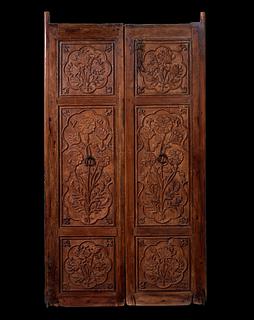
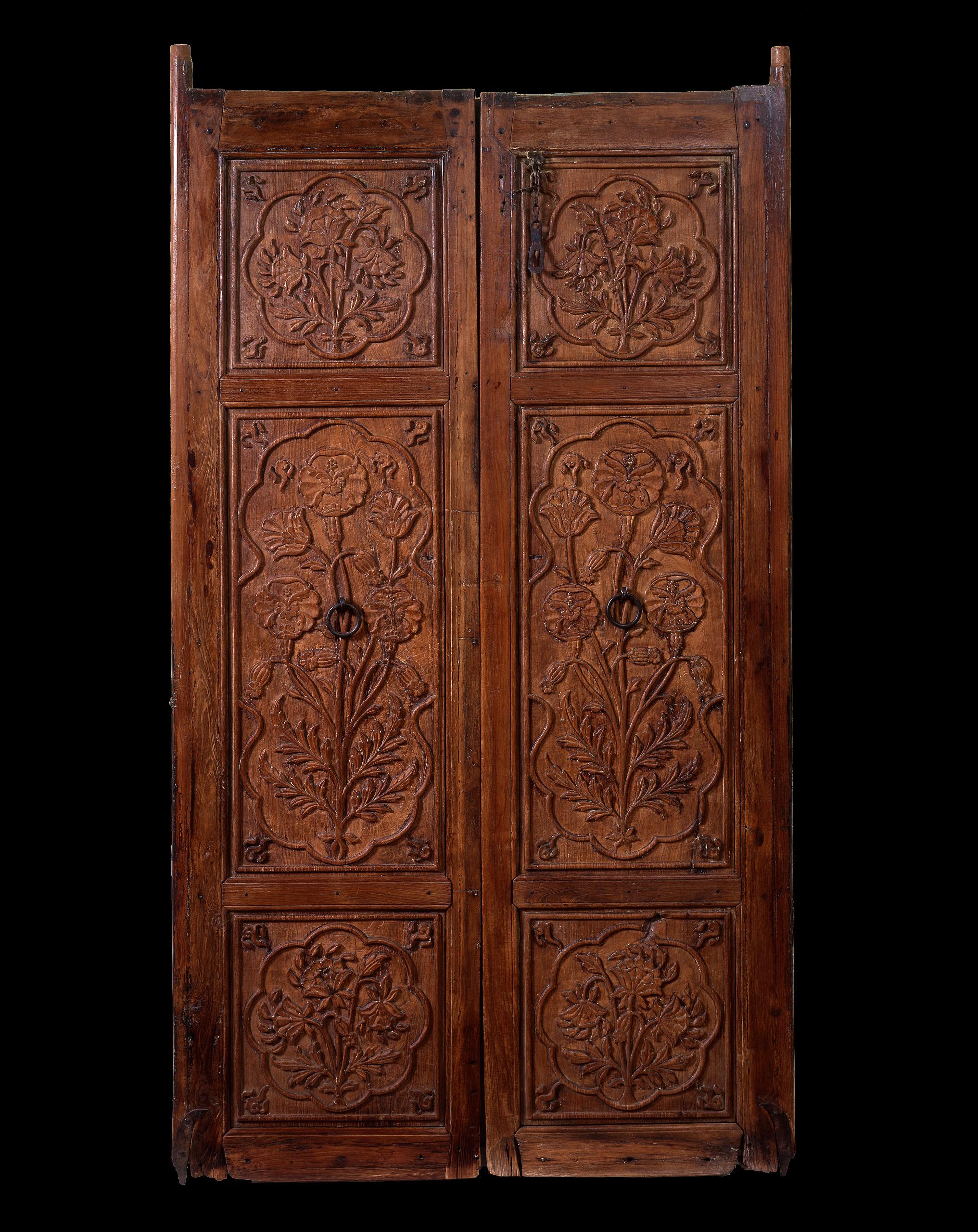
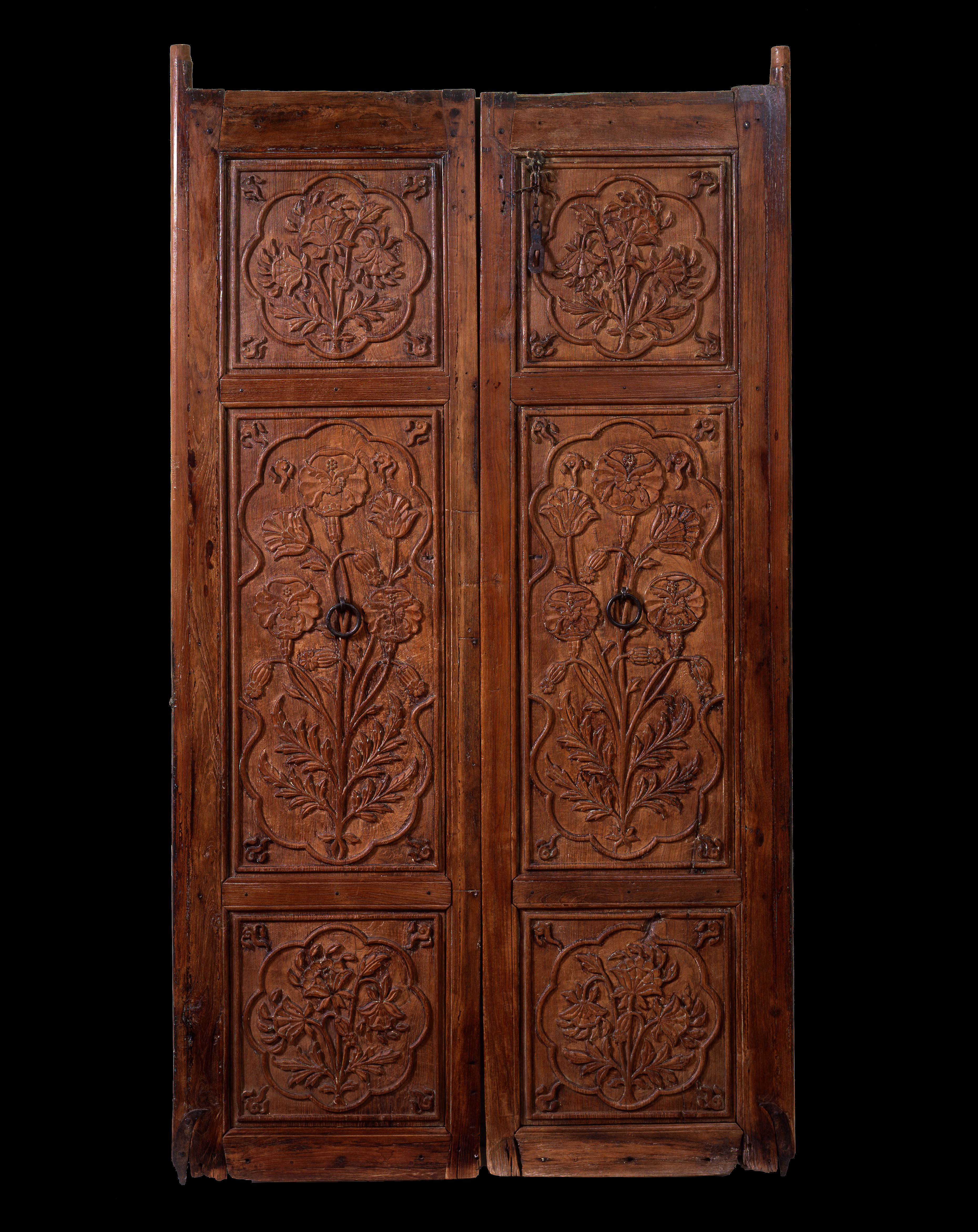
A pair of doors, carved teak
India; 2nd half of 17th century
H: 191; Overall W: 106 cm
Inventory number 15/1987
The predilection for naturalistic floral motifs at the Mughal court in the mid-17th century spread farther out into society.
Carved wooden doors like these were undoubtedly inspired by the sandstone and marble reliefs that embellished imperial architecture. They were originally painted, both protecting them against the elements and emphasizing the contrast between the simple, symmetrical cartouches and the quite naturalistically conceived poppy-like flowers.
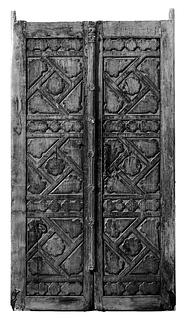
The decoration on the back is more formal, almost reminiscent of the garden designs of the day.
Carved wooden doors like these were undoubtedly inspired by the sandstone and marble reliefs that embellished imperial architecture. They were originally painted, both protecting them against the elements and emphasizing the contrast between the simple, symmetrical cartouches and the quite naturalistically conceived poppy-like flowers.
The decoration on the back is more formal, almost reminiscent of the garden designs of the day.
Published in
Published in
Kjeld von Folsach: Islamic art. The David Collection, Copenhagen 1990, cat.no. 295;
Kjeld von Folsach, Torben Lundbæk and Peder Mortensen (eds.): Sultan, Shah and Great Mughal: the history and culture of the Islamic world, The National Museum, Copenhagen 1996, cat.no. 312;
Kjeld von Folsach: Art from the World of Islam in The David Collection, Copenhagen 2001, cat.no. 446;
Kjeld von Folsach: Flora islamica: plantemotiver i islamisk kunst, Davids Samling, København 2013, cat.no. 39;
Kjeld von Folsach, Torben Lundbæk and Peder Mortensen (eds.): Sultan, Shah and Great Mughal: the history and culture of the Islamic world, The National Museum, Copenhagen 1996, cat.no. 312;
Kjeld von Folsach: Art from the World of Islam in The David Collection, Copenhagen 2001, cat.no. 446;
Kjeld von Folsach: Flora islamica: plantemotiver i islamisk kunst, Davids Samling, København 2013, cat.no. 39;